A Network Superpower, or Unobvious Lessons from Somaliland's Recognition for Global Politics
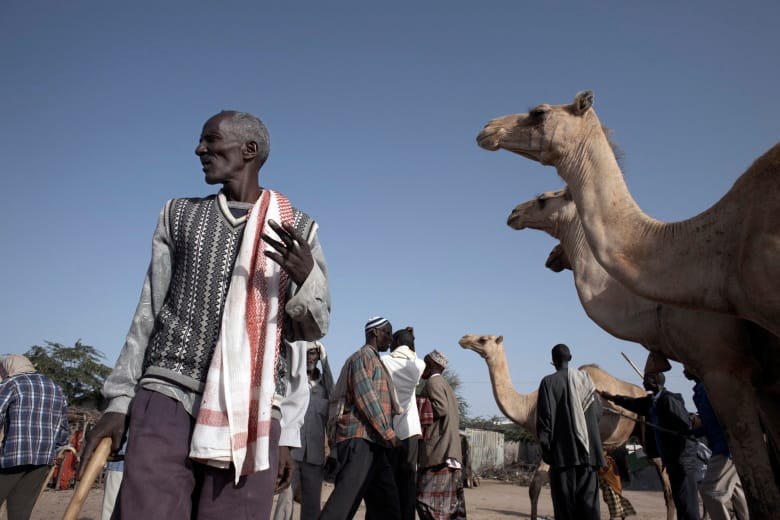
Israel's recognition of Somaliland went largely unnoticed by international organizations and major powers. There's talk of Jerusalem establishing a military base in Africa. This makes the situation illustrative: it allows us to assess which tools actually work in international politics and what role compact, technologically advanced states are beginning to play in it.
On December 26, 2025, Benjamin Netanyahu signed a declaration recognizing Somaliland, a state located two and a half thousand kilometers from Israel's borders, on another continent, in Africa. Thus, a country with a population smaller than New York did what neither the US, Britain, the African Union, nor the UN dared to do in 34 years. Behind this tactical move, there seems to be a global strategy. Tiny Israel seems to be moving beyond the role of a regional player and is now trying to play big.
The declaration was signed by Israeli Prime Minister and Foreign Minister Gideon Saar. The President of Somaliland, Abdirahman Mohamed Abdullahi, signed the agreement during a video conference from Hargeisa. Netanyahu specifically thanked Mossad Director David Barnea for his "contribution to advancing recognition." This wording may indicate that the public ceremony is the result of months, if not years, of intelligence, agent, and preparatory work. It immediately catches the eye that this decision is framed in the spirit of the Abraham Accords – the architecture of relations with various Arab countries that Israel has been building since 2020.
African Democracy
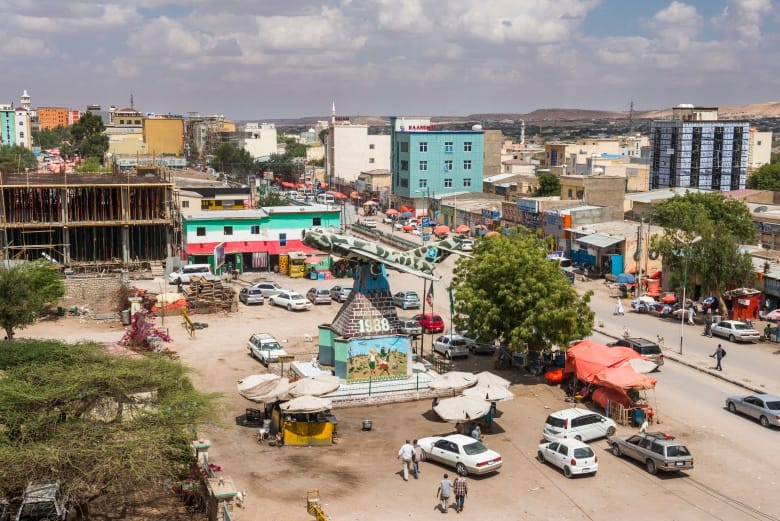
Somaliland declared independence from Somalia (a country in East Africa that has effectively collapsed) in 1991. Calendar-wise, this happened even earlier than the collapse of the Soviet Union. In the 34 years since then, the region has essentially built a fully functioning state. Somaliland has its own currency, army, police, parliament, and other necessary attributes of state sovereignty.
It is noteworthy that during its existence, the new country has already held four presidential campaigns with a completely peaceful and lawful transfer of power – a rarity even for some of today's developed democracies. Yes, in November 2024, the opposition won the elections and power changed hands without a single shot being fired. On the Freedom House scale of democracy commitment, Somaliland is rated as "partly free" with a score of 43 out of 100. Which strongly contrasts with Somalia's score of 8. And yet, no UN member state recognized its existence until December 26, 2025.
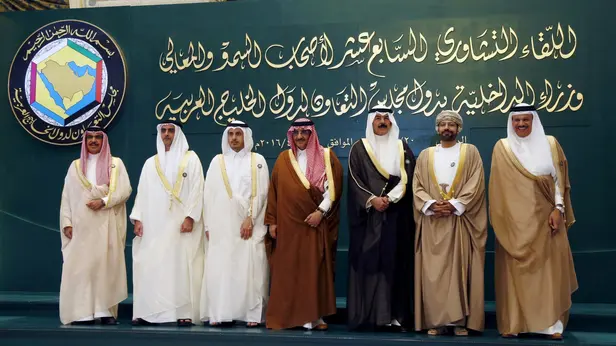
The reaction to Israel's decision was immediate. The African Union stated its "firm rejection" and called it a "dangerous precedent." The Arab League called Jerusalem's actions a "flagrant violation of international law." Saudi Arabia condemned the "unilateral separatist measures." Egypt, Turkey, and Djibouti issued a joint statement in support of Somalia's territorial integrity. The government in Mogadishu, the capital of Somalia, called Israel's decision a "deliberate attack on sovereignty."
And beside that, nothing else really happened. No sanctions were imposed on Israel, no one broke off diplomatic relations with it, and so on. In other words, there were no real consequences at all for the Jewish state. The position of many influential countries and international organizations around the world, representing billions of people, was completely ignored by a country with a population half the size of Moscow and a territory the size of half of the Moscow region.
Why did Israel's position prove more weighty than the consensus of international institutions? The answer to this question goes far beyond Middle Eastern politics. Recognition of Somaliland is not an isolated diplomatic gesture or an impulsive decision. In fact, this is a manifestation of Israel's new status, as it is increasingly vocal about its intentions to transform from a regional power into a global player. To understand the potential scale of this transformation, it's worth delving deeper into Jerusalem's approaches to international politics and their implications for the modern world order.

Israel's Southern Shield
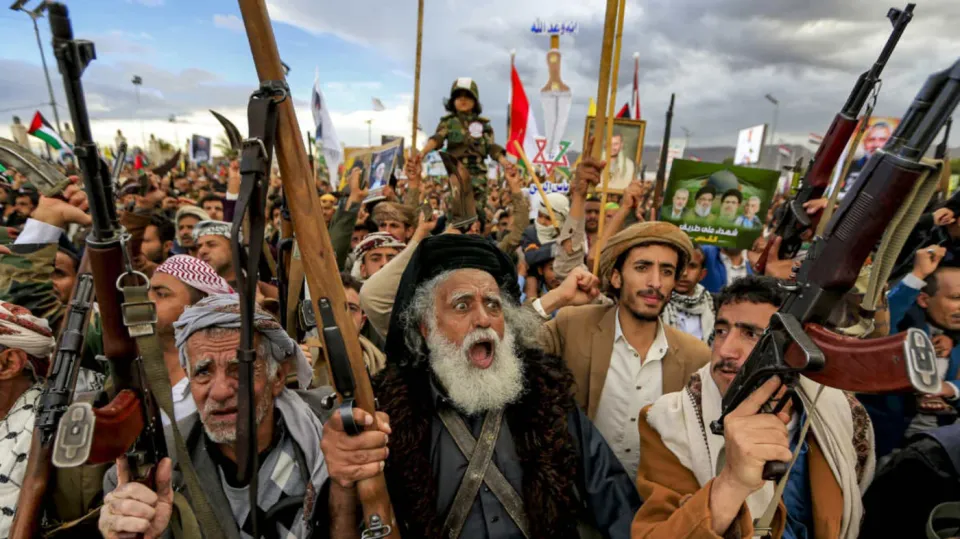
To understand why Israel cares about a state in the Horn of Africa, you only need to look at maritime shipping figures. The port of Eilat is the Jewish state's only maritime gateway to the Red Sea, leading to Asian markets. And by now, those gates have effectively closed. While 134 ships and 150,000 vehicles passed thru it in 2023, in 2024, only 64 ships and no vehicles did. In July 2024, the port management declared bankruptcy. A year later, in July 2025, the port's accounts were frozen and its operations completely halted. The Houthis (Yemeni rebels supported and armed by Iran) have achieved with cheap drones and missiles what numerous Arab armies failed to do over decades of bloody wars – they have closed Israel's southern trade route.
However, Israel is not the only victim of the Houthis. Egypt, whose Suez Canal accounts for up to 10% of all global trade, lost over $7 billion in 2024. The channel's revenue plummeted from a record 0.3 billion in 2023 to less than $4 billion in 2024. The number of vessels served has halved, from 26,000 to 13,000. The Red Sea, one of the planet's main trade routes, where huge bulk carriers were literally stuck in maritime traffic jams, has effectively emptied.
Israel tried to resolve the Houthi problem militarily. The air force struck rebel targets in Yemen – the port of Hodeidah, the capital Sanaa, and their military infrastructure. Each such raid required the deployment of aircraft over nearly 2,000 km, complex logistics, and in-flight refueling. All of this was expensive, labor-intensive, but most importantly, it was ineffective. The Houthis continued to launch drones and missiles as before.
Somaliland is located on the southern coast of the Gulf of Aden – directly opposite Yemen. It's about 640 km from its coast to Hodeidah. That is, three times closer than from Israel. Somaliland's entire coastline is 740 km long, stretching along the strategically important Bab-el-Mandeb Strait, thru which a third of the world's container traffic passes. An Israeli military base here would completely change the game – travel time would be reduced from hours to minutes, constant monitoring of Houthi activity would become possible, and early interception of drones and missiles would seem quite realistic.
Israeli analysts are talking about this openly. In a November 2025 report, the Institute for National Security Studies (INSS) called Somaliland a potential "forward base" for intelligence gathering, monitoring, and direct operations against the Houthis – "from offensive actions to intercepting attacks." INSS Institute's conclusion: Israel's recognition of Somaliland could very well be a turning point. A source in the Israeli government confirmed in an interview with The Independent that the decision is aimed at "combating Iran and its allies in the region."
The "Necklace" of Israeli Geopolitics
However, the issue is clearly not about how many square kilometers of foreign territory Israel can control, but rather about which points on the map will give it additional leverage in foreign policy. And this is more the logic of a maritime power than a continental one. The logic, for example, of Venice, which dominated the Mediterranean for centuries, essentially owning only islands and ports, not large landmasses. Or 17th-century Holland, whose trading empire was based primarily on extensive transportation networks rather than land ownership. Or Great Britain, which at the height of its empire controlled a quarter of the entire globe solely thru a chain of its major naval bases (Gibraltar, Malta, Suez, Aden, Singapore, Hong Kong, etc.), ensuring dominance over sea routes.
Somaliland is presumably set to become a major new bead in Israel's necklace of its growing geopolitical influence. If so, he will fit in very well with the rest:
Cyprus and Greece – strategic partnership, joint exercises, a springboard for operations in the Eastern Mediterranean.
Azerbaijan – deep intelligence cooperation, arms supplies, a staging ground against Iran from the north.
Eritrea and the Dahlak Archipelago – according to unconfirmed but widely discussed reports, signal intelligence and maritime traffic monitoring at the northern entrance to the Red Sea.
Of course, Israel is not building this network alone. The United Arab Emirates is a key partner and likely one of its main architects. Yes, the Emirati company DP World has invested $442 million in the modernization of the port of Berbera, the main harbor of Somaliland. The shares in this project are distributed between DP World (51%), Somaliland (30%), and Ethiopia (19%). The UAE military base in Berbera has been under construction since 2017. In March 2021, the Emirates appointed the first Arab ambassador to Somaliland. It was Abdullah al-Naqbi.

Another telling detail is that the UAE ambassador to Mogadishu left Somalia without explanation the day before Israel's recognition. And unlike Saudi Arabia, Egypt, and many other Arab countries, the Emirates did not condemn Israel's actions.
Against this backdrop, the Abraham Accords (normalization of relations between Israel and the UAE, Bahrain, Morocco, and Sudan) are increasingly seen today not as a series of separate peace treaties, but as a single, forward-thinking architecture designed to last for years to come.
The Evolution of Israeli Strength
In 1948, Israel was born as a besieged fortress. He was surrounded on all sides by extremely aggressive countries hostile to him. Each of them significantly surpassed him in territory and population. The wars of 1948, 1967, and 1973 were, without exaggeration, a struggle for survival. Defeat in them would have meant the inevitable destruction of the Jewish state. The strategic doctrine at that time was based solely on perimeter defense. Its key elements were ordinary stone fences-walls and buffer zones, as well as the military mobilization of the entire society. Israel was heavily dependent on external patrons at that time – first on France, then on the United States, which provided it with weapons supplies and diplomatic cover on the international stage. In those times, it was more of an object-state, lacking independent initiative. It didn't shape the international agenda, but the international agenda directly determined the conditions of its existence.
The first crack in that worldview was the Camp David Accords with Egypt in 1978. But even then, it wasn't yet expansion. It looked more like buying security. The return of the captured Sinai Peninsula in exchange for peace with the strongest of its neighbors at the time.
But by the early 2000s, the situation had changed qualitatively. After the collapse of the USSR, its traditional enemies of Israel weakened. Iraq was destroyed by war. Syria has descended into chaos due to internal political problems. Egypt and Jordan were linked to Israel by peace treaties. Today, Israel possesses undeniable military superiority in the Middle East and an undeclared nuclear monopoly in the region. Of course, the threats (Iran, Hezbollah, Hamas) still remain for now. However, they are no longer existential in nature. The former besieged fortress has quietly transformed into a strong regional player.
Simultaneously, another, no less important, transformation was taking place. Israel was becoming an increasingly high-tech country – cybersecurity, military technology, agritech, medicine, and many other fields. Technological development quickly translated into geopolitical influence.
And finally, the Abraham Accords in the early 2020s marked the transition to the third phase. Israel is no longer buying security – now it is building the architecture of its own security itself. The UAE, Bahrain, Morocco, and Sudan are no longer just countries that have recognized Israel. These are elements of a global system that Jerusalem is designing.
Recognizing Somaliland is a logical continuation of these efforts. With the only difference being that this time Israel is essentially "creating" an allied state for itself on another continent. And it does this despite the position of international players. Even Donald Trump was quick to publicly distance himself from the discussion of this issue.
Test of Recognition
Recognition of Somaliland has been discussed in Washington for years. Senator Ted Cruz promoted this idea in Congress. The conservative manifesto Project 2025 recommended such recognition as a tool to counter Chinese influence in Djibouti. In August 2025, Trump told reporters, "We are looking into that." By December, he was still studying it.
This decision was easier for Israel to make. It didn't have to be coordinated with numerous partners in the region and their lobbying capabilities at home didn't have to be taken into account, as happens in the United States. Furthermore, Israel is inherently risk-ready. A country in a state of permanent war is forced to base its policies on the principle of fait accompli. In other words, act first and deal with the possible consequences later.
Therefore, Jerusalem's logic is always deliberately pragmatic. Will the African Union condemn it? Of course, he'll condemn it. Will the Arab League issue a statement? Of course, he'll perform. But judgments will remain judgments, and the fact will remain a fact.
Israel's decision could be the first step. An unpleasant comparison for Jerusalem – the State of Palestine. The number of countries recognizing Ramallah increased almost exponentially. And it's the same here – someone has to be first.
For Somaliland itself, such a diplomatic move from Israel could be very timely. The Jewish state has survival technologies for a hostile environment. Reconnaissance systems for a country whose security is threatened by aggressive neighbors and terrorist organizations. Agricultural technologies for arid regions that work even under blockade. Medical examination. Cybersecurity. This is what Hargaysa is so lacking.
Pandora's Box has already been opened
The Peace of Westphalia in 1648 established a principle that underpinned the international order for nearly four centuries: the sovereignty of states and the inviolability of borders. The African Union, established in 2002, elevated this principle to a dogma. They say that former colonial borders are sacred, that no separatism is acceptable, and that recognizing breakaway territories is a threat to the military-political stability of the entire continent. The logic of Africans is understandable. If you allow borders to be redrawn in one place, the entire modern map of Africa, arbitrarily drawn by Europeans without regard for the ethnic and religious realities on the ground, will crumble.
Israel has openly challenged this logic. A dangerous precedent has been set. If a tiny state with the population of a single European city can recognize the independence of an entire African region against the position of the continental organization, the Arab League, and the principles of UN territorial integrity – why can't others? And this could lift the lid on Pandora's Box, which is already open. Who's next? Perhaps Kurdistan as well.
Of course, Israel's recognition of Somaliland won't open doors for all separatist projects overnight. But it once again clearly demonstrates that the principle of territorial integrity is no longer absolute. He only works when he has the backing of a force ready to defend him.
And this in turn means a further devaluation of international institutions as such. The UN, the African Union, the League of Arab States – they all function solely on the basis of consensus and common rules for everyone. When it turns out that rules can be broken without consequences, the institution loses its purpose, transforming from a global arbiter into a commentator.
His power is shifting to countries that are emerging globally, attempting to solve their regional problems. We've already seen this with Singapore, which has long been punching above its weight in Southeast Asia, or the UAE, which is actively building its own network of geopolitical influence from Libya to Pakistan. I venture to suggest that it is precisely such network powers, possessing influence but lacking the costs of a large country, that will be the key players in the geopolitics of the future.
 Сергей Коняшин