Africa 2025: Why Do Electoral Autocracies Hold Elections?
In October 2025, Tanzania's National Electoral Commission announced the results of the presidential election. The current head of state, Samia Suluhu Hassan, won with 97.66% of the votes with an 82% turnout. The numbers looked triumphant – almost absolute support, almost universal participation. However, few people now remember that just weeks before the vote, the country's largest opposition party, Chadema, was deregistered on formal grounds. Its leader, Tundu Lissu, was barred from participating in the elections, and protests against these decisions were brutally dispersed by the police. At many polling stations on election day, observers recorded a familiar scene for Russians – the official turnout was supposedly very high, but the polling places were empty.
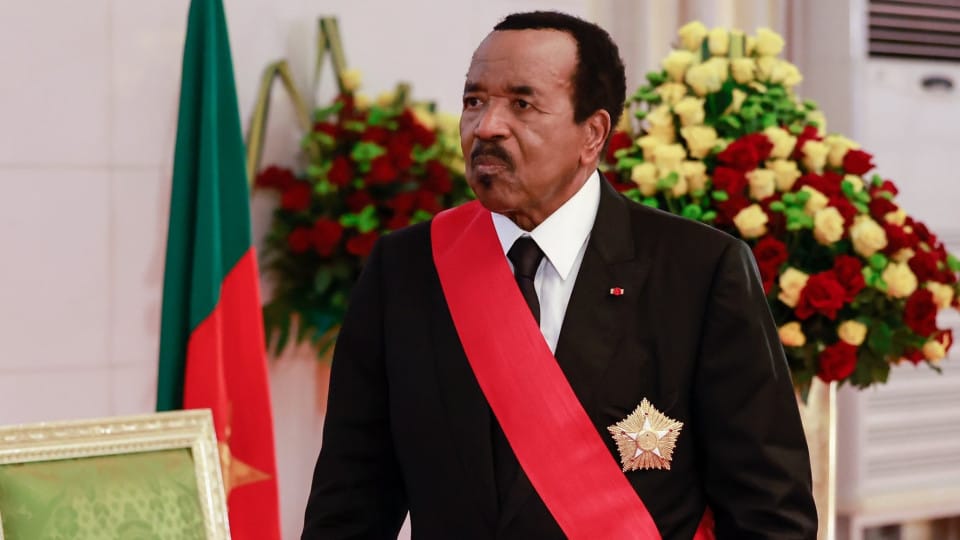
Very similar scenes unfolded that same month in Cameroon, where 92-year-old Paul Biya was "re-elected" for an eighth term amid violence in the Douala region, as well as in Côte d'Ivoire, where 255 people were arrested for attempting to dispute the vote count. All these events raise the question – if elections are considered the main criterion of democracy, why do they so rarely change power, at least in Africa? And why did an institution supposedly designed to ensure elite turnover ultimately turn into a ritual of their immutability?
Ritual Instead of Democracy
Africa's electoral calendar in 2025 looked quite busy. Presidential elections have been held or scheduled in more than twenty countries on the continent. For international observers and analysts, this is a traditional "stress test" of democratic institutions – a check on whether formal procedures can ensure genuine political competition and a peaceful transfer of power. However, the results of this test were depressingly predictable. In the vast majority of cases, incumbent presidents or their appointed successors won by an implausible margin, and the opposition was marginalized even at the stage of being allowed to vote. Even modern technologies – from biometric registration to electronic transmission of protocols – haven't changed the essence of what's happening in any way.
The chain of cases we want to examine in this article – Tanzania, Cameroon, Côte d'Ivoire, Malawi – might seem geographically and historically diverse at first glance. These are countries with different colonial pasts, different socio-economic systems, and different degrees of involvement in international organizations and institutions. However, they are united by something more important – similar mechanics for maintaining power thru "elections." In all four cases, the electoral process is preserved as an institution, but competition within it is systematically suppressed. To some extent, this list is continued by Mali, which has taken the practice of power usurpation to a whole new level. Her Russian-backed military junta appears to have decided to completely shed its "electoral" facade and rely solely on brute force from now on.
I think, based on these events, it can be assumed with a high degree of certainty that African countries are not experiencing a temporary crisis in the development of the traditional European-type democratic model, but rather the entrenchment of a fundamentally different sustainable model in their socio-political discourse – electoral autocracy. Within this model, so-called "elections" become a ritualistic procedure without a real alternative. On the one hand, they fully preserve the institution of legitimization in the power of the formal winner, and that is precisely why they are not abolished. But on the other hand, all real political competition is completely hollowed out during such mock events. And this is no longer a malfunction of the familiar European democratic system, but the normal functioning of a fundamentally different system, in many ways similar to the Russian one.
Predictability of the outcome is not an embarrassing fact that needs to be hidden to avoid accusations of falsification; on the contrary, it is the most important marker of the system's stability and its confidence in its strength, which should be conspicuously demonstrated to everyone around – from opponents to potentially disloyal voters. That's why in Tanzania, all real opposition is demonstrably removed from the ballots a month before the vote, in Cameroon protests are drowned in violence, and in Côte d'Ivoire, winning results shamelessly reach statistically impossible figures, in some places exceeding 99%.
In this row, perhaps only Malawi stands out somewhat – but even that is a rare exception that rather confirms the general rule. In September 2025, a formally peaceful transfer of power took place there from the incumbent president to an opposition candidate. However, that result was only possible thanks to the unique precedent of 2019, when, under pressure from mass civil protest, the Constitutional Court was forced to annul the election results due to widespread falsification. After this, the government admitted defeat. Those events became known as the "Tippex affair" – after the popular brand of stationery whose correction fluid was used to cover up the original entries in the minutes. The example of Malawi shows that the vector toward usurpation is theoretically reversible, but only with an independent judiciary and the elite's willingness to admit defeat – in other words, under exceptionally rare conditions.
However, if we look at the problem more broadly, two distinct belts seem to emerge on the political map of Africa today: the "belt of coups" (Mali, Burkina Faso, Niger, where military juntas have disrupted the electoral cycle and are ruling directly, without simulating popular will) and the "belt of elections without choice" (Tanzania, Cameroon, Côte d'Ivoire, Uganda, Equatorial Guinea, where elections are held regularly, but the outcome is predetermined long before election day). Intuitively, one wants to contrast these two belts as formal opposites. However, upon closer examination, the understanding is growing that these are not opposites, but rather two forms of essentially the same crisis – a crisis of political representation, in which elites are unwilling to share power and, in fact, do not share it as long as they can afford not to.
African-Style Lawfare
Modern power usurpers, including those in Africa, have already learned to do without crude tools for suppressing civil activity, such as direct party bans or open censorship of opposition media. Taking an example from their Russian colleague, among others, they are using a practice that political scientists call lawfare. The essence of this practice is very simple and well-known, for example, to citizens of Russia – strong competitors are taken out of the game not by political but by legal means. In other words, the opposition leader is not on the ballot solely for some formal reasons – his party's documents are allegedly not properly filed, or he himself doesn't meet certain requirements, or a criminal case has been opened against him on charges that cannot be refuted before election day, and so on.
Tanzania in 2025 is a textbook example of the use of this mechanic. In April, six months before the elections, the authorities blocked the participation of Chadema, the largest opposition party, which has existed since 1992. Her rival, Tundu Lissu, the only real competitor to President Samia Suluhu Hassan, was arrested on charges of treason. Legally, everything was impeccable, but from a political standpoint, it was equally obvious that the main opponent of the current government was eliminated precisely when he became dangerous.
Côte d'Ivoire used a more sophisticated filter – candidates' citizenship requirements. The constitution there sets strict criteria: the candidate must be "Ivorian by origin," and both of their parents must be citizens of the country without any other citizenship. Based on these essentially discriminatory laws, the Constitutional Council disqualified several strong candidates, including former Prime Minister Tiemoko Meyliet, from the 2025 elections due to his dual citizenship. However, the same criteria were never applied to the current president, Alassane Ouattara, and his entourage, even tho their biographies contain equally controversial aspects. Another telling case is Laurent Gbagbo (former President of Côte d'Ivoire, 2000–2011), acquitted by the International Criminal Court in 2019 but never allowed back into political life. His party was split by administrative methods, and his supporters are still being persecuted.
Thus, it is noticeable that today the effectiveness of the mechanism for retaining power increasingly depends on the brutality that was previously mandatory for African countries, rather than on a legalistic facade. International observers find it difficult to criticize decisions formally taken "according to the law." National courts are under the control of the authorities and rubber-stamp the desired verdicts. The opposition is protesting, but the protests are not overturning the administrative acts. As a result, by the time the vote takes place, the strongest competitors have been eliminated from the list, and the voter receives a ballot without a real choice – only the ruling party and dwarf parties that pose no threat to it.
The Arithmetic of the Impossible
However, candidate screening is just the first line of defense. Even if the opposition somehow manages to get on the ballot, the authorities control the voting and vote counting so tightly that the outcome of the election is predetermined in any case. The main tools for this are, again, well-known to us Russians – registry manipulations, "administrative summons," and vote stuffing and rigging in commissions.
Biometric registration, implemented with the support of international donors as a safeguard against "ghost voters," has created new opportunities for manipulation. In Tanzania, before the 2025 elections, the opposition complained that thousands of their supporters had simply disappeared from the lists – their data was allegedly not verified. At the same time, in districts loyal to the ruling party, the lists, on the contrary, swelled due to the appearance of a large number of virtual identities in the system. Readers with Russian passports won't find it difficult to guess that this electronic system is under the complete control of the National Election Commission, appointed by the president, that the opposition has no access to this database, and that all complaints are, of course, reviewed by the same bodies that conduct the registrations. We are all familiar with this.
District commissions are formally multi-party, but their composition is also controlled by the authorities. For example, in Cameroon, where the RDPC party has been in power since 1982, opposition observers are simply not allowed into such commissions under various pretexts: allegedly the documents are not properly filled out, the places are exhausted, the polling station is suddenly moved without notification, etc. As a result, the counting of ballots at thousands of polling stations on election day takes place without any independent oversight.
The results of the 2025 elections in Tanzania – 97.66% for the president with an 87% turnout – contradict any sociological, and even simple arithmetic, logic. In a country with a population of millions, great ethnic diversity, highly heterogeneous economic problems, and a high level of social discontent, such unanimity is simply impossible. For comparison: even in the USSR at the peak of the Stalinist era, a few percent "against" were formally allowed so that the results wouldn't seem completely fantastical.
Where do these numbers come from? A significant portion is the administrative appearance we are familiar with. Government-dependent voters are being forced to vote thru threats of dismissal, loss of benefits, denial of public services, etc. African municipalities receive the same directives as Russian regions: for example, a turnout of at least 90%, a result of at least 95%. Failure to comply, of course, carries the risk of sanctions. As a result, the commissions assign the necessary figures and "correct" the protocols from the polling stations. The electronic data transfer, implemented by international consultants, has only created the illusion of transparency. Because if the digital system remains under the control of interested structures, then digitalization doesn't solve the problem, it only masks it.
Cameroon shows a similar picture. In some regions of this country, the results are sometimes announced before the vote counting is completed. Opposition parties are publishing their versions of the protocols, and they differ radically from the official ones. At the same time, the Constitutional Council appointed by the president has never annulled the results of presidential elections in its entire history. Thus, the system is self-perpetuating: power controls the procedure, and the procedure legitimizes power.
It's clear that candidate screening and procedure control mechanisms can only work in tandem. The first eliminates strong competitors before the election campaign starts, while the second guaranties the result at its finish. The opposition ultimately finds itself in a trap: boycotting the elections only gives the authorities an easy landslide victory, while participating in them means playing a foregone unequal game and doesn't lead to tangible results. Breaking out of this vicious cycle is only possible thru a radical change in the rules of the game. But they are also written by those who remain in power. But only as long as he actually remains in power.
A Protest for the Price of Freedom
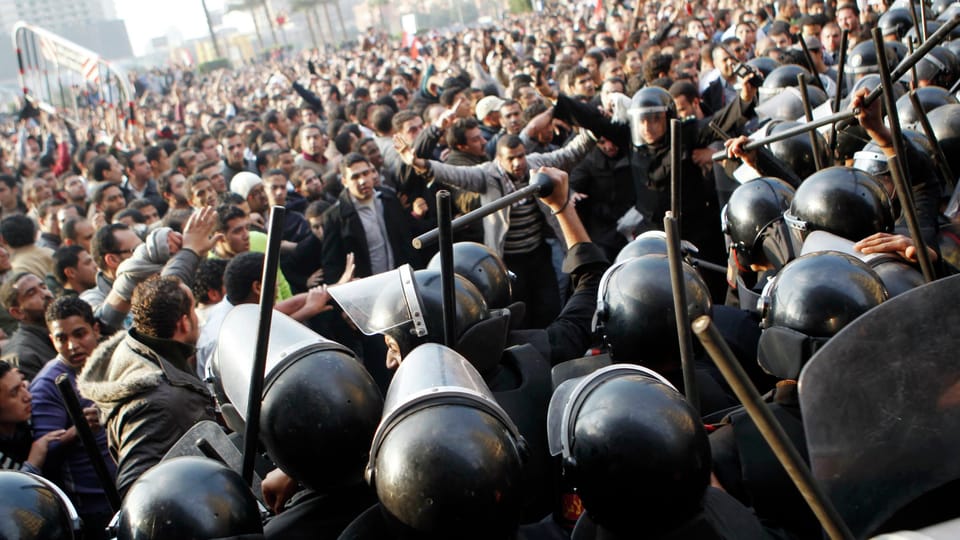
Legal filters and administrative control are effective, but not absolutely so. There's always room for unpredictability. The opposition can mobilize the streets, independent observers can document violations, and society can express its discontent thru protests. For this case, the third mechanism is the power mechanism. When the first two suddenly fail, the police and special services step in. As in Russia, violence is used selectively, but very aggressively and excessively – to make it clear that challenging the results comes at a price few are willing to pay.
Côte d'Ivoire is a clear illustration of this. When it became clear in October 2025 that the opposition would attempt to organize protests against the disqualification of candidates, the authorities immediately banned public gatherings. The opposition violated it and still held their march. The police acted with deliberate harshness. 255 people were detained, dozens were injured. As a result, by the time of the elections, all protest activity had been suppressed. Opposition leaders are partially arrested and partially intimidated.
Cameroon uses even more brutal methods. The 2025 elections coincided there with a protracted conflict in the English-speaking regions (simmering since 2016). Authorities are using this background to justify forceful control. In Douala, an opposition stronghold, a rally against vote rigging ended in bloodshed. Four people died, and dozens were hospitalized with gunshot wounds. According to the official version, the police opened fire in response to provocations by "extremists." Witnesses, however, claim that the protest was completely peaceful until the security forces themselves began using gas and rubber bullets. No investigation was conducted, of course, and no police officer was held accountable. However, the organizers were demonstratively arrested on charges of "inciting rebellion" – a crime punishable by decades in prison under local laws.
Tanzania is also demonstrating a similar model. After Chadema was blocked, its supporters attempted to organize protests in Dar es Salaam (the capital), Arusha, Mwanza, and other cities. Police dispersed the protests, detaining hundreds of people. Formally, the detentions were short-lived – most were released within a day or two. But that was enough: being detained means being entered into the police database, which makes it difficult for a citizen to find employment, access government services, travel abroad, and so on. For young activists, this is a serious threat. As a result, the mass mobilization of opposition forces was thwarted, and the protests remained localized.
It's important to understand that the power mechanism – whether in Russia or Africa – doesn't necessarily have to be large. Its effectiveness is based primarily on demonstrating, or even creating the illusion of the inevitability of punishment. Demonstrative arrests of several leaders, several harsh crackdowns, several deaths – that's already enough for the overwhelming majority of potential protesters to prefer staying home. Sociologists call this the chilling effect: in an attempt to avoid risky consequences, people themselves withdraw from participating in the political process, self-censoring their statements and calls. This works particularly effectively in societies with weak legal protection.
It’s Not a Glitch, It’s the System
Electoral autocracy in Africa is not a temporary setback for democracy that will be corrected as economic development progresses. 2025 clearly showed that we are dealing with a resilient system that has learned to reproduce itself by adapting to external pressure and internal challenges. The close symbiosis of the three mechanisms mentioned above – lawfare, procedural control, and coercive backup – is a distinguishing feature of the system of power reproduction thru elections in African countries. And this system is quite flexible – depending on current realities and needs, the government emphasizes one of the mechanisms or combines them.
Thus, in countries with a developed legal culture and strong international attention (Côte d'Ivoire), legal filters become more relevant. In countries with a less demanding external audience (Cameroon), more overt violence is permissible. In countries with a stable party system (Tanzania), there is sufficient control over procedures. But all three elements are present everyplace – in different proportions.
The key difference between modern African countries and classic 20th-century dictatorships like Nazi Germany or Stalinist USSR is the preservation of a formal democratic facade. Elections are held regularly, in the presence of international observers, using modern digital technologies. Constitutions declare freedom of speech, assembly, and party activity. Courts and the media pretend that they are supposedly independent and free. However, the real situation is very different from the formal one. The meaning and functions of state institutions have been reduced to zero. Behind the facade of outwardly correct signs, no constitutional guaranties are functioning.
Such an illusory system is convenient for many. Power endlessly reinforces its legitimacy thru the electoral ritual, avoiding the costs of natural military rule. The international community interacts with supposedly "democratically elected" governments without asking itself or others any uncomfortable questions. Regional organizations (the African Union, ECOWAS) formally adhere to the principle of constitutional order: elections are held, and there are no coups. Even the opposition sometimes participates in a knowingly unfair game – because a complete boycott deprives them of their audience and funding.
The only ones who definitively lose in this struggle are the voters. Their voices have no impact on the outcome, their protests are suppressed, their demands are ignored. Elections are transforming from a tool of political competition into a ritual of legitimizing a single ruler, from a mechanism for elite turnover into a way of preserving them. As long as the costs of maintaining the system remain acceptable to the government, and the costs of its destruction are prohibitive for society, electoral autocracy will be reproduced cycle after cycle. And breaking this cycle is only possible when several conditions are met.
First, the independence of the judiciary. Malawi has shown that courts are capable of overturning fraudulent elections and forcing the ruling party to accept defeat. But this was made possible by a unique combination of factors: the weakness of the executive branch, dependent on external funding; an active civil society; and the personal courage of the judges. In most African countries, these conditions are absent. Judges are appointed by the president, are dependent on the executive branch, and are subjected to pressure and threats.
The second condition is strict term limits for presidents, protected from manipulation. Cameroon and Côte d'Ivoire have shown how easily such restrictions are circumvented when the president controls the parliament and the constitutional court. Laws change, terms are "reset" – and the leader remains for another decade. Term limits obviously require an effective protection mechanism. For example, provisions stating that articles on deadlines cannot be amended under any circumstances. But even these guaranties only work if there is a political culture of respect for the rules.
The third condition is real access for the opposition to the electoral process at all its stages. This means not just the right to register parties, but also protection from arbitrary government actions, access to state media, the ability to hold supporters' rallies, the presence of independent observers at polling stations, transparency in vote counting, and so on. Tanzania showed how easy it is to eliminate competition simply by deregistering a party two months before the elections. Côte d'Ivoire: How citizenship courts are becoming a tool for political persecution. Cameroon: How assembly bans turn protest into a crime. Each of these mechanisms is formally legal, but politically destructive.
The fourth condition is the protection of the right to peaceful assembly and protest. When all other channels of political action are closed, the street remains the last space where society can express its discontent. Suppressing this right – thru bans, crackdowns, arrests, and violence – signifies the complete closure of the political system.
But even if all these institutional "safeguards" are put in place, they won't work without a fifth condition – an internal public demand for a change of power. Institutions do not exist in a vacuum. They only work when society is ready to defend them and demand their observance. Malawian courts were able to annul the elections because they were backed by months of mass protests. The 2024 Senegalese elections led to a real change in power because young people turned out to vote in large numbers. In countries where society is apathetic, fragmented, or intimidated, even the most perfect institutions will remain a dead letter.
And this is not only relevant for Africa...
 Сергей Коняшин