The Algorithm of Regime Collapse — or a Bit of Scientific Statistics on the Fall of Dictatorships
In the fourth year of the bloody war in Ukraine, it feels as though this nightmare will never end. The end of this absurd fratricidal conflict is awaited not only by many Russians and Ukrainians but also by people all over the world. However, the more we read the reports from the front lines, the stronger the impression that the fate of this war will be decided not so much on the battlefields as by the political destiny of one particular individual. This is why many of us increasingly ask the question—when, at last, and under what circumstances will Putin’s authoritarian regime collapse?
Of course, no one can give a confident answer to this question except conspiracy theorists and charlatans. Yet we can look at the situation through the lens of scientific knowledge to understand which scenarios are statistically more likely. To date, comparative political science has described and analyzed thousands of examples of how autocracies have emerged, evolved, and disappeared. Studies based on large datasets covering hundreds of authoritarian regimes similar to Putin’s show that, despite the unique features of each case, the most common scenarios of their downfall fit into a limited set of basic patterns.
Recently, in global and domestic media discourse, journalists and analysts most often mention the following main threats allegedly capable of bringing down Putin’s authoritarian dictatorship: defeat in the war with Ukraine, economic crisis, a coup resulting from a split within the Russian elite, and a popular uprising—either armed or in the form of nonviolent protest. Let us, with the help of specialized scholarly literature, examine how often and under what conditions each of these triggers actually works, and try to understand which of these possible scenarios is most likely in contemporary Putin’s Russia.
To assess the “potential” of each factor, we can turn to the fundamental work of scholars of authoritarian regimes—V.L. Djuve, C.H. Knutsen, and T. Wig—Patterns of Regime Breakdown since the French Revolution. In June 2018, they presented to the academic community their working paper titled Historical Regimes Data (HRD), an extensive dossier of empirical material compiled for their study. The HRD is a unique database covering the period from 1789 to 2016 and describing in detail the principles for coding the key variables related to the termination of political regimes.
For the reader’s convenience, we will not make this essay resemble an academic article by overloading it with references in a special format. You will find a list of the most important works discussed here for further study at the end.
Defeat in an Aggressive Foreign War
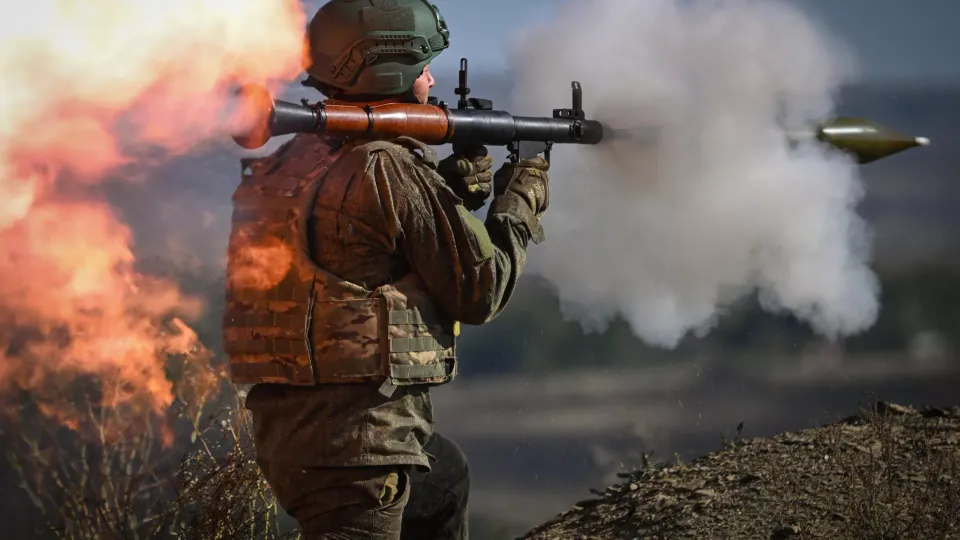
Military failure would seem to be a classic blow to the legitimacy of an autocrat who rules by force. However, although the HRD identifies interstate war as a distinct type of cause in the transformation of authoritarian regimes, it accounts for no more than 5% of all cases. This category includes, for example, the 1905 revolution in Russia (following defeat in the war with Japan), which changed the socio-political structure of the Russian Empire but left Tsar Nicholas II in power.
If we shift the focus from the transformation of the regime to the overthrow of the dictator himself, the picture becomes even more modest. In the global dataset on leadership changes since 1950, only 24 such cases have been recorded (3.1%). For instance, the United States deposed M. Mossadegh in Iran by military means (1953) and the Taliban regime of M. Omar in Afghanistan (2001); France removed J.-B. Bokassa in the Central African Republic (1979); the USSR took out I. Nagy in Hungary (1956) and Yu. Tsedenbal in Mongolia (1984), and supported regime change in Afghanistan (1980s). However, in all these cases, the opposing state was significantly larger and more powerful than the autocratic one. Therefore, the likelihood that the Armed Forces of Ukraine will be able to overthrow Putin is, unfortunately, statistically negligible.
Another large comparative study, conducted by B. Geddes, J. Wright, and E. Frantz in 2014, classifies foreign invasion as belonging to the category of so-called “forced transitions,” alongside coups and armed uprisings. Notable examples include the Dominican Republic (1965), Afghanistan (2001), Iraq (2003), and others. However, in their work, the precise share of regimes that fell exclusively due to external defeat is not specified. These authors emphasize the multifactorial nature of authoritarian regime collapse and therefore do not single out any one cause as unequivocally dominant.
At the same time, statistical models that include the variable “War Defeat” clearly show that failures on the battlefield do indeed lead to a decline in the dictator’s legitimacy, which in turn increases the likelihood of his removal through other scenarios, while “War Victory” predictably protects the ruler from such developments. In other words, a disaster at the front can theoretically open a window of opportunity for the overthrow of the regime. However, it is usually internal players, not foreign tanks, who manage to pass through this window. Therefore, it is reasonable to expect that even the most catastrophic scenario on the Ukrainian front will be merely a condition for regime change in Putin’s Russia, but not its trigger.
So what else must happen if this condition is met? Let’s continue exploring.
Economic Crises
An economic storm usually hits an autocracy from at least three directions. First, it deprives the population of income and creates social tension that pushes people into the streets. Second, it drains the treasury, leaving the tyrant without financial levers to bribe corrupt elites and pay for the services of the security apparatus. Third, the very fact of economic collapse demonstrates the low effectiveness of state governance, becoming a visible indicator of the regime’s exhaustion and sending a signal to all those who would like to reverse the negative trends. For these reasons, deep recessions and other kinds of economic shocks do indeed increase the risk of regime change. However, as practice shows, this scenario is realized only in combination with other factors. Good examples are modern North Korea, Iran, Cuba, and similar countries, where people have lived in total poverty without basic conveniences for decades but are in no hurry to overthrow their regimes. This happens not only because it is hard to muster the strength to resist tyranny when you have been living on cabbage alone for years, but also because, aside from the catastrophic state of the economy, there are no other objective triggers for an uprising.
Nevertheless, V.L. Dyvve, C.H. Knutsen, and T. Wig (2020) concluded that just two pronounced factors—low GDP per capita and negative economic growth—almost double the likelihood of regime collapse through a coup or armed uprising. At the same time, a controlled “restructuring” of a collapsing economy by the authoritarian regime itself—seemingly an intuitively obvious step for any dictator—actually happens far less often than one might assume. A more recent analysis by Dyvve and Knutsen (2024) unequivocally links economic recessions to coups and severe elite infighting, rather than to the liberalization of economic policies by a “bankrupt” autocrat.
Naturally, the question arises—how deep does an economic downturn have to be to create insurmountable problems for a power usurper? D. Tanneberg, C. Stefes, and W. Merkel, who in 2013 established a direct connection between economic troubles and the likelihood of a coup, argue that it is not the depth of the decline itself that acts as a trigger but its sharpness—that is, the suddenness and speed of the collapse. The sharper the downturn, the higher the chance that elites will rebel against the leader. If, however, the changes, even very dramatic ones, unfold slowly, both the people and the elites begin to adapt and get used to them. This is the same “boiled frog effect,” where the frog doesn’t jump out because the water heats gradually.
The structure of the economy also plays a significant role. The study by M. Tan, N. Huhe, and C. Zhou (2017) clearly showed that when the state sector grows so large that people hold the government directly responsible for prices and wages, a crisis more often becomes a trigger for middle-class discontent and for an alliance of elites against the authorities. A. del Rio’s 2022 study, which confirmed this finding, also established that the regime’s business partners are more actively looking for a “backup airfield” when popular discontent can provide moral cover for their disloyalty to the leader and their aggressive actions against him.
Despite the obvious role of the economic factor in the collapse of authoritarian regimes, modern political science does not calculate a precise figure for what share of dictatorships fall specifically because of it. As in the previous case, it is more of a condition for tyranny’s downfall than its direct cause. The collapse of each autocrat is a unique, unrepeatable “cocktail” of several crises, elite intrigues, street pressure, external circumstances, and more. The only thing that can be stated with certainty is that in a resource-based autocracy like Putin’s, a recession very effectively hits the wallets of the regime’s security officials, lawmakers, oligarchs, governors, and other loyalists—and it is precisely at that moment that the political pendulum usually gets its first push to swing the other way.
Elite Splits and Coups d’État
If defeats at the front and economic troubles merely destabilize an authoritarian regime, the final blow is most often delivered by the dictator’s closest associates. According to V. Dyvve, C. Knutsen, and T. Wig, military, palace, intra-elite, and other types of coups form the largest group of causes for regime transformations. In the sample studied by V. Bove and M. Rivera, who focused their 2015 research on the more modern period from 1950 to 2004, such events accounted for more than half—102 out of 201 autocracies they examined fell at the hands of insiders.
It is well known that authoritarian regimes rely above all on elite loyalty. Their irrational devotion to the dictator is both his strength and his weakness. On the one hand, having passed a strict, highly competitive selection based on personal loyalty to the supreme leader, officers and officials firmly control the state machinery and keep their assigned sectors of power in an iron grip. On the other hand, all this lasts only as long as they genuinely believe in their patron’s power and remain satisfied with the size of the benefits they receive from him—usually through various corruption schemes. Therefore, the more the leader’s perceived legitimacy declines and the emptier the courtiers’ pockets become, the more factions grow discontented, the lower the individual risks of conspiracy fall, and the higher the probability of a coup attempt rises. Economic crises, mass protests, or military defeats serve as good catalysts for turbulence and as a guarantee that at least part of the population will support the conspirators.
The form a coup takes largely depends on the regime’s configuration. The military coups studied by Bove and Rivera are considered classics in Latin America and Africa. They unfold and succeed much faster than other types of coups but almost always bring to power a new autocracy little different from the previous one. Palace intrigues in single-party or monarchical systems, in the overwhelming majority of cases, only remove the top figure without changing the nature of the regime itself—in essence amounting to little more than a “planned rotation” of the leadership. The so-called “self-coups” described by Dyvve and Knutsen occur when the dictator himself launches a conspiracy against his own elite or the constitutional order of his country, shifting the political system into a new phase while retaining personal power. For example: Napoleon III (France, 1851), Alberto Fujimori (Peru, 1992), Boris Yeltsin (Russia, 1993), Hugo Chávez (Venezuela, 1999), Vladimir Putin (Russia, 2020), among others.
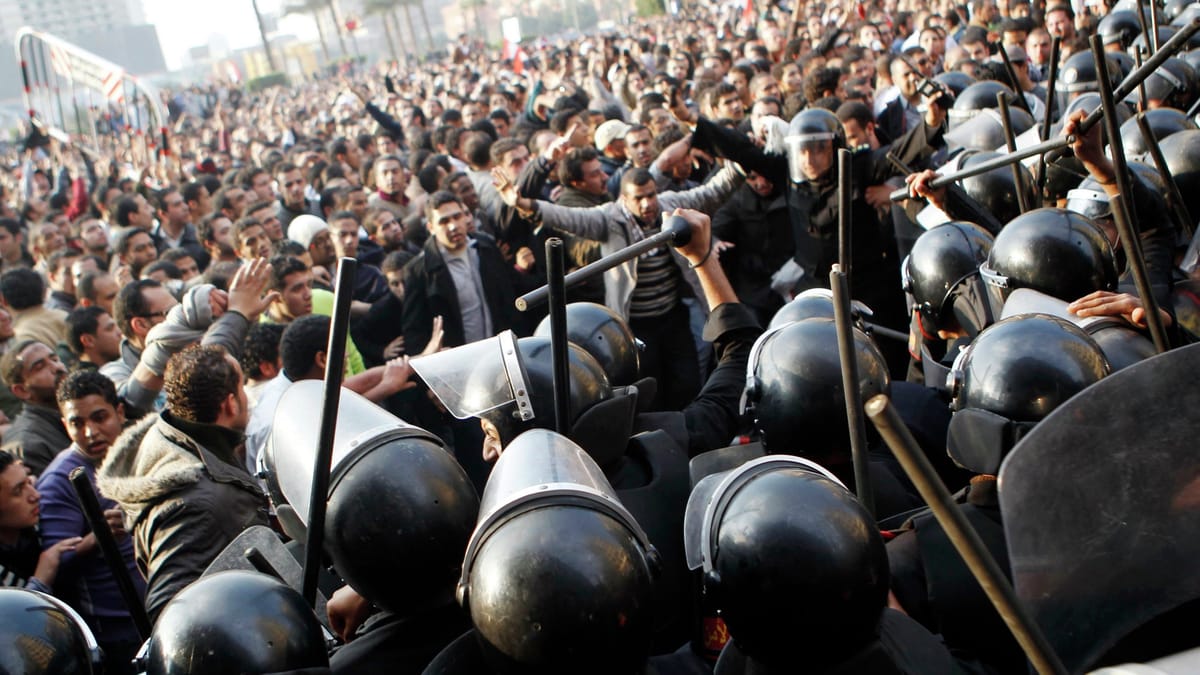
Several factors increase the likelihood of a conspiracy. First, the type of dictatorship itself. Military juntas are the most fragile, while personalist regimes (like Putin’s) can remain in power for quite a long time. However, if the ruling coalition cracks, they collapse much faster than any other—almost instantaneously. Second, internal purges. Each new wave of dismissals or repressions against generals and senior officials raises the probability of a plot among those who remain, warn J. Powell and C. Thyne (2011). Elements of liberalization, if they still exist in the country, can also play an important role. Semi-open institutions provide elites and the opposition with communication channels, making it easier to coordinate a coup. This mechanism was described in detail by M. Gandhi and A. Przeworski (2007). Finally, mass demonstrations near the capital often signal to security forces that, at that moment, the risks of siding with the opposition are much lower than they previously seemed. B. Casper and S. Tyson (2014) clearly showed that large protest events accelerate the defection of parts of the military and law enforcement to the conspirators’ side.
The conclusion of this section is unambiguous: authoritarian regimes are far more often destroyed by blows from within than by an assault from a crowd of sailors storming some figurative Winter Palace. However, there is also a high risk that in the aftermath of a coup, one dictator will simply be replaced by another. As for contemporary Russia, this unfortunately means that the key to change should be sought not in the streets of foreign capitals—so beloved lately by Russian opposition activists—but in the tightly closed Moscow offices near Lubyanka Square, Staraya Square, or Smolenskaya-Sennaya Square…
Armed Uprisings
Popular uprisings usually make more noise in the media than other scenarios, but in objective statistics their share is far more modest than in public discourse. In the HRD dataset, the “Uprising” category accounts for only about 5% of all cases of regime collapse—significantly less than coups d’état and even self-managed regime transformations. Interestingly, the frequency of uprisings over the historical period studied has moved in waves. Peaks occurred in 1848 and in the 1920s. Since the early 21st century, the “Uprising” curve has been rising again. However, it is important to understand that this only shows an increase in the number of uprisings themselves, not an increase in their effectiveness as a method of fighting dictatorships.
Undoubtedly, sometimes an armed revolt can topple a regime directly—Russia (1917), Romania (1989), Libya (2011), Syria (2024). But more often, it merely opens the door to deeper upheavals, through which other actors—military forces, splintered elites, and so on—enter the game. The same dataset shows that it is not uncommon for a mass rebellion to be followed by a classic coup, which only underlines the close interconnection between these mechanisms and again makes it impossible to precisely isolate their individual shares of total regime changes.
An important element in the picture of a successful uprising is psychological. A study on security force desertion by K. Gleditsch, R. Olar, and M. Radyan (2023) shows that the aggressiveness of large-scale citizen demonstrations sharply increases the likelihood that law enforcement will defect to the opposition. When they see tens of thousands of people in the streets, wavering generals and officers often recognize the weakness of the tyrant they serve and make the right choice. However, for this to happen, the protest must be truly massive and nationwide so that in the mind of a soldier or police officer the idea takes root that remaining loyal to the dictator is no safer than siding with the protesters. Otherwise, the situation ends up resembling Belarus in 2020.
Thus, a successful popular uprising against an authoritarian dictatorship is a vivid but quite rare spark. Its power depends directly on how deep and wide the cracks in the fabric of society have become. For Russia, this means that the “barricade” strategy that worked in Ukraine’s Maidans is unlikely to succeed on its own without a sufficient number of allies in uniform. At best, it can serve as a detonator. But will there be any explosives to ignite?
Peaceful Protests
It is time to discuss the most mythologized form of resistance to authoritarian dictatorships—namely, the so-called peaceful, or nonviolent, protests so beloved by the overwhelming majority of Russian opposition activists. Due to the extremely small number of successful examples of this scenario, the HRD dataset does not even separate them into their own category, instead classifying them as a specific case of “Uprising.”
Since 1950, as a result of a truly nonviolent protest—without the consent of the incumbent government and without the involvement of the previous elite—only four new heads of state have come to power: the Philippines (1986), Poland and Czechoslovakia (1989), and Tunisia (2011). Out of 773 studied cases, this represents only half a percent. It is worth noting that by successful peaceful protest, researchers mean situations in which the demonstrators not only forced the old leader to step down but also directly installed a new one themselves, bypassing any agreement or participation from the old regime. This is indeed an extremely rare phenomenon. Perhaps we are defining peaceful protest too narrowly?
Well, let us try broadening it to the concept of a peaceful campaign. This is a more inclusive term. Researchers use it to describe a form of nonviolent protest that can lead to the resignation of the incumbent leader, partial democratization of the regime, and some concessions from the authorities, but does not necessarily mean that the demonstrators themselves appoint the new ruler. As a rule, after (which does not always mean as a result of) such campaigns, either early elections are held or power is concentrated in the hands of some “transitional government” or military junta. A classic example is the overthrow of Abdelaziz Bouteflika by the “Algerian street” in 2019, after which the same protesters continued the so-called Hirak (“the movement”) against Algeria’s next “elected” president, Abdelmadjid Tebboune. In total, the fall of the previous regime following peaceful campaigns was recorded only 31 times (about 4%), still the lowest figure among all the scenarios considered.
For completeness, it should also be noted that opposition forces managed to launch peaceful anti-government demonstrations in only about 15% of all autocracies studied. In other words, this form of protest is not only the least effective but also the most difficult and resource-intensive for organizers. Building a community of active supporters and maintaining communication with them through party or opposition media can take years and require enormous funding, while even the largest peaceful demonstration that manages to bring people into the streets is often dispersed by a single police regiment within a few hours.
Therefore, peaceful protest should be seen less as a method of overthrowing authoritarian dictatorships and more as a condition that can facilitate a coup—though only in combination with several other factors. Moreover, it is worth remembering that nonviolent marches often serve to legitimize a coup carried out in their shadow by entirely different actors who are far from peaceful, laundering their reputation in the eyes of the international community: “You saw yourselves how people marched through the streets with anti-government placards. So what complaints can there be against us, who supported the righteous indignation of the people?”
Applied rationality, based on hard statistics, is clearly not on the side of peaceful protest. On the one hand, it is pointless without additional, more serious triggers such as the dictator’s military defeat, an economic crisis, the proximity of the protest site to the capital, and so on. On the other hand, when such triggers are present, the absence of peaceful protest does not significantly blunt the urgency of the moment. The notional 90% of conformists will usually accept a coup anyway—even without unarmed people on the streets threatening no one.
Without Force, There Is No Victory
Empirical evidence is ruthless in its objectivity. As we have just seen, the fate of autocracies is determined not by paper placards and peaceful marches with flowers, but by splits among elites and violent clashes unfolding against the backdrop of a dictator’s mounting problems. Therefore, with all my deep respect for the memory of Alexei Navalny—tortured to death in prison by Putin—I must acknowledge that his idealistic bet on peaceful protest, coupled with promises to guarantee safety to the Russian tyrant, was a fundamental mistake, as his approach directly contradicted the scientific patterns of authoritarian regime collapse.
When fighting a dictatorship, the priority should be to destroy the dictator himself—the focal point and load-bearing pillar of his personalist political system—not to guarantee him security. At the same time, the elites should not be intimidated with threats of inevitable lustration and prosecution for corruption in the so-called “beautiful Russia of the future,” but methodically split apart and coaxed over to the opposition’s side, gradually turning them against their former boss. Moreover, it is obviously unwise to lead tens of thousands of supporters into the streets over and over again for years without a clear plan for seizing power and without an alternative center of authority already prepared to receive disaffected elites ready to defect from Putin. Mass beatings by security forces, imprisonment, and the elimination of hundreds of the movement’s most loyal activists were, arguably, the only real outcome of Russians’ peaceful protest activity in the 2010s.
It is all the sadder today to watch how, even after the tragic end of Navalny’s political path and life, his remaining supporters—now in exile—are essentially doing exactly the same as before, as if failing to understand that their current marches in Paris or Berlin are even more futile than all their previous demonstrations in Moscow. Peaceful marches outside Russia are the epitome of political futility, as they lack every component of a successful coup d’état. They do not strain the Kremlin’s finances, do not bring its military defeat in an aggressive war any closer, do not create an alternative center of power for elites to defect to, do not give the opposition any tools to work with the conformist majority inside the country that will, in theory, have to recognize their authority after a revolution, and so on.
And all this when the historical precedent of successful revolutionary action stands right before their eyes. France, Germany, Switzerland, Finland, and England—places where many of them often travel—were the sites of exile of the only truly successful Russian revolutionary, Vladimir Ulyanov (Lenin), who always relied exclusively on seizing power by force. He regularly held congresses abroad that laid the foundation for the future structure of his government and maintained extensive contacts with foreign actors: launching the newspaper Vpered with Japanese money (January 1905), the fifth RSDLP congress in London financed by an English businessman (May 1907), traveling in a “sealed train car” through Germany with that government’s approval (April 1917), and more.
Therefore, one possible path to success for today’s Russian opposition could have been, for example, the timely formation of an alternative government on the “liberated” territories of the Kursk region, which the Armed Forces of Ukraine held long enough to allow this. An opposition political center on internationally recognized Russian territory would undoubtedly have provided both discontented citizens and disillusioned elites with a tangible camp to join. According to the conclusions of B. Casper and S. Tyson (2014), it is precisely such arrangements that most often trigger the irreversible chain reactions leading to successful uprisings against dictators. Yet not a single prominent Russian opposition figure even visited occupied Sudzha during all the time it was free of Putin’s security services.
Apparently, they are also in no hurry to establish working contacts with the Ukrainian government, even though the Ukrainian Armed Forces are today the only force in the world capable of delivering two essential blows to the Putin regime: inflicting serious military defeat and creating insurmountable economic problems (by lobbying for sanctions and destroying industrial assets). Instead, nearly all recognizable figures of the Russian opposition openly declare their commitment to the single most useless and ineffective method of the struggle for power—peaceful protest. Well, for all the failures of the Kremlin’s dictator, at least in his political opponents, he has certainly been lucky.
 Сергей Коняшин
Bibliography
Bove, V., & Rivera, M. (2015). Elite co-optation, repression, and coups in autocracies. International Interactions, 41(3), 453-479.
Casper, B. A., & Tyson, S. A. (2014). Popular Protest and Elite Coordination in a Coup d’état. The Journal of Politics, 76(2), 548-564.
Change, R. (1995). Economic Crisis and Political Regime Change: An Event History Analysis. American Political Science Review, 89(4).
Djuve, V. L., & Knutsen, C. H. (2024). Economic crisis and regime transitions from within. Journal of Peace Research, 61(3), 446-461.
Djuve, V. L., Knutsen, C. H., & Wig, T. (2020). Patterns of regime breakdown since the French revolution. Comparative Political Studies, 53(6), 923-958.
Gandhi, J., & Przeworski, A. (2007). Authoritarian institutions and the survival of autocrats. Comparative political studies, 40(11), 1279-1301.
Geddes, B., Wright, J., & Frantz, E. (2014). Autocratic breakdown and regime transitions: A new data set. Perspectives on politics, 12(2), 313-331.
Gleditsch, K. S., Olar, R. G., & Radean, M. (2023). Going, going, gone? Varieties of dissent and leader exit. Journal of Peace Research, 60(5), 729-744.
Goldsmith, A. A. (2024). Power Grabs from the Top: A Database of Self-Coups. International Studies Quarterly, 68(4), 147.
Johnson, J., & Thyne, C. L. (2018). Squeaky wheels and troop loyalty: How domestic protests influence coups d’état, 1951–2005. Journal of conflict resolution, 62(3), 597-625.
Powell, J. M., & Thyne, C. L. (2011). Global instances of coups from 1950 to 2010: A new dataset. Journal of peace research, 48(2), 249-259.
Río, A. D. (2022). Strategic uncertainty and elite defections in electoral autocracies: A cross-national analysis. Comparative Political Studies, 55(13), 2250-2282.
Sudduth, J., & Bell, C. (2018). The rise predicts the fall: how the method of leader entry affects the method of leader removal in dictatorships. International Studies Quarterly, 62(2), 352–367.
Tang, M., Huhe, N., & Zhou, Q. (2017). Contingent democratization: When do economic crises matter?. British Journal of Political Science, 47(1), 71-90.
Tanneberg, D., Stefes, C., & Merkel, W. (2016). Hard times and regime failure: autocratic responses to economic downturns. In Comparing autocracies in the early Twenty-first Century (pp. 105-119). Routledge.
Ulfelder, J. (2005). Contentious collective action and the breakdown of authoritarian regimes. International Political Science Review, 26(3), 311-334.