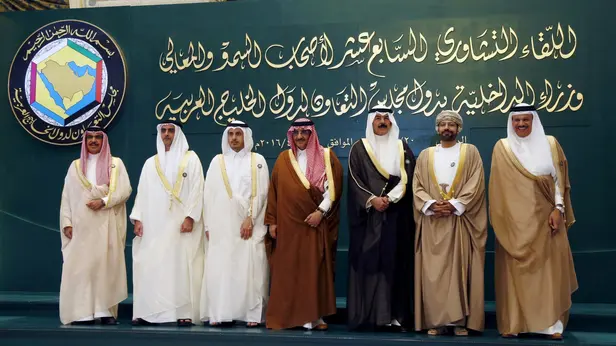
The Story of the Canceled Summit, or the End of Russian Influence in the Middle East
The entire Kremlin protocol prepared thoroughly for this historic event. The staff of St. George's Hall had already measured the exact intervals between the flagpoles of the 22 Arab states. The best translators from the Ministry of Foreign Affairs and the Presidential Administration polished every phrase of the future communique in three languages. FSB generals planned the routes for the motorcades of high-ranking guests. On October 15, 2025, Moscow was scheduled to host the first-ever Russian-Arab summit – a massive event intended to demonstrate that even amidst the most severe war and Western sanctions, Russia maintains its position in the Middle East.
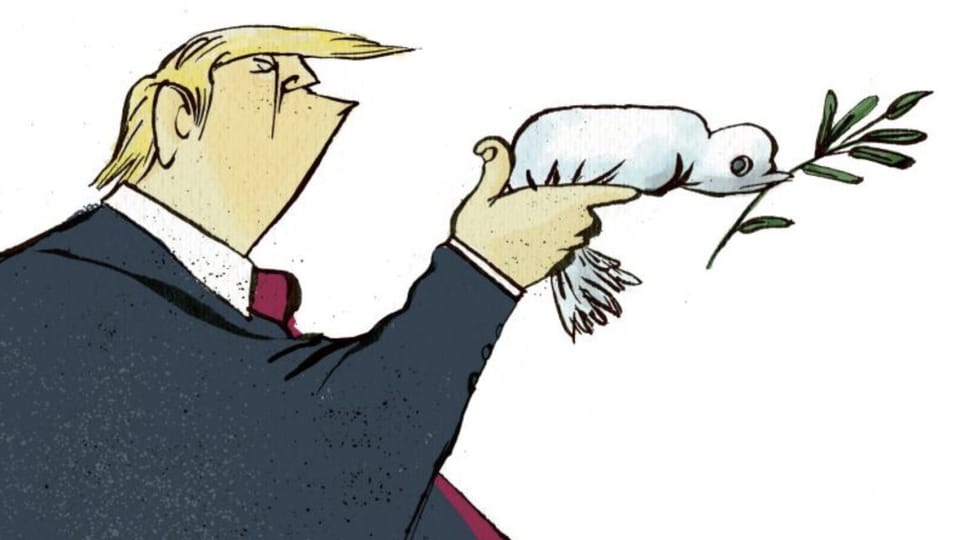
However, that meeting didn't happen. On October 10th – just five days before it was due to begin – the Kremlin shamefully announced the alleged "postponement" of the summit. According to the official, but no less absurd, version, Vladimir Putin made this decision so as not to interfere with the efforts of the Donald Trump administration to resolve the situation in Gaza. However, Bloomberg, for example, reported something completely different – of all those invited to the summit, only two confirmed their arrival in the Russian capital: Syrian President Ahmad al-Sharaa and Arab League Secretary-General Mohammed Soudani.
The cancelation of the Russian-Arab summit cannot be attributed to a routine organizational failure or a temporary postponement, as Moscow's official propaganda is desperately trying to portray it now. What we are clearly witnessing is a manifestation of a much more serious problem – over the quarter-century of Putin's rule, Russia has completely lost its influence in Middle Eastern politics. Behind the grand declarations about the alleged "return of the Russian presence to the region" lies a systemic inability to build working relationships with Arab states.
The roots of this geopolitical defeat should be sought not in unfavorable international circumstances, but solely in the internal flaws of the Russian foreign policy system – pervasive corruption, an acute shortage of qualified personnel, the absence of a long-term strategic vision, and – most importantly – the unacceptably low competence of the country's top leader in Middle Eastern affairs.
Russian President's aide Yuri Ushakov explained his boss's official position by saying that Arab leaders are allegedly uncomfortable leaving the region in the midst of American peacekeeping efforts in the Gaza Strip. So, they said they decided to postpone the meeting. Despite no Arab leader having made such a statement, Russian state media readily seized upon this interpretation, presenting the postponement as an example of Moscow's "diplomatic flexibility" and responsible approach. Thus, formally, the event hasn't been definitively canceled yet, but only postponed indefinitely – presumably until November 2025. However, conclusions can be drawn from this story right now – without waiting for Putin and Ushakov's November justifications. It's clear that the true reasons for the Kremlin's "diplomatic flexibility" lie solely in the unwillingness of two dozen foreign leaders to meet with a Russian war criminal.
It's all the more surprising that preparations for this summit lasted almost half a year. It wasn't until the beginning of October that it became definitively clear that Putin simply had no one to hold this meeting with – none of the Arab states, except for war-torn Syria, felt it necessary to respond to the Kremlin's invitation. To assess the scale of what happened, it's important to understand how ambitious the original plan was. The meeting between the Russian president and the leaders of all Arab League countries was conceived as the first full-fledged summit in history between Moscow and the entire Arab world in a "reciprocal dialog" format. This format involves an equal exchange of views at the highest level between the two sides – Russia and the entire united Arab bloc represented by the Arab League. Apparently, they decided to hold this event on the model of the Russia-Africa summits that have been held since 2019.
The Kremlin was clearly hoping to use this pan-Arab forum in Moscow to demonstrate that Russia allegedly remains an influential player in the Middle East and is playing a role as one of the centers of the emerging multipolar world order. For Putin, who constantly emphasizes the "end of the unipolar world" and Moscow's special role on the global stage, the successful holding of such a meeting was of immense importance from all perspectives – politically, symbolically, and in terms of prestige. The outcome was all the more painful and shameful. Such a large-scale public humiliation, of course, cannot be masked by any talk of "responsible diplomacy."
The depth and seriousness of the Kremlin's foreign policy failure should not be underestimated. It's important to understand that the cancelation of a summit of this kind – and at the very last moment – cannot be either an accident or a confluence of unfavorable circumstances. This is a natural consequence of Russia's long process of losing its real weight in the Middle East.
Putin's Middle Eastern Mirage: From Invitations to Shame
On April 22, 2025, Russian presidential spokesman Dmitry Peskov stated that a meeting of the leaders of Russia and all the states belonging to the Arab League will take place in the autumn – an unprecedented event in history. The idea of gathering the heads of all Arab countries in Moscow has been brewing, I suppose, for a very long time. Over the past decade, the Russia-Arab World Forum has convened foreign ministers six times, and in December 2023, during another meeting in Marrakech, Sergei Lavrov, on behalf of Vladimir Putin, finally proposed raising this dialog to the highest level.
In the spring of 2025, the Kremlin began to put its plans into action. President Putin personally sent invitations to the leaders of all 22 member states of the Arab League and the organization's Secretary-General, proposing their participation in the summit scheduled for October 15 in Moscow. Putin did not hide his ambitions, wanting to demonstrate to Western capitals, primarily US President Donald Trump, that Russia still enjoys support and influence in the Middle East.
The first signals appeared encouraging to the Kremlin. In May, Putin publicly expressed confidence that most Arab leaders had already accepted his invitation. By the beginning of autumn, preparations had entered their final stage – Moscow launched the official website of the summit, and a ministerial session of the "Russia – LAC" cooperation forum was planned for October 13th, the day before the meeting. In an interview with RT that aired on the morning of October 9th, Sergei Lavrov emphasized that the overwhelming majority of League countries plan to participate at the level of heads of state or government. And that already seemed strange back then, as by that time there were numerous signs of an impending collapse.
Despite invitations being sent to all Arab leaders without exception, neither Saudi Arabia nor a number of other key countries publicly confirmed their participation until the last week before the summit. Under these circumstances, the Kremlin inexplicably began to justify itself for the reluctance of its Arab partners to come to Moscow. Yes, on October 7, presidential aide Yuri Ushakov acknowledged that the final composition of the delegations is still fluctuating, linking this to the fact that many of the invited leaders have become involved in the implementation of the unexpectedly emerged "Trump plan" for Gaza. If we translate this statement from diplomatic language, Moscow itself has openly admitted that almost all of its Middle Eastern partners clearly prioritized other goals over the meeting in Moscow. And that was a catastrophic signal.
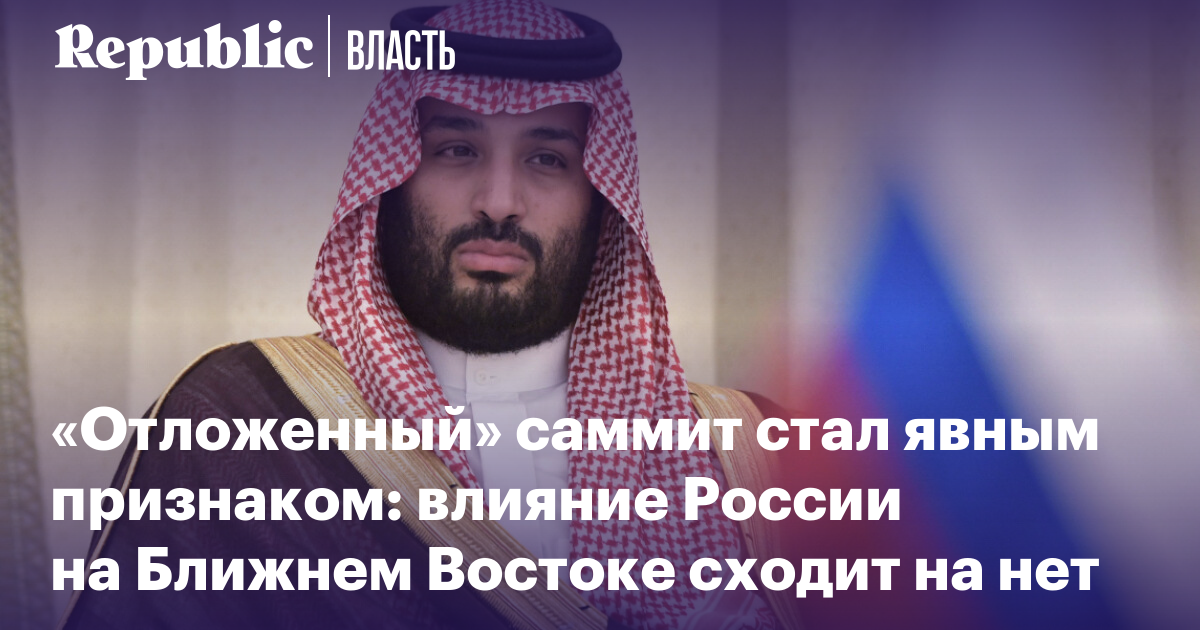
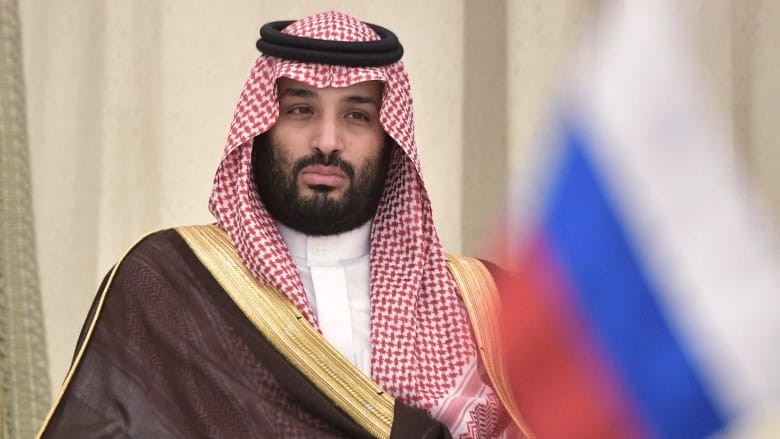
So, who exactly refused to come to Putin? And why is that so critical for him? Among those absent were, for example, the leaders of countries on which the geopolitical situation in the Middle East largely depends, as well as Moscow's traditional ties with the region. First of all, let's note that Crown Prince and de facto leader of Saudi Arabia, Mohammed bin Salman, ignored Putin's invitation.
The significance of Riyadh for Moscow is difficult to overestimate. Saudi Arabia is not only one of the leaders of the entire Arab world but also the world's largest oil exporter and a key partner of Russia in the OPEC+ agreements. In the context of Russian-Saudi relations, the summit was seen as an opportunity to consolidate the rapprochement of recent years. One need only recall the mutual visits of Putin and Prince Mohammed, the coordination of efforts in the oil market, and the dialog on Syria. However, Riyadh, presumably, reached the expected conclusion that the benefits of supporting Russia in the current situation are negligible, while relations with Washington, especially in light of the activation of the Donald Trump administration, require a very careful foreign policy balance.
Equally indicative was the position of UAE President Sheik Mohammed bin Zayed Al Nahyan, who had recently maintained close contacts with Putin and remained one of the few regional leaders who openly continued cooperation with Russia after 2022. Against the backdrop of the war in Ukraine, the Emirates have become an important hub for the Russian economy and logistics. Everyone thot that Abu Dhabi was very interested in deepening political dialog with Moscow. This makes Al Nahyan's refusal to go to Moscow even more significant, as it showed that even the countries most loyal to Russia prefer not to display excessive closeness with Putin at the moment, but rather to distance themselves from Moscow in favor of alternative centers of power.
Egyptian President Abdel Fattah al-Sisi also pointedly refrained from meeting with Putin. Egypt is the most populous Arab country and a long-standing partner of Moscow. One need only recall the strongest Soviet-Egyptian alliance of the last century, as well as modern cooperation in the military and energy sectors. Now it has become clear that this "ally" has also decided to act along the pro-American line and not deviate from the anti-Putin consensus that has formed among the most influential Arab states.
Jordan, a long-standing partner of Moscow in the Syrian settlement, also showed no interest in the summit, remaining in solidarity with the position of the Saudis and Egyptians. The largest gas exporter and a direct competitor to Gazprom, Qatar, was initially less enthusiastic about inviting Putin than many others. Thus, the absence of representatives from all the power centers of the Arab world at the Moscow summit already made Putin's event meaningless in terms of its stated goals. However, it was doubly humiliating for the Kremlin usurper that all the other Arab leaders also declined the visit to Moscow, except for the former Syrian terrorist who had only recently seized power by force and therefore needs any additional legitimacy.
Although the words "cancellation," "failure," or "shame" are understandably absent from the official Kremlin version, this feeling is clearly in the air for many. In this regard, it is quite noteworthy that, in explaining the sudden employment of two dozen potential "allies," the Russian authorities are specifically referring to the American plan for Middle East settlement, in the implementation of which Moscow is not participating at all. In other words, Putin, albeit reluctantly, is already effectively acknowledging the secondary role of his role in the Middle East – one of the key regions of the modern world.
From this, the conclusion naturally suggests itself that the failed Russian-Arab summit is a clear and very alarming symptom of a systemic crisis in Russian influence in the Middle East. The war against Ukraine has clearly diverted a significant portion of all those military, economic, and diplomatic resources that Moscow traditionally used to bolster its positions in Arab countries. The fall of Bashar al-Assad's regime in Syria at the end of 2024 deprived the Kremlin of a foothold around which a significant portion of its Middle Eastern policy had been built. At the same time, the United States and China have significantly increased their presence in the region.
Moscow's hasty attempt to demonstrate the strength of its long-standing positions in the Middle East unexpectedly turned into a demonstration of their almost complete absence. The supposed "postponement," but in reality the cancelation of the summit, showed how weakened the Kremlin's ability to influence the agenda in the Arab world has become, and how deep the process of degradation of Russia's foreign policy on the Middle Eastern track has turned out to be. And also how ineptly and disastrously Putin is losing the tough competition for this crucial region to other global centers of power.
Ashes of Lost Influence: From Superpower to Marginalized
To better understand the scale of the decline in Russian influence in the Middle East under Putin, it's worth remembering from what heights it began. During the Cold War era, the Soviet Union was one of the two main players in this region. Moscow consistently supported friendly regimes and movements there: Egypt under Gamal Abdel Nasser, the Syrian Ba'ath Party led by Hafez al-Assad, Saddam Hussein's Iraq, South Yemen, Algeria, and many others. Soviet military advisors trained Arab officers. Soviet engineers built dams, power plants, and hydroelectric dams in many Arab countries. Universities in Moscow, Leningrad, and dozens of other Soviet cities accepted thousands of students from Arab countries.
In the 1960s and 1970s, Arab socialism and Pan-Arabism flourished. Moscow seemed like a natural and reliable ally for many Middle Eastern leaders who were challenging Western influence. The Soviet fleet was constantly present in the Mediterranean Sea. The Kremlin has been involved in almost all the region's key conflicts on the side of its numerous allies.
Even after the collapse of the USSR, Moscow, having lost its former financial and military-technical capabilities, maintained significant influence and authority in the Middle East for a very long time solely on the momentum of its Soviet legacy. Vladimir Putin, upon coming to power in 1999, spoke extensively about Russia's revival as a great power. He proclaimed the Middle East as one of the priority directions of this revival. In the speeches of Russian diplomats, it was increasingly stated that Russia, as a traditional partner of the Arab world, is supposedly returning to the region.
However, Putin's loud rhetoric about multipolarity and Russia's special role in the Middle East has never been backed up by any real actions. In the 1990s and 2000s, Russia offered the region nothing comparable to what other major players were doing there after the collapse of the USSR. There were no large-scale economic initiatives like those promoted by China, investing billions in the region's infrastructure and energy; no independent peacekeeping plans capable of competing with the Americans; and no new "soft power" programs – cultural or educational presence. The only commodity Moscow could offer to the Middle Eastern market remained weapons. However, the US was already firmly dominant in that field, and Europe and China were increasingly becoming Moscow's competitors.
In 2005, in an attempt to regain influence in Damascus, Putin wrote off about 0 billion in Soviet-era debt owed by Syria. He also personally visited key capitals – from Algiers and Tehran to Ankara and Riyadh – offering to restore cooperation. Moscow has joined – albeit rather nominally – the Middle East Quartet for resolving the Israeli-Palestinian conflict. However, all these steps yielded very limited results. No Arab country viewed Russia as an equivalent replacement for the United States or a new security guarantor. The rhetoric about multipolarity largely remained a declaration – beautiful, but completely empty.
The 2011 Arab Spring dealt a serious blow to Moscow's weakening positions in the Middle East. The wave of popular uprisings and regime changes caught the Kremlin off guard. Putin did not expect the rapid fall of old dictator friends in Tunisia, Egypt, Yemen, and Libya, which was accompanied by a surge of democratic aspirations in many other Arab countries. He was clearly watching with concern as the West supported the protesters and, of course, couldn't help but see parallels between these events and the color revolutions in the post-Soviet space.
In Libya, Russia suffered a complete humiliation. She abstained from voting in the UN Security Council, effectively allowing the Western military intervention that led to the overthrow of Muammar Gaddafi, a close friend of the Kremlin. And although Moscow later openly regretted that miscalculation, fundamentally those events confirmed that Russia has long lost the initiative in the region and no longer has authority or influence there. And she's being actively pushed out of there by other players.
Against this backdrop, Putin's decision for direct military intervention in the Syrian war was born. By 2015, Syria remained perhaps the last place in the Middle East where Moscow could still claim the role of savior – the regime of Bashar al-Assad, the son of former Soviet ally Hafez al-Assad, was teetering on the brink of collapse under the onslaught of rebels and Islamist groups. In September 2015, Russia sent its expeditionary force to Syria, launching Moscow's largest military operation outside the post-Soviet space in the entire post-Soviet era at that time.
From the Kremlin's perspective, this was an attempt not only to save a long-standing ally but also to loudly announce Russia's return to the big game in the Middle East. In the early years, Putin's intervention even looked somewhat successful. The Russian Air Force launched massive strikes against the positions of Assad's opponents, turning the tide of the war in his favor. Russian advisors have effectively taken over the planning of Syrian army operations. By the end of 2017, government forces had recaptured major cities, including Aleppo. Moscow has concluded long-term agreements with Damascus on military bases – an air base in Hmeimim and a naval base in Tartus.
However, in reality, the military triumph in Syria turned out to be a "Pyrrhic victory." Moscow's long and extremely costly military presence has not translated into its sustainable political influence. Yes, Russia personally saved Assad and preserved his loyal regime in Damascus, but it has never been able to become an internationally recognized mediator, either in the region as a whole or even within Syria itself. Moscow's attempts to launch a parallel peace process – negotiations in Astana with Iran and Turkey – yielded a ridiculously meager result and ultimately, predictably, reached a dead end. Other people quickly took over Putin's initiative. Turkey began establishing its own order in northern Syria, while Iran consolidated its influence in the country thru Shia militias. The UN, with US support, systematically and consistently continued to lead its "Geneva Process" for Syrian settlement, paying no attention to Putin's "Astana format."
That "victory" didn't bring economic dividends either. War-torn Syria did not receive significant assistance from Russia in its reconstruction and did not become a major trading partner for Moscow. Putin failed to even ensure that commercial contracts for the post-war reconstruction of infrastructure went to Russian builders. Most of the tenders were won by Iranian and Chinese companies, leaving the Russians out of the picture.
In the end, the Syrian adventure did not make Russia a more attractive partner for the rest of the Middle Eastern countries. Rather, quite the opposite. By supporting Assad's Alawite regime, Moscow clearly sided with the Shia minority in a regional interfaith divide that is very fundamental for Muslims in the region. For the Sunni monarchies of the Persian Gulf, primarily Saudi Arabia, Qatar, and the UAE, the Russian intervention appeared to be a significant threat. After all, she saved their longtime enemy Assad, an ally of Iran, and in doing so strengthened Tehran's position. And these countries have been funding and arming the Syrian opposition for years, hoping to overthrow Assad, and therefore naturally viewed Moscow's actions as a direct challenge to their interests.
As a result, Russia's relations with Saudi Arabia and some other Gulf states deteriorated sharply in 2015–2016. Riyadh even refused dialog with Moscow on the Syrian issue, demanding that support for Assad be stopped first. Egypt and Jordan formally remained neutral, but they too no longer saw Putin as a defender of the Arabs, which was the traditional role of the USSR. To them, Putin seemed more like a marginal opportunist pursuing some personal goals rather than defending the national interests of their traditional ally, Russia.
The Syrian war, given new impetus by Putin, has divided the Middle East into two camps. And Russia found itself on the same side of the barricades as Tehran and Damascus, against most of the most influential Arab countries. This severely limited her already shrinking room for maneuver and dialog in the region.
By the early 2020s, the process of Russia's marginalization in the Middle East had become evident to everyone. All the key regional shifts were already taking place entirely without Moscow's involvement. In September 2020, under the direct mediation of the United States, the so-called "Abraham Accords" were signed – historic agreements normalizing relations between Israel and a number of Arab states: first with the UAE and Bahrain, and later also with Morocco and Sudan.
This breakthrough overturned many previous assumptions about conflicts in the Middle East, ushering in a new era of alliance between Israelis and Arab countries. Russia wasn't even attempted to be involved in this process – Putin found out about those agreements after the fact, from the news.
Several years later, in March 2023, Beijing set a new high-profile diplomatic record. China, unexpectedly for many, mediated between Saudi Arabia and Iran, organizing their reconciliation and the restoration of diplomatic relations after years of animosity. What Putin had been unsuccessfully trying to achieve for decades – awkwardly balancing between Riyadh and Tehran, while losing influence over both – the Chinese managed in a matter of months. The Saudi-Iranian deal in Beijing demonstrated the emergence of a new strong player in the region, while also showing how much the positions of the old players have weakened – primarily Russia, whose presence on this front was no longer even felt.
Meanwhile, the strategic situation for Moscow was further complicated by the war in Ukraine. Formally, almost all Middle Eastern governments have taken a neutral stance – no Arab country has imposed sanctions on Russia or severed relations. However, Putin didn't receive open support from any of them either. Rather, quite the opposite – Arab elites saw the Russian-Ukrainian war as a warning: just as the Kremlin brutally violated the sovereignty of a neighboring country, it could behave in other regions of the world as well.
Wealthy Gulf countries like the UAE and Saudi Arabia have cautiously distanced themselves from Moscow. While continuing economic contacts, such as buying Russian oil at a discount, they simultaneously strengthened ties with China, India, and most importantly, maintained a direct communication channel with Washington. Furthermore, Western sanctions have limited Russia's ability to invest and trade, making it appear economically unpromising to its Middle Eastern partners. Even within the oil cartel OPEC+, the relationships were distinctly pragmatic rather than allied. The Saudis have repeatedly made decisions based on their own interests, without taking Moscow's requests into account. Putin's influence was waning, and the war in Ukraine was quite enough to finally bury any hopes of her return to the region.
By 2024, Russia essentially had only one significant asset left in the Middle East: military bases and a political presence in Syria. But he too was suddenly and foolishly lost. In late 2024, Bashar al-Assad's regime in Syria fell under the onslaught of Islamists. Even the Russian military didn't help him at all. The rapid advance of the rebels and the economic collapse forced the former Syrian dictator to flee the country. This was a real geopolitical shock for Moscow. Assad's overthrow nullified all of Russia's strategic gains in Syria over the past decade.
Putin has lost his last formal ally in the Arab world. The fate of the Russian military bases in Hmeimim and Tartus is still unclear, but it is already evident that they will not enjoy the same regime of full favor from the local authorities as before. But Moscow's problems in the Middle East didn't end there. Assad's fall triggered other processes that intensified the marginalization of Moscow's position. Israel has sharply intensified its strikes against Hezbollah and pro-Iranian militias, and Iran, having lost an important foothold in Syria, has begun to drift even further toward China, pushing Russia into a secondary role even within the so-called "axis of resistance."
All of the above leads us to a clear conclusion: by the second half of 2025, Russia has definitively transformed into a "straw man" in the Middle East – a peripheral and insignificant player. Putin's opinion is now only taken into account by Arab countries insofar as Moscow still retains the right of veto in the UN Security Council. While all her actual Middle Eastern assets have long since depreciated.
Diplomacy Without Diplomats: From Primakov to Prigozhin
Why did Russia's presence in the Middle East fade so rapidly? I think one of the main reasons for this situation lies in the catastrophic shortage of skilled personnel. The once powerful Soviet schools of Oriental studies have long declined, and the circle of Middle East experts has critically narrowed. Among young diplomats and analysts, there are almost no one left who are fluent in Arabic, have a deep knowledge of the region's history, religion, and culture, and have a good understanding and feel for its social characteristics.
The Soviet generation of outstanding Middle Easterners has long since passed away, and no worthy replacement has emerged. A prime example of such a failure is the events of 2011, when the wave of protests of the "Arab Spring" caught Russian orientalists completely unprepared. The mass popular uprisings came as a complete surprise to them. Therefore, instead of a deep analysis of the internal socio-economic reasons for those events, they began to explain what was happening with conspiracy theories about the "machinations of Western imperialism."
Alongside the depletion of personnel, the institutional basis of foreign policy was also disintegrating. The Ministry of Foreign Affairs, increasingly stripped of its independence in decision-making under Putin, was practically paralyzed by the end of his rule, having lost its capacity for initiative. Appointments to diplomatic positions in the Russian Foreign Ministry have long been made primarily based on personal loyalty, rather than professional qualifications. Due to experience and knowledge being predictably sacrificed for political reliability, the level of modern ambassadors, consuls, and special representatives on Middle Eastern affairs has noticeably declined compared to previous times. In the end, today's generation of Russian diplomats is, to put it mildly, very far from the scale of Yevgeny Primakov.
The decline also affected the very culture of diplomatic language. Previous channels of interaction with foreign partners have significantly weakened and even collapsed due to Moscow's official rhetoric increasingly resorting to primitive propaganda clichés. We can clearly see how the vocabulary of government statements in recent years increasingly resembles the ideological clichés of the late USSR. The coarsening of style goes hand in hand with a loss of diplomatic subtlety. It is being replaced by almost aggressive market-style insults from Russian representatives, even at the UN.
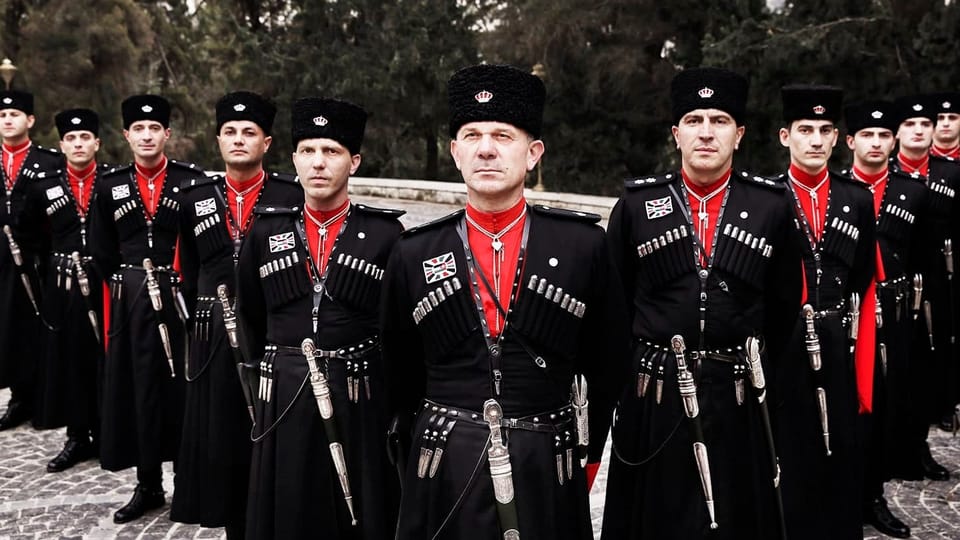
Moreover, in recent decades, the Russian Ministry of Foreign Affairs has systematically lost its monopoly on conducting foreign policy activities. Under Putin, almost anyone could become a "diplomat" – meaning individuals authorized to conduct foreign affairs – from close associates of Chechen leader Ramzan Kadyrov who appealed to Muslim identity, to war criminals among the mercenaries of Yevgeny Prigozhin. Their shadow connections, controlled by the special services, increasingly pushed professional diplomats to the background each year. As a result, traditional channels of communication with Middle Eastern governments atrophied, and the value of institutional expertise unnecessarily plummeted to zero.
Finally, it is impossible not to mention the decomposition of the foreign policy decision-making process in Russia itself, which is particularly evident in the Middle Eastern direction. Key decisions under Putin became highly personalized. Today, they are being received by a narrow circle of people led by the president, bypassing all established institutional mechanisms. Backroom dealings and secret agreements have long overshadowed public diplomacy and professional expertise. Decisions are almost always made based solely on personal relationships and secret personal deals. For example, Vladimir Putin's direct contacts with the Crown Prince of Saudi Arabia or the President of Egypt have long replaced systematic work with these countries at all levels.
At the same time, there is a lack of healthy feedback within the Russian system of public administration. A climate of fear and loyalty has long been established within Putin's state apparatus, where subordinates are afraid to report unpleasant news or failures to their superiors. After 2022, these trends have only worsened.
Even in private conversations, Foreign Ministry employes now show extreme, almost painful, caution, competing to demonstrate ostentatious agreement with the official line and personal loyalty to their superiors. Since any unwanted information, criticism, or doubts are carefully suppressed in such an environment, management always receives only a whitewashed and highly distorted picture. The degradation of Lavrov-Putin's Foreign Ministry has long deprived it of the ability to adequately understand what is happening in the Middle East and to fully interact with the region. As a result, modern Putinist diplomacy is simply institutionally unable to compete with the foreign ministries of other countries – neither in soft power nor in hard power.
The End of Illusions: The Decline of Kremlin Influence in the Middle East
The empty halls of the Kremlin, meticulously prepared for the first Russian-Arab summit that never took place, became a vivid metaphor for Vladimir Putin's entire Middle Eastern policy. This is not just a diplomatic failure, but public evidence of the end of an entire era. That era when Moscow could still claim to be an influential player in the Middle East, and Arab leaders, out of respect or caution, pretended to take its opinion into account. Eras of illusions that the Kremlin carefully cultivated and broadcast to its domestic audience. On October 10, 2025, that era ended – quietly, almost unnoticed by the general public, but completely obvious to those who follow regional politics.
This was the natural outcome of twenty years of degradation of Russian influence in the Middle East. Over Putin's years in power, Russia has gone from bold ambitions to reclaim its lost Soviet heritage to its current state of total marginalization. And the reasons for this failure lie not in external hostile forces, but in Putin's flawed system, within which the Russian foreign policy machine has been decaying from within for years. Systemic corruption, a shortage of professional staff, the lack of a consistent strategy, and competent analysis of the region have led to the complete degradation of what was once one of the best schools of Middle Eastern studies and Arabic in the world. It's clear that under such conditions, any of Moscow's foreign policy initiatives are doomed to failure from the outset.
Putin bears direct personal responsibility for the current situation. His Middle Eastern failure is objectively neither an isolated nor the last such instance. It fits quite logically into the broader context of Russia's overall decline in global standing. Even in the post-Soviet space, where Moscow's influence was recently considered absolutely unquestionable, we are already seeing a similarly rapid loss of its last levers of influence. No matter which region you take, Putin's foreign policy model is rapidly losing stability everyplace. And this is clearly a deep structural shift that will solidify the foreign policy decline of Putin's Russia for a long time to come.
 Сергей Коняшин