A Dozen Stars, Three Arrows, and One Enormous Dream of an Ancient People
Among the many place names in the vicinity of my hometown of Novorossiysk, one tiny settlement particularly caught my attention. Its unusual name stood in stark contrast to the names of the former Cossack villages surrounding it – Kirillovka, Vasilievka, Borisovka, etc. That village is called Ubykh. This short, explosive word with obviously non-Slavic phonetics constantly captured my imagination as a child, and I always wondered where such an unusual name could have come from among the many other deliberately Russian place names? And one day I was told a very beautiful legend...
The Forgotten People of the Black Sea Coast
Long ago, long before the Russians came to the lands of my small homeland – the northeastern Black Sea coast – the Ubykh tribe lived here. They were pagans and worshipped two deities: Bodh and Bydha, the embodiments of the male and female principles respectively. The stone statues of these deities were erected by the Ubykh ancestors on the summit of a high mountain under a sprawling ancient oak tree. And there, for many centuries, the Ubykhs performed their rituals in honor of Bodh and Bydha.
In the early 19th century, the Ubykh leaders decided to convert to Islam. Arab Muslim preachers who arrived in our land demanded the destruction of the stone statues of Bodh and Bydha as pagan idols and the construction of a mosque in their place. The Ubykhs, who did not want to completely break with their ancestors' heritage, resorted to a trick. During the idol destruction ceremony, which took place in the presence of Muslim preachers, they broke large stones that were part of the Bodha statue into small pieces and scattered them all over the slope of their sacred mountain with colorful dances and loud songs. By doing this, they distracted the Arab guests' attention from the absence of the second, smaller Bydha statue. The Ubykhs had hidden it in advance by burying it in a secluded spot.
After the ritual was completed, the mountain sacred to the Ubykhs was renamed "Kaaba Bakhakh." Translated from their language, it meant "looking towards the Kaaba" – the holiest site in Islam, located in Mecca within modern-day Saudi Arabia. However, as soon as the deceived Muslim preachers left for home, the Ubykh were attacked by a very strong, fierce, and incredibly cruel enemy – numerous conquerors from the north: the Russians.
All the tellers of this legend agree that the Russian army came to the Ubykh lands as punishment. However, different reasons are given for this punishment. Muslims believe that in this way, Allah punished them for their attempt to preserve the former pagan idol after converting to Islam. On the other hand, proponents of ancient Ubykh beliefs believe that the adoption of Islam, which was foreign to the Ubykhs, angered their traditional gods. Regardless, the Ubykh lands were devastated so severely and so quickly that few managed to escape.
The vast majority of them were brutally massacred by the Russians during their numerous genocidal campaigns in the 19th century across the territory of modern Kuban and the Black Sea region. The few survivors fled south to the territory of the then Ottoman Empire under the protection of their fellow Turks. Since then, the centuries-old presence of the Ubykh people on our land is only remembered by the village of the same name in the suburbs of Novorossiysk. The mountain's name, "Kaaba Bahakh," was Russified with the arrival of the occupiers – it is now called Kabakhakha. It's symbolic that the largest cemetery in the vicinity of Novorossiysk is located there today.
According to legend, the Ubykh people, who lost their homeland, still pass down the ancestral covenant from generation to generation. It is that if one of them manages to find the Bydha statue hidden two centuries ago in the vicinity of modern Novorossiysk and finally destroy it, then the occupation of their land will end – they will be able to return and rebuild their state.
The Ubykh tribe belonged to the Circassian, or Adyghe (Adyghe is the self-name of the Circassians), people who at that time inhabited the entire area from the Black and Azov Seas in the west to the Caspian Sea in the east. For example, according to another legend, during the conquest of the area around modern Novorossiysk by Russian troops, one soldier, horrified by the atrocities committed by his army against the local population, deserted his regiment and joined the Circassian tribe whose aul was located in the mountains beyond the "Seven Winds" pass. Modern Novorossiysk residents are well acquainted with this pass thanks to one of the best observation decks above the city. When Russian troops destroyed this aul along with others during another raid and found their fugitive there, they arrested him and took him with them to the then-military fortress of Novorossiysk (which was later to become the modern city of Novorossiysk).
Before leaving, the Russians, as usual, brutally executed all the boys and men without exception, and raped many girls and women. The young wife of the Russian defector, whom he had managed to marry during his short time among the Circassians, grabbed a weapon (according to one version, a saber; according to another, a rifle; firearms were also widespread among the highlanders by that time) and rushed in pursuit of the departing column of Russian troops. It's hard to say what she was hoping for – whether to seriously free her beloved or simply to avenge the occupiers – but thanks to an unexpected attack on the convoy, she managed to kill several Russian soldiers. However, in an uneven fight against an entire military detachment, she, of course, had no chance. She was killed on that road, her body pushed over a cliff, and her newlywed husband, a Russian soldier who had defected, was executed by firing squad in front of the troops in the military fortress that evening.
After that incident, according to legend, inexplicable things began to happen when passing through the "Seven Winds" pass, where a young Circassian woman fought an unequal battle against Russian soldiers. For no apparent reason, Russian soldiers began falling from cliffs and dying there, military supply wagons were breaking down and rolling into the ravine, and even high-ranking officers were dying right in their saddles on the march. After a while, rumors began to spread around the area that during such incidents, someone had allegedly seen a white silhouette darting quickly from side to side in the thick fog that enveloped the mountain pass – the ghost of a local girl who continued to avenge her beloved against the Russian military.
This is how the "Legend of the Circassian Woman" appeared in Novorossiysk folklore – the restless soul of a young woman who still wanders the mountains around the city. This legend made such a deep impression on me as a child that I even used its plot – a local girl avenges the occupiers and dies in an unequal battle – in one of the episodes of my war novel "The Last Frontier" about the defense of Novorossiysk against the Nazi invaders in 1942–1943.
And these are just two of the most famous legends associated with the Circassians, from my hometown of Novorossiysk alone. In reality, there are many more of them. In the south of modern Russia, numerous legends about the Circassians still persist almost everywhere – because the memory of this ancient people literally permeates every inch of land here.
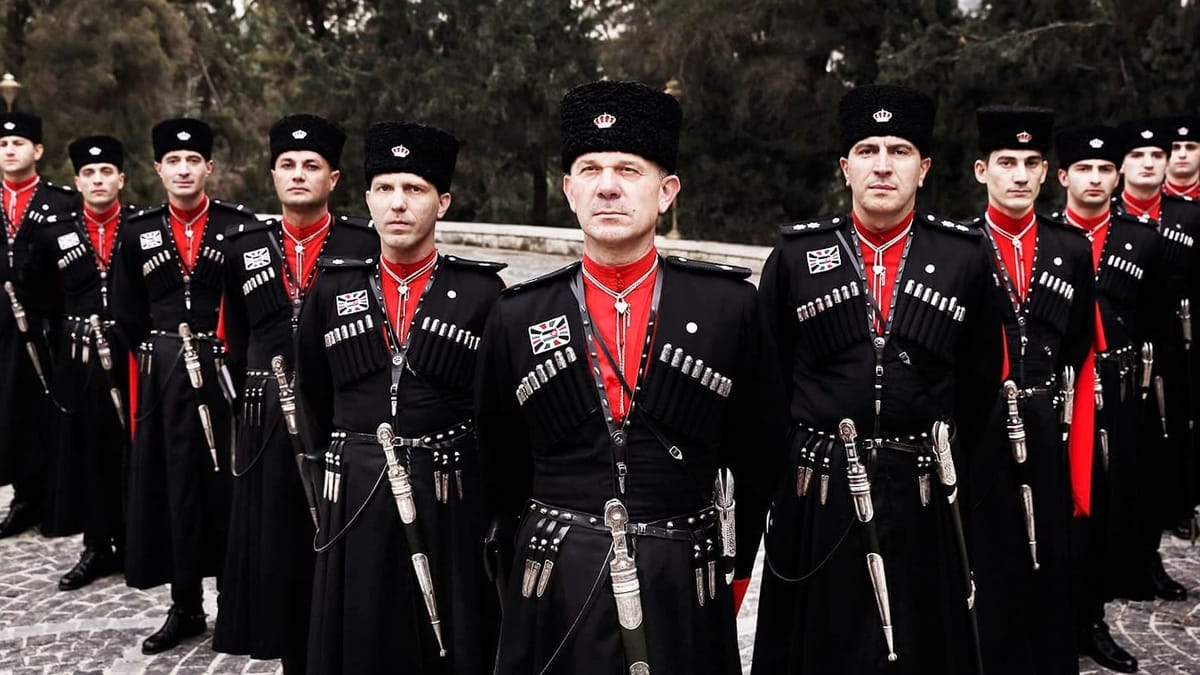
At the same time, in official Russian discourse, it's as if there are no Circassians and never have been. All military-patriotic education in the southern regions of Russia is reduced exclusively to glorifying the predatory exploits of Russian Cossacks who conquered this land for the Russian Empire. Cossack culture and history are even studied in schools in specially introduced lessons called "Kuban Studies." It is the Kuban Cossacks who are now being proposed as the alleged true masters of our land. Their units, in distinctive old-fashioned uniforms – derisively referred to by the locals as "masqueraders" – regularly patrol the streets of my hometown of Novorossiysk, as well as many other cities in the Russian Black Sea region, as if embodying a second aspect of local law enforcement alongside the regular Russian police.
Therefore, it's not surprising that almost no one, even among my fellow countrymen, unless they are specifically interested, usually knows anything about the history of the indigenous population of their small homeland. The local authorities are seemingly burning out any memory of the Circassians among the population of southern Russia, whose ancestors lived here for millennia before the arrival of the Russians.
I clearly remember that when I came to study at a Moscow university after graduating from school, there was a guy named Aslan from Kabardino-Balkaria in my academic group. He lived in the room next to mine in the student dormitory. When I first visited him, I saw a huge green flag with twelve golden stars and three crossed arrows hanging above his bed.
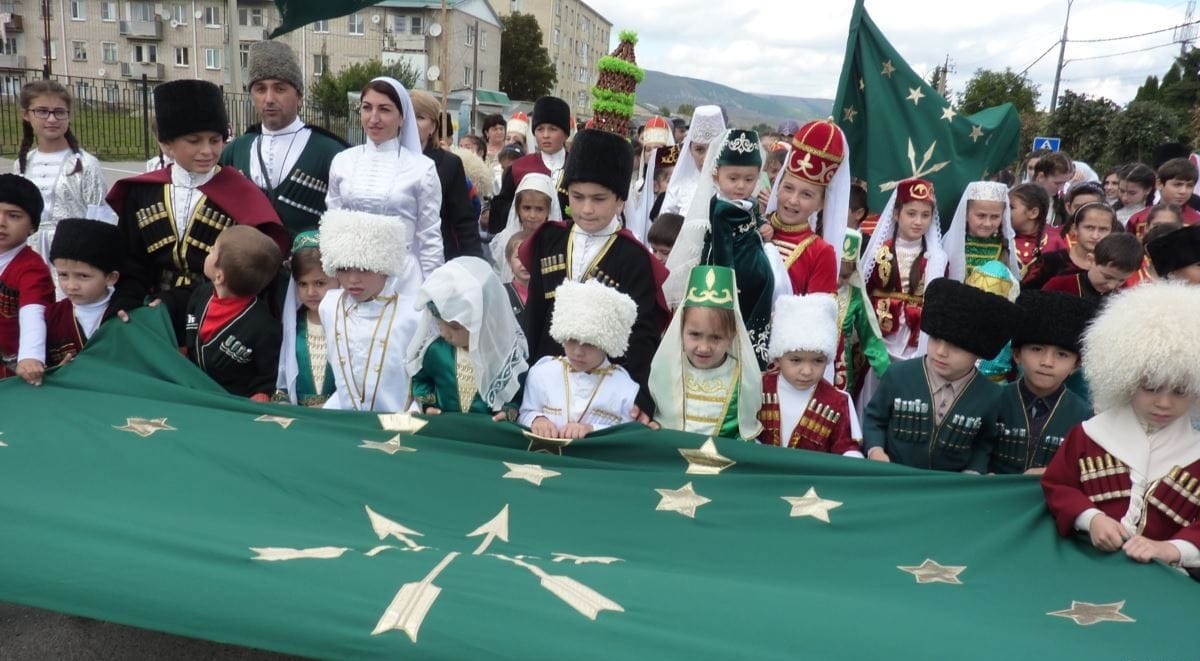
I used to only see this flag on government buildings in Adygea – a national republic within my native Krasnodar Krai. Of course, I asked my classmate why he had hung a flag from a region other than his own above his bed. And Aslan explained to me that this is the flag not only of the Adyghe people, whom I know from my neighborhood in his native Novorossiysk, but also of his entire vast Circassian, or Adyghe, people, to whom, with rare exceptions, almost the entire indigenous population of the Western and Northern Caucasus belongs. To my shame, I didn't know all of this back then – even though I was born and raised on ancient Circassian land. For me, the history of my small homeland, according to our generally accepted canons, always began only in 1838 – from the moment the Russian military fortress of Novorossiysk was founded on the shores of Tsemes Bay. And what was happening on our land before the beginning of the second third of the 19th century, no one ever told us – neither in schools nor in the city media.
In general, the Russian authorities made considerable efforts not only in seizing this land and committing genocide against its indigenous population, but also in trying to erase the centuries-old history of the Circassian people, who were partially exterminated, partially expelled, and partially enslaved by them. And today, this history has been crudely replaced by popular tales about Kuban Cossacks – Russian invaders and occupiers who only entered the Black Sea region at the end of the 18th century.
Circassian Golgotha
In 2014, Russia hosted the Winter Olympic Games in Sochi. The international community was quite surprised when this seemingly routine sporting event was suddenly met with a wave of protests – albeit small in number, but extremely persistent. In various countries, they were raised by activists from Circassian communities, who directly reproached all of humanity: "You ski and celebrate your sporting victories on the site of mass graves of the victims of our people's most terrible genocide, which claimed the lives of over a million innocent people!" The tragic symbolism of that situation was heightened by the fact that the year of the Sochi Olympics coincided with the 150th anniversary of the last desperate battle of the Circassians against Russian troops. That battle, which finally secured the power of the Russian Empire over the last stronghold of Circassian resistance in southern Kuban, took place in 1864 precisely where the Olympic venues now stand.
So, why did Russia so ruthlessly wipe hundreds of Circassian villages off the face of the earth, turning the Black Sea coast into a vast mass grave for an entire people? There are many reasons for this, but to list the main ones, it's worth first understanding who the Circassians are in general.
Historically, the Circassian ethnos was formed from several ancient peoples whose common history dates back to the time of the Hittite kingdom. The Hittites' homeland was likely the Balkans, which they left around the end of the 3rd millennium BC. During several waves of migration eastward, the Hittites reached Asia Minor (the territory of modern-day Turkey), but their further route south along the eastern coast of the Mediterranean Sea was blocked by Ancient Egypt.
After a prolonged period of Hittite-Egyptian confrontation, in the second half of the 2nd millennium BC, the Hittite ethnos disintegrated. Some of its parts migrated north. One of them, called "sea-faring Hittites" by the Greeks: the Cercetae (Greek: κερκέται - literally: rowers), crossed the Black Sea and, mixing with local tribes, settled on its northern shore. The modern ethnonym "Circassian" is a distorted Italian pronunciation of the Greek word "kerkete." It became established in European tradition as the name for the Circassians in the Middle Ages, when Genoese merchants were actively trading with the northeastern Black Sea region.
By the beginning of the 19th century, there were over one and a half million Circassians. They lived in semi-nomadic tribal communities across almost all of the Western and partially the Northern Caucasus. Power belonged to the councils of elders, who could summon the chiefs of all tribes and clans in times of danger. However, such a union was always temporary and extraordinary in nature. Each Circassian tribe preferred to live in isolation and highly valued its independence. Therefore, any general decisions could only be made with complete unanimity.
The economy of Circassia was quite diverse. Its foundation was mountain cattle breeding, which made most Circassians nomadic. Some tribes living in small towns on the Black Sea coast actively traded with foreign countries. One of the most popular goods in local markets at that time were slaves, as historically the Circassians were heavily involved in the slave trade between the Russian and Ottoman empires. Yes, the name of the popular Russian resort of Gelendzhik translates from Turkish as "little bride" – that's where the Circassians usually resold Slavic girls bought in the north into slavery to Turkish merchants.
By the 19th century, most of Circassia had adopted Islam, although elements of ancient pagan beliefs were firmly preserved in many tribes – for example, the ancestor cult remained widespread. In the end, for the Orthodox Russian Empire, the Circassians seemed like completely alien people – culturally, religiously, and socially.
Catherine II had plans to conquer Circassia as early as the late 18th century. Their main goal was to gain full control over the northeastern coast of the Black Sea – a strategically important region at that time. To implement these plans, Russia, as always, chose not diplomacy, not cultural or economic interaction, but the only path it knows: direct military violence. The freedom-loving population, who essentially lived under a unique form of European-style representative democracy (a collective inclusive body – the council of elders), and who would never have submitted to the sole rule of the Russian Tsar, were labeled barbarians and savages in St. Petersburg, hostile to the entire Christian Russian world.
In 1817–1818, the imperial army under the command of General Alexei Yermolov carried out the first massacres of Circassians during its punitive expeditions to the south. After all the captured Circassian warriors refused to cooperate with the Russian troops – specifically, to accompany Yermolov's detachments into the lands of other Circassian tribes – the general ordered them to be brutally tortured to death, after which he completely burned their captured villages, seized all their property and livestock, and gave the women and girls to the Russian soldiers for their amusement. However, compared to what awaited the Circassian people in the future, even these crimes by the tsarist troops didn't seem like the height of cruelty.
Throughout the 1820s, the Russians significantly scaled up their previous genocidal practices and invented new ones – in particular, they deliberately spread epidemics of plague and other terrible diseases among the local population. By the early 1830s, hundreds of Circassian villages had been deserted, and almost the entire Western and Northern Caucasus was ablaze with the Russian invasion. Numerous partisan detachments arose throughout Circassia, who heroically resisted the occupiers.
However, if Russia had not formally owned Circassia before and therefore had no legitimate rights to it, the situation for the Circassians worsened significantly after the conclusion of the Treaty of Adrianople with the Ottoman Empire in 1829, according to which the Russian Emperor officially gained control of the entire northern Black Sea region. Their armed clashes with the Russians formally ceased to be a national liberation struggle against foreign aggression and were henceforth viewed as Russia's internal affair to suppress a local rebellion on its own territory.
Therefore, the 1830s predictably brought only a significant increase in violence to the region. Russian influence has noticeably strengthened. More and more Tsarist troops were being sent to the Caucasus in large numbers, often consisting of disgraced soldiers and even criminals sentenced to imprisonment. In 1840, the Russian fleet managed to completely blockade all Circassian seaports. The supply of the rebels by European countries sympathetic to them – primarily England and France, as well as their co-religionist Turkey – was completely cut off. Famine has begun in Circassia. To exacerbate it, Russian troops systematically and deliberately destroyed the crops and food supplies of the local tribes. Simultaneously, the first attempts at spot and often forced settlement of the territory of Circassia by Russian peasants began.
A brief hope for salvation flickered after the Crimean War (1854–1856), in which Russia's defeat led to the temporary withdrawal of its troops from the Caucasus. Western powers attempted to resume support for the highlanders' liberation struggle against Russian occupation. However, it quickly became clear that by that time, as a result of the most severe genocide that had been ongoing for several decades, the economic, human, and consequently, the defensive potential of the Circassian people had been hopelessly undermined. Having recovered from the Crimean defeat and completed the crushing of Chechnya, Russia returned to the Western Caucasus with even more significant military forces than before. Some Circassian tribes, realizing the futility of further resistance, were forced to sign a surrender in exchange for their lives being spared. Many others went into the mountains, intending to continue fighting until they died.
In the early 1860s, the final cleansing of what was now essentially the former Circassia from the last pockets of popular resistance began. General Nikolai Evdokimov, known for his radical nationalist views, burning hatred, and fanatical cruelty towards everything non-Russian, was demonstratively appointed as the leader of the decisive punitive campaign. However, even his brutal massacres of the remaining Circassian detachments did not intimidate the highlanders or break their resistance. This only angered the general even more.
When Alexander II finally considered ending the bloodshed in Circassia and accepting its inhabitants as his subjects without mandatory expulsion from their historical lands in September 1861, Evdokimov quickly dissuaded the Tsar and firmly insisted on the continued extermination of the Circassians. In fairness, it should be noted that the emperor himself didn't insist too much on his humanistic plans and readily agreed with Evdokimov's arguments. Therefore, from the end of 1861, the Russian army resumed the cleansing of Circassia with renewed zeal, still burning entire villages, killing or driving out all their inhabitants, and also building new Russian settlements and military forts everywhere.
The widespread "Evdokimov" tactic was as follows. Military intelligence located a mountain valley with several villages and directed the main Tsarist troops there. The Russians completely burned down all the Circassian settlements they found there, exterminated everyone they could find in them, and pretended they were leaving. A few days later, they returned to the same place in a swift march and finished off those who had previously been lucky enough to hide somewhere. And this continued until the Russian soldiers stopped finding any living people at all in the ashes of the burned-down villages.
1864: How did Circassia disappear?
Everything we know today about the tragedy of the Circassian people, we know exclusively from the military documents of the Tsarist army. The Circassians themselves were unable to pass on any written heritage to their descendants or preserve it for historians, for understandable reasons. However, even what we find in Russian sources that have undergone thorough censorship and are permitted for study is enough to be horrified by the incredible scale of the occupiers' completely unjustified animalistic cruelty and to develop boundless respect for the heroism of the defenders of Circassia, many of whom fought to the last, even when all hope was lost.
The highlanders always bravely held back the advance of Russian troops on their villages, even if this resistance only helped them gain a few minutes for their wives and children to escape into the mountains or hide from the invaders. If the Russian attacks caught them unarmed, they would charge the enemy bayonets even with their bare hands. In their diaries and memoirs about the Caucasian War, Tsarist officers often described how Circassian fighters, unwilling to surrender under any circumstances, died of hunger and cold in stone gorges with their rifles clutched tightly in their hands, hoping until the very last moment to fire a final shot at the enemy.
The last major battle between the remnants of the Circassian resistance and the Tsarist troops gathered from across the Russian Empire took place on May 27, 1864, at the site of present-day Krasnaya Polyana. Due to the extreme scarcity of the remaining mountain troops, Circassian women melted down their jewelry into daggers and stood in line with the men. It's clear that in that battle, the Circassians were no longer fighting for victory, but simply to avoid becoming slaves, dying with weapons in their hands. Realizing the irreconcilability and defiance of the highlanders, the Russians took no prisoners and killed them all to the last man.
At the same time, thousands of exhausted Circassian mothers with young children, disabled people, and the elderly were heading towards the coast in the hope of crossing to Turkey by ship, boat, or even makeshift rafts. To survive, many of them ate only tree leaves for months. Famine, typhus, smallpox, and other diseases that raged among the refugees wiped out entire families and clans. Thus, in the cold winter of 1863–1864, when hundreds of thousands of Circassians were crowded into overcrowded ports lacking food, medicine, and ships, at least several thousand people died each week. And waiting for the coveted departure to Turkey in such conditions could take months.
Transport ships were sometimes so overcrowded that some of them capsized from being overloaded and sank right in the harbor. However, even in the overcrowded holds of the ships that did manage to set sail, there was a real hell. Due to overcrowding, cold, hunger, unsanitary conditions, and rapidly spreading diseases, the death rate among passengers often reached levels comparable to the transatlantic slave trade. Of the nearly one million Circassian refugees, at least one in four did not reach Turkey. It was during this time that most of the Circassian tribes were finally and irrevocably destroyed – along with all their unique cultures, traditions, ways of life, and, of course, the unique dialects of the ancient language, which scholars from all over the world are now trying to reconstruct bit by bit.
1864 is considered in Russia the year of the triumphant conclusion of the so-called "Caucasian War." This is how Russian schoolchildren are taught – including in the south of Russia. For the Circassians, the indigenous population of those areas, this is the year the bloody genocide of their people ended. By that time, their historical homeland, the land of their ancestors – once free and flourishing Circassia – had been virtually depopulated and lay entirely in charred, bloodied, and desecrated ruins at the hands of Russian soldiers. In the coming years, Russia will actively populate the Western and Northern Caucasus with its new settlers, who know nothing about this ancient land, its indigenous inhabitants, or the thousand-year history of their peoples.
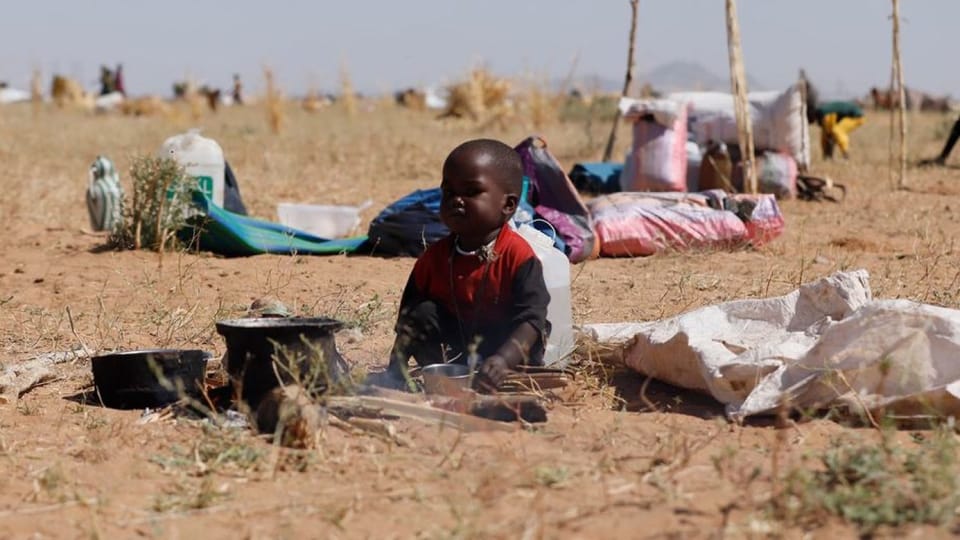
For the few descendants of the miraculously surviving Circassians, scattered today across the world from Turkey to Sudan, from Europe to America, the lost northeastern Black Sea region has always remained a homeland, albeit unattainable, but no less desirable for that. And the struggle to return to it has always been a significant part of their national identity. For them, Krasnaya Polyana will never be a popular Russian ski resort; it will forever remain solely a mass burial site for their unjustly killed ancestors – even if the rest of the world chooses to forget one of the most terrible genocides in human history.
A Chance for Rebirth
I am confident that if the numerous Circassian communities around the world were to unite and unequivocally declare their desire to recreate their lost homeland on historical lands, it would also bring many tangible benefits to the Russian-speaking majority who inhabit them today. In a situation where the Putin government is embroiled in a costly, protracted, and clearly losing war, the secession of southern Russia into a separate, Moscow-unaffiliated state could not only restore historical justice but also become a practical salvation for all residents of this region, regardless of their nationality.
Firstly, citizens of the new state would obviously not be threatened by any mobilizations or army drafts announced by Putin, followed by transfers to combat units fighting in eastern Ukraine. Instead of the constant fear of electronic summonses and Russian military enlistment offices, the citizens of independent Circassia would have a real prospect of returning to a full peaceful life, and its military would only be obliged to defend their homeland, not to wage an aggressive war of conquest on the territory of another country. This would be a very effective way to save the region from social decay and demographic catastrophe – many families would no longer be torn apart by mobilization or by humiliating poverty pushing fathers and husbands into the ranks of the criminal Russian army for the only possible income.
Secondly, any region that managed to secede from Moscow before the final defeat of Putin's regime in the Ukrainian war would have every chance of avoiding collective responsibility for all the terrible crimes brought to Ukrainian soil by the armed forces of the aggressor state, collectively perceived as "Russian." Therefore, when other regions, areas, and republics remaining within Russia begin to pay reparations to Ukraine from their meager budgets, suffocating under international sanctions, the citizens of a revived Circassia could very well have avoided all these problems – living in a free and open country, without losing their taxes and savings, without being included in international sanctions lists, without facing border closures, property arrests, and other similar issues that are already well-known to all Russians.
Thirdly, having gained at least partial recognition on the world stage, independent Circassia will be able to quickly regain access to global economic markets, banking systems, and international payment instruments. Her citizens will once again be able to use Visa, Mastercard, PayPal, and other similar services, freely order goods from abroad, send and receive money transfers, travel, and conduct business worldwide without restrictions. Not to mention that numerous indebted debtors, driven into financial bondage, will not only be able to but will also be obliged to stop repaying any of their debts to Russian banks the very next day after Circassia declares independence. Otherwise, they risk being included among the state sponsors of terrorism, with all the ensuing consequences.
Fourthly, strategically located on the Black Sea coast between several major countries, Circassia has all the prerequisites to quickly build its own sustainable and prosperous economy, deeply integrated into global business processes. The new state could successfully reorient itself towards the capital-intensive markets of the European Union, China, Turkey, and other global partners capable of offering broad trade, industrial, and investment opportunities.
At the same time, liberation from Moscow's predatory control and its all-pervasive corrupt pressure would also free up colossal internal funds – which are currently being simply stolen – that could be quickly directed towards the needs of education and science, healthcare, and social security. However, abandoning the military model of the economy in favor of establishing transparent and sound financial and monetary policies would significantly improve the new state's credit and investment ratings, especially against the backdrop of the rapidly deteriorating economy of the former metropolis. For the citizens of Circassia, this would mean an increase in the purchasing power of their salaries, price stability, protection of personal savings from devaluation, low inflation, and an overall improvement in the quality of life.
An equally important consequence for citizens liberated from the Moscow yoke would be their freedom from Putin's repressive apparatus as well. Drawing on the ancient proto-democratic traditions of Circassian society and modern liberal values, the new state could successfully build a just and inclusive political system where people of all nationalities and religions would no longer fear unlawful arrests, denunciations, and censorship, would be able to freely express their opinions and engage in politics without fear for their safety.
And all of this is just a small part of the reasons that make the idea of reviving Circassia not only historically justified, but also a completely timely and rational alternative to its dark and hopeless future within a dying empire.
 Сергей Коняшин