The Bear and the Dragon in the Sands of Southern Arabia, or the Role of Russia and China in Supporting the Yemeni Houthis
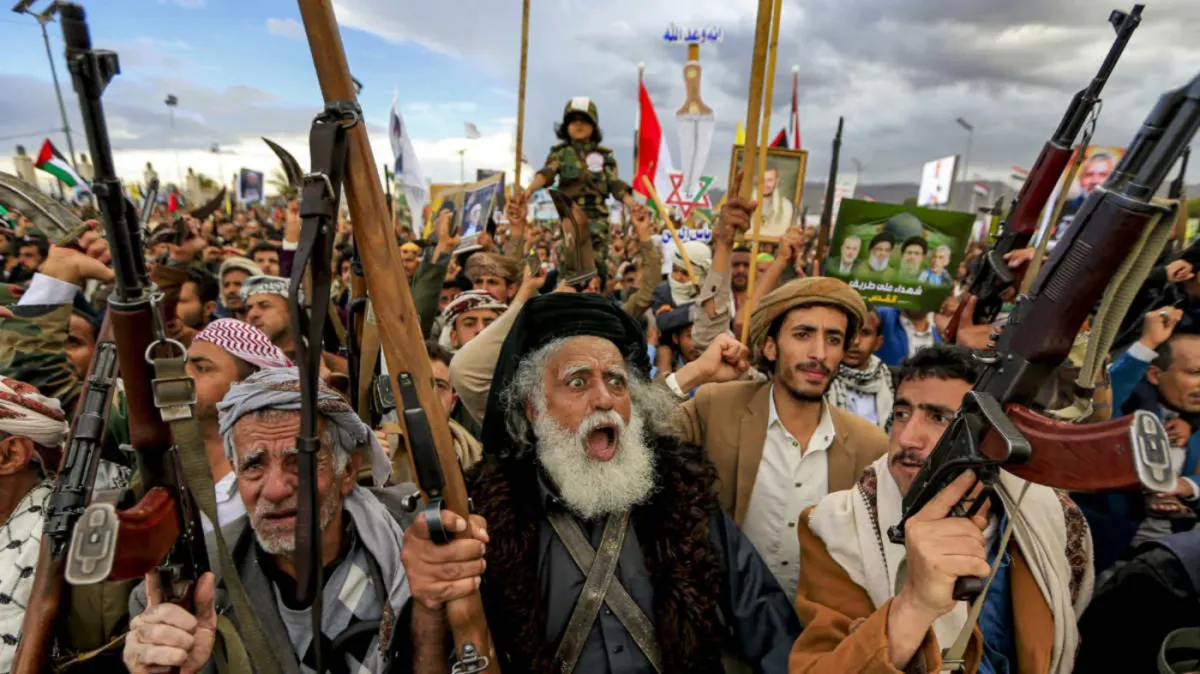
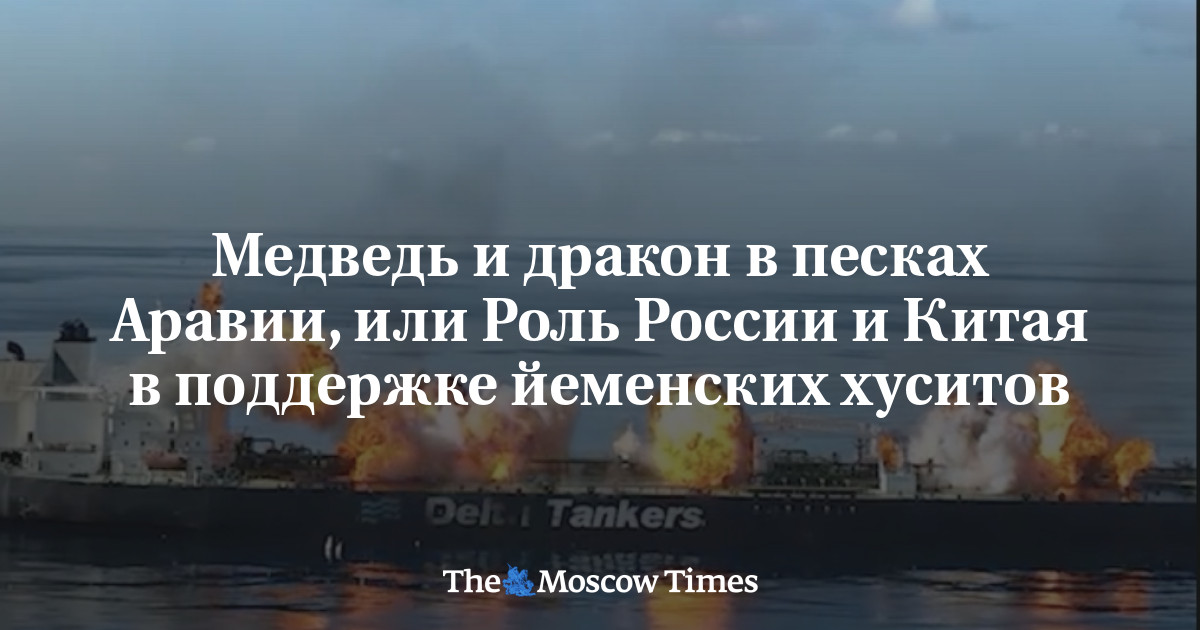
The consequences of the Israeli Air Force airstrike on Sana'a on August 28, which eliminated the Prime Minister of the Yemeni Houthis, Ahmad ar-Rahawi, along with almost his entire government (at least seven ministers), could extend far beyond the Yemeni theater and trigger significant global shifts. And it's not even about the potential escalation of Houthi retaliatory strikes on maritime shipping in the Red Sea, although that is also significantly impacting international trade.
The expansion of the Israeli practice of "beheading" from marginal terrorist groups like Hamas and Hezbollah to the state level (the Houthis control a significant part of Yemen, including the capital) fundamentally changes the usual rules of the modern geopolitical game. Firstly, this could push the broadly understood "Iranian" camp to raise the stakes and take asymmetric steps not only against Israel but also on many other fronts. Secondly, international support for the Houthis has long been limited to Iran alone.
In particular, the ongoing scandal since April 2025 surrounding the Chinese company "CGSTL," which Washington claims provided satellite images to the Yemeni Houthis to guide missile and drone strikes against US and allied ships in the Red Sea, increasingly confirms the conclusions that, for example, Beijing is gradually transforming from a cautious observer into a major shadow sponsor of the Yemeni rebels. Apparently, it's not far behind its Far Eastern neighbor and Russia, which also actively supports the Houthis, on the Southern Arabian track.
Of course, we are most accustomed to hearing about the close cooperation of the Houthis, primarily with Iran and its proxy forces. Therefore, the inclusion of Russia and China on this list may seem unexpected to many outside observers. And indeed, both Moscow and Beijing remained in the background in the Yemeni conflict for a long time, declaring neutrality and calling exclusively for a peaceful resolution to the problem. However, in recent years, both the communist Chinese and the fascist Putin regimes have begun to provide increasingly active support to the Houthis, significantly strengthening their military capabilities and effectively placing themselves on par with Iran as patrons of the Yemeni rebels. The reasons for this decision lie primarily in the strategic interests of both countries in the region and their global (though not joint, but separate) confrontation with the United States.
From Saada to Sana'a, or the Path of "Ansar Allah" to Power in Yemen
The Yemeni movement "Ansar Allah," more commonly known as the Houthis, has taken a rather interesting path from a small religious-tribal group in northern Yemen to one of the key forces in the modern Middle East. Over the decades of their existence, they have not only managed to survive a devastating civil war and establish control over a significant part of Yemen, but have also become a very significant factor in the current stage of geopolitical confrontation between leading superpowers. External support played a significant role in their successes – primarily from Iran, as well as a less obvious but growing involvement from Russia. Additionally, the covert support for the Houthis from the Chinese Communist regime has become no less significant to date.
The Ansar Allah movement emerged in the early 1990s in Saada province in northern Yemen. Its founder was the Islamic preacher Hussein Badreddin al-Houthi, from whose surname the group's other name, the Houthis, is derived. Initially, it was a small religious and educational movement of Zaydi Shia Muslims who sought to revive Islamic values and resist foreign (primarily Western) influence. Over time, the local community evolved and grew into a vast network with tens of thousands, and later hundreds of thousands, of supporters across northern Yemen. By the early 2000s, radical political slogans had become firmly established in the Houthi ideology. For example, their sarkha (war cry) is:
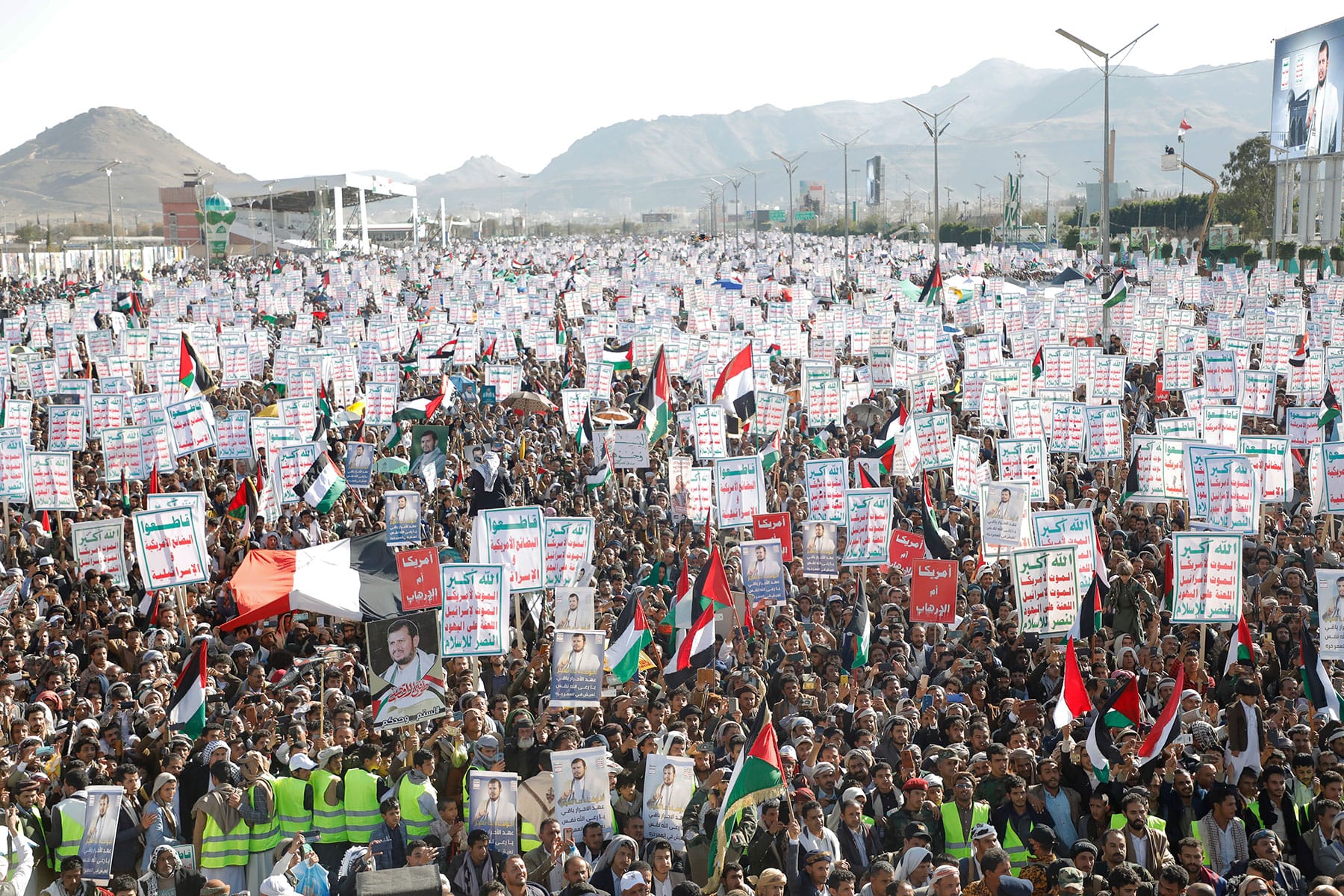
Allahu Akbar (God is Great)! Death to America! Death to Israel! A curse on the Jews! Victory to Islam!
Since that time, the Houthis have repeatedly engaged in bloody armed clashes with the central government of Yemen under the leadership of then-President Ali Abdullah Saleh. Yes, between 2004 and 2010, there were six full-scale wars between the Houthis and the Yemeni army. In the first of these, in 2004, Hussein al-Houthi himself was killed, becoming one of the most revered martyrs for the Ansar Allah movement.
However, despite unprecedentedly harsh measures by Yemen's military-political leadership, the Houthi movement not only survived but also significantly strengthened. By 2010, when I arrived in the Yemeni capital Sana'a as a Russian diplomat, a fragile truce had been established in the country after another round of fighting. By that time, the Houthis already confidently controlled most of Saada province and some adjacent areas, effectively creating their own autonomous quasi-state there. Even then, it was quite noticeable that they were acquiring increasingly modern weapons and equipment, the origin of which raised questions. Later, intelligence agencies from many countries discovered that the roots of this military power extended far beyond Yemen.
A radical turning point in the domestic political situation in Yemen – and consequently, the role of the Houthis in it – occurred during the so-called Arab Spring of 2011. Mass protests forced President Saleh, along with a number of other Arab heads of state, to resign. Power passed to a transitional government headed by Abd Rabbuh Mansur Hadi. State institutions have weakened, and the Houthis have taken full advantage of the power vacuum. They quickly gained the support of a segment of the population dissatisfied with the corruption and economic decline under the previous regime, significantly expanded their area of influence, and even formed a tactical alliance with their former archenemy, ex-president Saleh. In September 2014, the Houthis, with the assistance of a section of the army loyal to Saleh, made a swift march south and captured the capital. The new president, Hadi, fled the country.
By the beginning of 2015, the rebels controlled all of Sana'a and a significant area in northwestern Yemen. This served as a wake-up call for neighboring Saudi Arabia and a number of other Arab countries. They clearly saw the success of the Houthis as the machinations of their fellow Shiite Iran and a significant threat to their own national security. In March 2015, Saudi Arabia led a coalition of Sunni states that launched a major military intervention in Yemen against the Houthis. The operation was named "Decisive Storm" and aimed to restore Hadi's government. Thus, a full-scale, bloody civil war erupted in Yemen with a clear geopolitical undertone – a confrontation between the Arab countries of the Persian Gulf supported by the United States on one side and Iran with its proxy forces on the other side, all on Yemeni soil.
Despite the fierce bombings and complete economic blockade, the Houthis managed to survive and consolidate their position in the captured territories this time as well. Furthermore, they quickly built up their military strength, transforming their guerrilla insurgent units into a well-organized armed force. By the early 2020s, the Houthis had effectively built their own state on the third of the former territory of Yemen under their control, with its capital in Sana'a and a full-fledged army of approximately 350,000 fighters. The remaining ports in the west of the country on the Red Sea (Hodeidah, Salif, etc.) gave them access to the sea, and thus to external aid and the ability to influence global trade routes passing through the Bab-el-Mandeb Strait.
Today, the Houthis openly position themselves as an integral part of the global Islamist "axis of resistance" – an unofficial anti-Western bloc uniting Iran, Lebanese Hezbollah, Palestinian Hamas, and other radical and terrorist groups of Muslim extremists.
Iran's foothold near Bab al-Mandeb, or Why Does Tehran Need Yemen?
Iran is known to be the oldest and most obvious external ally of the Houthis. Their alliance originated long before the current round of global confrontation in the Middle East. As early as the 1990s, some Houthi leaders (including direct representatives of al-Houthi's family) received religious education in Iran. However, until the late 2000s, neither Tehran nor the Houthis themselves confirmed the existence of any significant ties.
The situation changed significantly during the sixth Houthi war against Saleh's government in 2009, when the first evidence of Iran's direct involvement in supporting its co-religionists emerged. According to Yemen's counter-terrorism unit, that's when Tehran began seriously training and arming Houthi militants. With the fall of Yemen's central government in 2011, the last obstacles to full-fledged Iranian penetration into the ranks of the Ansar Allah movement also fell, and after the Houthis captured Sana'a in 2014, Iranian support became systematic.
Tehran quickly established supplies of modern weapons, training, and intelligence sharing with the former rebels in Houthi-controlled Yemen. These measures significantly strengthened the military capabilities of al-Houthi's heirs – they acquired sophisticated ballistic and cruise missiles, reconnaissance drones, and kamikaze attack drones, which were never before part of even the Yemeni army's arsenal. For example, as early as 2015–2017, the Houthis were actively using modernized Iranian Burkan-type ballistic missiles, Samad long-range drones, sea mines, and other high-tech weaponry that is not typical for a poor and underdeveloped country like Yemen. Tehran denies direct involvement in supplying the Houthis, but international military experts are unanimous in their opinion that without Iranian assistance, such a leap in the Houthis' military capabilities would have been impossible even in theory.
Iranian support for the Houthis is broad and diverse. Primarily, this is direct military aid – the supply of weapons and ammunition (smuggled in, bypassing the naval blockade), the transfer of technology and ready-made samples of missile and drone systems, and the dispatch of military advisors. According to Saudi Arabia and the United States, dozens of Iranian arms shipments destined for the Houthis have been intercepted in recent years, ranging from Kalashnikov rifles and anti-tank missiles to ballistic missile components and drones. Supplies often went through roundabout routes, such as via the Sultanate of Oman, which borders Yemen to the east, whose authorities often turned a blind eye to the transit. By the way, Oman acted as a mediator between Iran and the Houthis for a long time. Washington directly accuses Tehran of supplying the Houthis with missiles, especially after the rebels began shelling Saudi territory and merchant ships in the Red Sea.
In addition to weapons, Iran also provides the Houthis with significant financial and logistical support. In 2014–2015, direct flights were even operating from Tehran to Sana'a until the Saudis closed their airspace to them. This allowed the Iranians to transport equipment and people to Yemen in large quantities. Western intelligence agencies have repeatedly reported the presence of instructors from Iran's Islamic Revolutionary Guard Corps (IRGC) and Lebanon's Hezbollah in Yemen, who were training Houthi specialists in the use of complex weapons systems.
Strategically, Iran views the Houthis as an important element of its regional policy – part of the so-called "Shia axis of resistance" against the influence of the United States and its allies. Supporting the Houthis gives Tehran a number of obvious geostrategic advantages. Firstly, this creates a proxy front against Saudi Arabia on its southern border, forcing Riyadh to spend resources on a grueling war. The Houthis have repeatedly struck Saudi territory, shelling border towns and launching drones and missiles at Saudi oil facilities. As the most striking examples, one can recall, for instance, the attack on the Abqaiq and Khurais oil refineries in 2019, for which the Houthis claimed responsibility.
Secondly, through the Yemeni rebels, Iran gains significant leverage over international maritime trade routes. By controlling the southernmost stretch of the Red Sea coast, the Houthis have the ability to threaten shipping through the Bab al-Mandeb Strait – one of the key transportation corridors in the Eastern Hemisphere, through which approximately 12% of all global trade passes. For example, in 2023–2024, they repeatedly attacked tankers and cargo ships (under the pretext that they were carrying goods for Israel), effectively destabilizing shipping and forcing many companies to go around Africa via the Cape of Good Hope. This significantly impacted the economies of Iran's adversaries.
Thirdly, the Houthis are ideologically close and aligned with Iran. Although the religious dogma of the Zaydi Shia in Yemen differs slightly from the views of the Jafari Shia in Iran, their political goals largely coincide. Both groups oppose the US presence in the Middle East and deny the right of the "Zionist entity" – Israel – to exist.
Thus, Iran's role in the formation of the Houthi military-political machine is enormous. Without Iranian missiles, drones, and specialists, the Houthis would have been unlikely to not only withstand the attacks first from Saleh's regime and then from the Saudi-led pan-Arab coalition, but also to launch a confident offensive – specifically, to shell Saudi cities and the kingdom's oil infrastructure, and in 2023 even intervene in the conflict around Gaza by firing missiles towards Israel and starting to hunt merchant ships in the Red Sea.
At the same time, many analysts note that the Houthis still retain significant autonomy in decision-making and, in this regard, represent a more equal partner for Tehran than its other proxies, such as Hamas or Hezbollah, over whose decisions Iran had almost complete control until recently.
The Shadow Coalition, or Moscow's Secret Game in Yemen
Russia's policy in the Yemeni conflict was initially relatively neutral and pragmatic. Moscow has traditionally maintained relations with all sides – the official government, the southern separatists, and even unofficially with the Houthis. Specifically, I remember how, while filling in for the head of the Russian embassy's protocol service in Sana'a who was on vacation in 2012, I organized and attended a meeting between our Russian Ambassador to Yemen, Sergei Georgievich Kozlov, and his Iranian counterpart. Among other issues discussed there were also ways to jointly support the Houthis.
Russian ties with the Houthis were more active through intelligence channels than through diplomatic ones. For example, my then-immediate superior, SVR (Russian Foreign Intelligence Service) officer Yevgeny Viktorovich Petrishchev, who was serving in Sana'a under the cover of a Russian consul in the diplomatic rank of second secretary of the embassy, regularly contacted representatives of the Houthis. Sometimes he even brought us, his subordinates, souvenirs from them in the form of stickers, notebooks, pens, t-shirts, etc., with the rebels' distinctive green and red "logo" – their sarkha, inscribed in a vertical rectangle.
In those days (the early 2010s), the Russian intelligence community's attention to the Houthis was explained not so much by geopolitical considerations and a desire to get closer to Iran, but by purely practical ones – combating terrorism within Russia itself. In Saada province, the birthplace of the Houthis, several Salafi (i.e., "Wahhabi") religious schools were operating, where graduates from Muslim regions of Russia were trained. Returning to their homeland, they joined the extremist Islamist underground in the North Caucasus and fought there as part of jihadist armed groups. The Houthis, who call themselves Shiites, naturally considered the Salafis (Sunnis) their enemies and therefore often attacked such schools, sometimes almost completely wiping out their students.
And such activities of the SVR, it must be admitted, were bearing fruit. In 2013, a native of Dagestan reached Sana'a and came to our consular section, who, without revealing his real name, introduced himself as Abu Bakr al-Daghestani (members of extremist movements often adopt such "Arab" pseudonyms while studying abroad). He identified himself as a student of "Dar al-Hadith" – one of the largest Salafist schools in Saada, sponsored by Saudi Arabia – and after standing in a long queue in the scorching sun outside the consular section gates for many hours, he asked me just one question: do we have at least 50 death certificate forms and at least 200 birth certificates in stock? Noticing my surprise, he explained that they were expecting a major Houthi attack on Dar al-Hadith in the coming days, which could lead to the extermination of all the men there.
Therefore, they say they are afraid that their wives (each with several children born there and without Russian documents) will not be able to quickly escape back to Russia afterwards if they don't manage to promptly obtain all the necessary documents for this at our consulate. Of course, he couldn't have known that the actions of the Houthis against their school and against their families were coordinated, including by the direct head of the very consular section he had turned to for help. When I passed the information I received to Yevgeny Viktorovich, he didn't order the missing certificate forms, but he did write down in great detail all the numbers I recounted from Abu Bakar's words about the number of Russian militants in Dar al-Hadith and their family members – obviously for his report to Moscow.
In the early years of the pan-Arab coalition's war against the Houthis (2015-2018), Russia formally adopted a position of non-interference – calling for UN-sponsored peace talks and even voting in favor of resolutions condemning the Houthis' seizure of power. For example, Moscow supported UN Security Council Resolution 2216 (2015), which demanded that the Houthis lay down their arms. However, at the same time, Russian diplomacy has repeatedly criticized both the Saudi bombings in Yemen and its humanitarian blockade. Thus, Moscow sought to maintain the image of a neutral peacemaker and not burn bridges with any of the conflict participants. As a former Russian diplomat and eyewitness to events in Sana'a in 2010–2013, I am well aware that Russia has historically had good relations with Yemen. One need only recall, for example, the full-scale cooperation between the USSR and South Yemen, which peaked in the 1970s. It was there, for example, that the recently dismissed Deputy Foreign Minister Mikhail Bogdanov began his career as an Arabist diplomat. Those old connections then allowed Russian representatives to build relationships with the northern Zaydi. In the early years of the war, the Russian embassy was one of the few that continued to operate in Sana'a, which had been captured by the Houthis. Although this didn't last long – only until the end of 2017, when he was also evacuated for security reasons.
As geopolitical tensions intensified after 2022, Russia's position shifted even further in favor of tacit cooperation with the Houthis, whom Moscow viewed as another anti-Western force. Ansar Allah responded in kind. Yes, on February 21, 2022, three days before the invasion of Ukraine began, the Houthis openly supported Moscow's actions. Specifically, they welcomed the Kremlin's decision to recognize the independence of the LPR and DPR in eastern Ukraine. This symbolic gesture did not go unnoticed. Many observers have noted the growing rapprochement between Russia and Ansar Allah, especially in the military sphere.
In 2023, reports appeared in the Western press that Russia may have been providing direct military assistance and intelligence support to the Houthis.
According to The Wall Street Journal, the Houthis received satellite intelligence from the Russian military that helped them strike commercial vessels in the Red Sea more accurately. This data was transmitted through the Iranian Islamic Revolutionary Guard Corps (IRGC) – Russian specialists provided images and coordinates, which their Iranian allies then shared with the Houthi command. As a result, the Houthis were not only able to significantly expand the geography of their attacks on ships in the Red Sea and the Gulf of Aden in the autumn of 2023, but even launched several drones towards American warships.
Another resonant news item was information about possible arms supplies from Russia to the Houthis. In the summer of 2023, CNN and some other sources reported that Russia was preparing to transfer a batch of modern missiles and other weaponry to the Houthis but canceled the deal at the last minute due to strong objections from Saudi Arabia and the United States. According to these reports, in July 2023, Russian warships made an unusual stop in the southern part of the Red Sea, where they disembarked a group of specialists. A little later, these people were taken away on their boat by the Houthis. American intelligence believes they could have been Russian military advisors.
Alongside this, direct supplies of Russian missiles to the Houthis were also discussed. These negotiations could have been overseen by the infamous arms dealer Viktor Bout, who was released from an American prison in 2022. According to the American "Foundation for Defense of Democracies," he allegedly acted as an intermediary in the discussion of a 0 million deal to sell small arms and ammunition to the Houthis. In October 2024, The Wall Street Journal and other publications again wrote about secret negotiations between representatives of the Kremlin and Ansar Allah, supported by Iran, that took place in Tehran, and that Viktor Bout is participating in them as an official representative of Russia. Russian President's Press Secretary Dmitry Peskov, whose statements have long been recognized as lies in Russian foreign policy, then called these reports fake and categorically denied the Kremlin's military cooperation with the Houthis.
Nevertheless, the Houthi leaders themselves, unlike the Russian side, claim that contacts with Moscow have indeed intensified. Yes, a member of the Ansar Allah political bureau, Mohammed al-Bukhaiti, admitted in an interview: "We have constant contacts with the Russian leadership. We are holding many meetings – both in Iran and in Moscow. We are working on developing these relations in all areas, including the military sphere. He also expressed regret that there is no direct military cooperation between the parties yet, although it would be extremely necessary to jointly confront the United States. Thus, the Houthis are openly declaring their desire to gain the support of major powers in the fight against "Western hegemony." It is also significant that they guaranteed the safety of Russian (as well as Chinese) ships in the Red Sea. Al-Bukhaithi and other Houthi representatives stated that they would not take hostile actions against Russian ships. This aligns the Houthis' position with Iran, which is also trying not to damage relations with Moscow and Beijing.
So, what could be behind Russia's increased interest in the Houthis? Firstly, against the backdrop of the war in Ukraine, during which Tehran supplied Russia with drones and ammunition, Moscow was forced to strengthen its ties with Iran more and more. Naturally, this also implied a certain coordination of efforts with his proxy forces, including Ansar Allah. Thus, aiding the Houthis is an indirect way to support Iran's "vassal" and also to counter the influence of the United States and its allies in a strategically important region. Secondly, the Houthis themselves are demonstrating loyalty and usefulness to Putin's Russia. Their attacks on global commercial shipping are significantly distracting Washington and other Western capitals, as well as creating problems for the global economy, which is clearly playing into the hands of Russian dictator Putin, who is extremely interested in diverting the attention of Ukraine's most influential partners to other issues. It's no coincidence that some Western analysts have started talking about the formation of an alliance of autocracies – Moscow, Beijing, Tehran, Pyongyang, and their proxies, where the Houthis are listed among the destructive forces exchanging weapons, intelligence, and technology. In this context, Putin's Russia's cooperation with Yemeni rebels appears to be a natural continuation of its rapprochement with Iran and China against Western influence.
However, Russia, despite everything, is acting quite cautiously, trying not to publicize its contacts with the Houthis so as not to damage relations with other players. Saudi Arabia, for example, is an important partner for Moscow in the oil market within the "OPEC+" alliance, so directly arming the Yemeni rebels would certainly have angered Riyadh. This is likely why in 2023, the Kremlin froze overt arms supplies to the Houthis, limiting their support primarily to less visible channels, mainly through diplomatic means (advisors, intelligence, and so on).
Officially, the Russian leadership maintains a neutral stance on the Yemeni issue, consistently calling for a political resolution to the conflict and supporting negotiations under the auspices of Oman. Nevertheless, the facts stubbornly indicate that Moscow is steadily drifting into the camp of the Houthi patrons.
Thus, Ansar Allah now has another source of technology and military aid. For example, UN experts have documented cases where weapons with markings and technical specifications similar to Russian ones were attempted to be smuggled into Yemen. Specifically, the discussion focused on 9M133 "Kornet" anti-tank missiles, automatic small arms, and others. In the fall of 2024, the US government stated that the Houthis had received new anti-ship missiles from a foreign state, posing a threat to shipping. According to analysts, it could have been about the transfer of Russian complexes to them, although no direct evidence of this was provided.
Thus, Russia's role in strengthening the Houthi military machine is currently primarily supportive and covert. Moscow is clearly not supporting the Houthis as extensively and actively as Iran is, for example, but this support has been gradually increasing recently – through intelligence, military specialists, and possibly even through the supply of certain types of advanced weapons.
The Houthis, on the other hand, definitely view Russia as a desirable ally in their confrontation with the West and are therefore actively seeking closer military cooperation with Moscow. It's no coincidence that in an interview with Russian orientalist Ruslan Suleimanov for the publication "Meduza" in November 2024, Muhammad al-Bukhaiti pompously declared: "If we unite with Russia, we can strangle America and its hegemony." In the Kremlin, however, such rhetoric is viewed with restraint. While Russia is clearly taking a wait-and-see approach, strengthening contacts with Ansar Allah only to the extent that it is beneficial in the current situation, but deliberately avoiding open confrontation with Saudi Arabia and other Gulf Arab monarchies.
The Chinese Dragon in the Red Sea, or the Invisible War by Proxy
The most underestimated but extremely important external player in the current Yemeni conflict is China. For a long time, the Far Eastern dragon remained in the background, declaring neutrality and calling exclusively for a peaceful resolution to the problem. However, in recent years, China's communist regime has also begun to actively support the Houthis, significantly strengthening their military capabilities and effectively becoming one of the patrons of the Yemeni rebels, alongside Iran. The reasons for this lie mainly in Beijing's strategic interests in the region and its global confrontation with the United States. Paradoxically, modern Yemen is turning into a kind of proxy war front between China and the West.
Formally, China recognizes Yemen's official government, consistently votes in favor of UN Security Council resolutions supporting the country's territorial integrity, and even supported sanctions against the Houthis in 2015. In 2016, the Chinese navy participated in the evacuation of its citizens from the war-torn Gulf of Aden, demonstrating its neutrality. However, behind closed doors, Beijing is actively establishing contacts with the leaders of Ansar Allah.
This is primarily explained by simple pragmatism. As a major importer of Middle Eastern oil, China naturally seeks to secure its merchant ships passing through the Red Sea. Especially considering that since 2015, the Houthis have repeatedly attacked commercial vessels, as well as warships of the international coalition and US allies. Under these circumstances, an unspoken agreement between Beijing and Sanaa was inevitable – the Houthis don't touch Chinese ships, and in return, they receive unofficial support and possibly supplies of certain goods. Specifically, according to the Atlantic Council and Al-Araby Al-Jadeed, in 2023, the Ansar Allah leadership held direct talks with Chinese officials on neutral territory in Oman, where security guarantees for Chinese-flagged vessels were agreed upon. And indeed, since the end of 2023, when the Houthis began mass attacks on foreign vessels (under the pretext of Israel's war in the Gaza Strip), all ships marked "Chinese Vessel & Crew" have been passing through dangerous waters virtually unhindered.
Western observers immediately noted that it all seemed too selective to be a coincidence. It was impossible to completely eliminate incidents; there were cases of mistaken attacks – for example, in March 2024, a Houthi drone damaged a Chinese tanker due to a guidance system malfunction. However, overall, Chinese shipping companies have clearly gained a privileged position on key global maritime trade routes. As a result, as the Atlantic Council notes, against the backdrop of an overall reduction in the number of merchant ships passing through the Red Sea by more than 70%, the share of Chinese maritime tonnage, on the contrary, has only increased. Therefore, while Western ships are forced to go around the entire African continent, goods to and from China are moving with virtually no delays. Thus, China has been able to derive a clear economic benefit from its relationship with the Houthis – European carriers are incurring losses and wasting time, while Chinese goods are arriving at their destinations strictly on schedule. And this gives Beijing an obvious competitive advantage in global trade.
However, China's friendship with Ansar Allah is clearly not limited to trade and diplomacy alone. There is every reason to believe that Beijing is actively increasing the volume of military-technological assistance to the Yemeni rebels, which is expressed in the supply of weapons components, electronics, software, and even intelligence data that directly strengthen the Houthi military machine.
In 2024-2025, the United States began openly accusing China of secretly aiding the Yemeni rebels. For example, in April 2025, the US Treasury Department imposed sanctions on the Chinese company "Chang Guang Satellite Technology Co." (CGSTL), which is linked to the Chinese Academy of Sciences. According to Washington, this firm provided the Houthis with satellite images that allowed them to launch high-precision strikes against US and allied ships in the Red Sea.
The US State Department directly stated at the time: "The Chang Guang company directly supports the attacks by the pro-Iranian Houthis on US interests," and protested to Beijing for not taking any action to stop such activities by its Middle Eastern "partners." Beijing predictably denied everything, claiming it has nothing to do with the Houthis.
Nevertheless, American intelligence has accumulated evidence of a whole chain of Chinese companies supplying the Houthis with critical military goods. For example, earlier in October 2024, the US imposed sanctions against two other Chinese companies, Shenzhen Rion Technology and Shenzhen Jinghon Electronics, which were found to have supplied hundreds of components for missile guidance systems and drones to the Houthis. In June 2024, the US Treasury Department also added several firms from China and Oman to its "blacklist" for helping the Houthis acquire missile and drone parts, as well as equipment for their own weapons production.
Among the Chinese companies mentioned in this case were, in particular:
• Guangzhou Tasneem Trading Company – through which weapons were purchased and then transferred to Yemen,
• Ningbo Beilun Saige Machine Co. – a supplier of materials for drones and other types of weapons,
• Dongguan Yuze Machining Tools Co. – which provided the rebels with machine tools and equipment for local weapons production.
Independent investigations also confirm the growing "Chinese footprint" in the arming of the Yemeni Houthis. In 2023, the organization Conflict Armament Research reported that Chinese-made hydrogen fuel cells were found in the wreckage of Houthi drones used to attack ships, increasing the drones' range and stealth capabilities. In another case, around 800 drone propellers with Chinese markings were intercepted at the Yemeni border, identical to those used not only by the Houthis but also by pro-Iranian militias in Iraq and even by Russian forces in Ukraine.
All of this clearly indicates that China has deliberately chosen a "gray zone" tactic: instead of direct arms supplies, it exports key components (engines, electronics, guidance systems, fuel technologies, etc.), as well as providing advisory assistance through semi-official structures. This allows Beijing to continue denying its involvement in strengthening the Houthis. At the same time, the military benefit for the latter is obvious – their arsenal has been significantly enriched with modern technologies that were previously unavailable to them. This is confirmed by many Western and Yemeni government sources (i.e., from the officially recognized Yemeni government, which is currently fighting the Houthis), who report that more Chinese-made weapons have fallen into the hands of Ansar Allah militants in recent months, whereas previously they relied mainly on Iranian and older Soviet (Russian) models.
The accuracy of the Houthi strikes has also increased. Chinese satellites and mapping tools helped them aim their missiles at targets more accurately. US State Department representatives sometimes say outright that Beijing, under the guise of neutrality, is effectively supplying the Houthis with the tools of war.
Why is China so consistently siding with some of the world's most dangerous outcasts? In my opinion, there are two main reasons for this. The first of these is the desire to damage the influence of the United States and its allies in the Middle East. The Houthis openly position themselves as opponents of American hegemony, and their successes are presented by Chinese propaganda as a sign of the decline of US influence in the world. Thus, by supporting the Houthis, Beijing is, on the one hand, undermining Washington's prestige, while on the other hand, it is not entering into a direct confrontation with it, which would entail significant geopolitical costs for China. The second reason is the geopolitical interest in strengthening the alliance with Iran, with which China has significantly drawn closer in recent years. Specifically, on March 27, 2021, a package of strategic partnership agreements between the two countries was concluded in Tehran for a period of 25 years. Therefore, by supporting various Iranian proxies – primarily the Houthis – China is indirectly strengthening Iran itself, its close geopolitical partner.
For example, in January 2025, two Iranian vessels transported over a thousand tons of sodium perchlorate from China to Iran's Bandar Abbas, a component of solid rocket fuel that could be enough to produce about 260 medium-range missiles. This clearly indicates that Chinese-Iranian military-technical cooperation is steadily expanding, and its fruits (missiles, drones, and other weapons systems) are then distributed to Iran's various proxy networks, including the Houthis. Thus, through the hands of Iran, its proxy forces, and allies, China achieves its goals – effectively confronting the United States while remaining on the sidelines of this struggle itself.
Yemen on the Global Chessboard, or the Great Power Game Continues
As of the beginning of the second half of 2025, a fragile truce remains in place in Yemen. Active offensive operations have come to a halt. War-weary Saudi Arabia is negotiating a long-term ceasefire and the terms of a possible peace settlement with the Houthis through intermediaries. Nevertheless, a political resolution to the conflict is still objectively far off. The Houthis are demanding recognition of their government and representation in power, while Saudi Arabia is demanding security guarantees and an end to the Houthis' ties with Iran.
Thus, it can be said that the progress made in 2023, when Riyadh and Tehran, with China's mediation, reached an agreement to restore diplomatic relations, has already had a positive impact on the Yemeni track as well. Saudi emissaries were then visiting Sanaa for direct talks with the leaders of Ansar Allah, and it seemed that the implacable regional adversaries were finally ready to end the bloodshed on compromise terms. However, the escalation of the situation in the Middle East at the end of 2023 (the war in Gaza, the increase in tensions between the US and Iran) led to the Yemeni front becoming active again. The Houthis, either at the direction of Tehran or on their own initiative, have resumed attacking US and allied targets in the Middle East, leading to American retaliatory strikes against targets in Yemen. To counter threats to shipping, the US launched airstrikes several times in December 2023 – January 2024 against Houthi targets – radar positions, weapons depots, etc. This showed that without a full resolution of the conflict, the Houthis will continue to provoke military tensions in the Middle East.
What will the future role of external powers – Iran, Russia, China – be in the fate of the Houthis and Yemen? Iran will likely continue to support the Houthis as its strategic outpost on the Arabian Peninsula. For Tehran, the Houthis are a very valuable asset, so it clearly has no intention of giving them up. If the de-escalation in Saudi-Iranian relations continues, Tehran could push the Yemeni rebels to seek compromises with Riyadh. One such agreement could be, for example, a power-sharing agreement or the creation of a federation in Yemen. However, if Iran's relations with the Sunni monarchies deteriorate again, the Houthis could remain on constant alert for a very long time, provoking new conflicts.
Russia will likely continue its dualistic approach. On the one hand, Moscow is not interested in continuing the "eternal war" in Yemen – it is important for it to maintain partnerships with both Iran, Saudi Arabia, and the UAE. Therefore, at the diplomatic level, Russia will support any peaceful initiatives. On the other hand, in the global confrontation with the West, the Kremlin understands the benefits of cooperating with the Houthis – this includes access to the Red Sea (potentially, for example, the ability to use Yemeni ports for its navy, given the uncertain fate of the naval base in Port Sudan), and terrorist pressure on the US military presence in the region. Therefore, I don't rule out that under certain conditions, Russia might even officially recognize the Houthi government (as has already happened with the Afghan Taliban, for example), after which it could establish supplies of its weapons to Yemen. For now, against the backdrop of the war in Ukraine, Russia clearly values the Houthis' neutrality – they have not joined any sanctions and, on the contrary, politically support Russia. Based on the above, it can be predicted that contacts between Moscow and Sana'a will continue to deepen, especially if an administration focused on a tougher and more decisive foreign policy returns to power in the United States.
China, based on current trends, will become increasingly involved in Yemen's affairs, supporting the Houthis – although likely without making it public. And if the confrontation between China and the West continues to deepen, it is logical to expect that Yemen will become one of the battlegrounds in this struggle. In this case, China could increase its supply of dual-use technologies to the rebels. For example, to help create more advanced drones or air defense systems under the guise of commercial goods. I wouldn't rule out bolder steps either – for example, Beijing acting as a mediator in negotiations between the Saudis and the Houthis.
This would clearly significantly strengthen China's image as a peacemaker in the region – especially in light of the recent similar success in normalizing relations between Riyadh and Tehran. In any case, it seems that Beijing is seriously intent on establishing a foothold in the South Arabian region – whether through friendship with the Houthis, investments in the port of Aden, or even through a naval presence. Especially since the potential development of Chinese-Houthi ties fits organically into the concept of an emerging alternative world order – at least as it is presented in Beijing and Moscow.
For Yemen itself, the influence of external players is a double-edged sword. On the one hand, support from Iran, China, and Russia allows the Houthis to successfully hold their ground against the superior forces of numerous external opponents, and thus maintain relative stability for a significant portion of the population in the territories they control. On the other hand, their suspicious external connections significantly hinder their reconciliation and make them the main opponents. Because they will always suspect the Houthis of not acting independently and that Tehran, Moscow, or Beijing are behind them with their imperial or whatever other goals and ambitions.
 Tal
Tal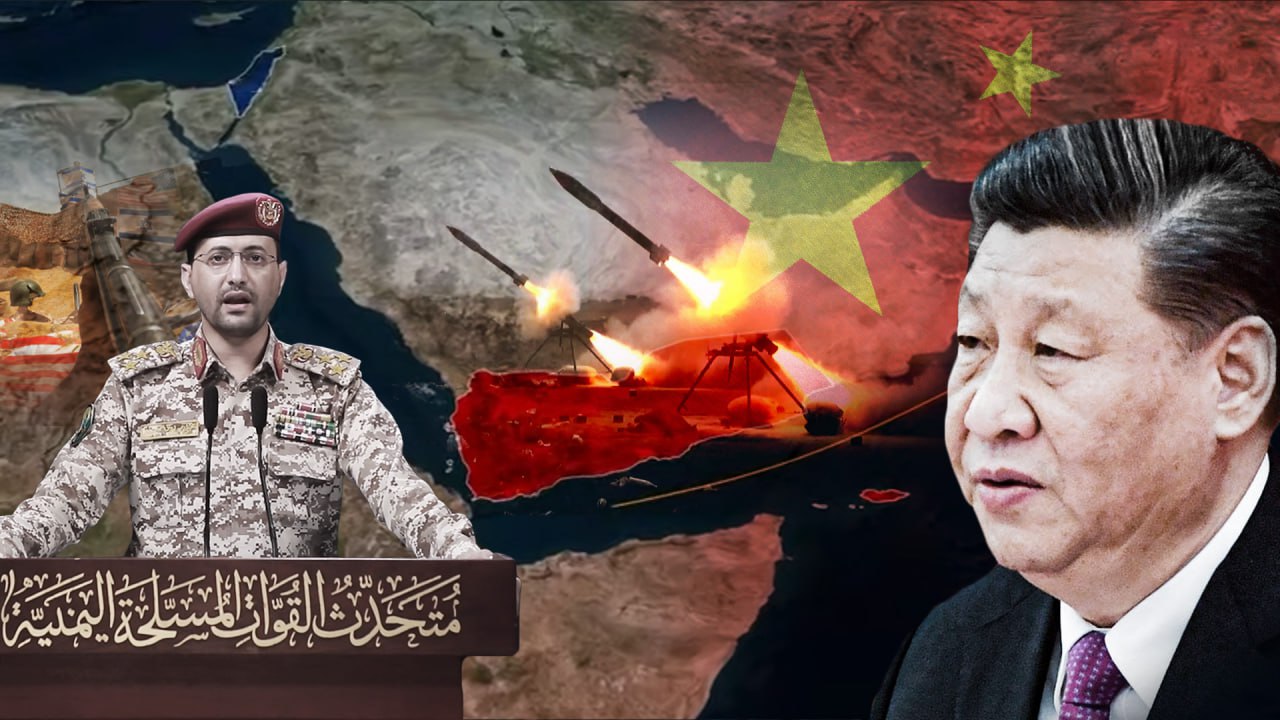
 Сергей Коняшин