How to Lose Friends and Stop Wielding Influence in the Middle East: A Masterclass by a Veteran Geopolitician
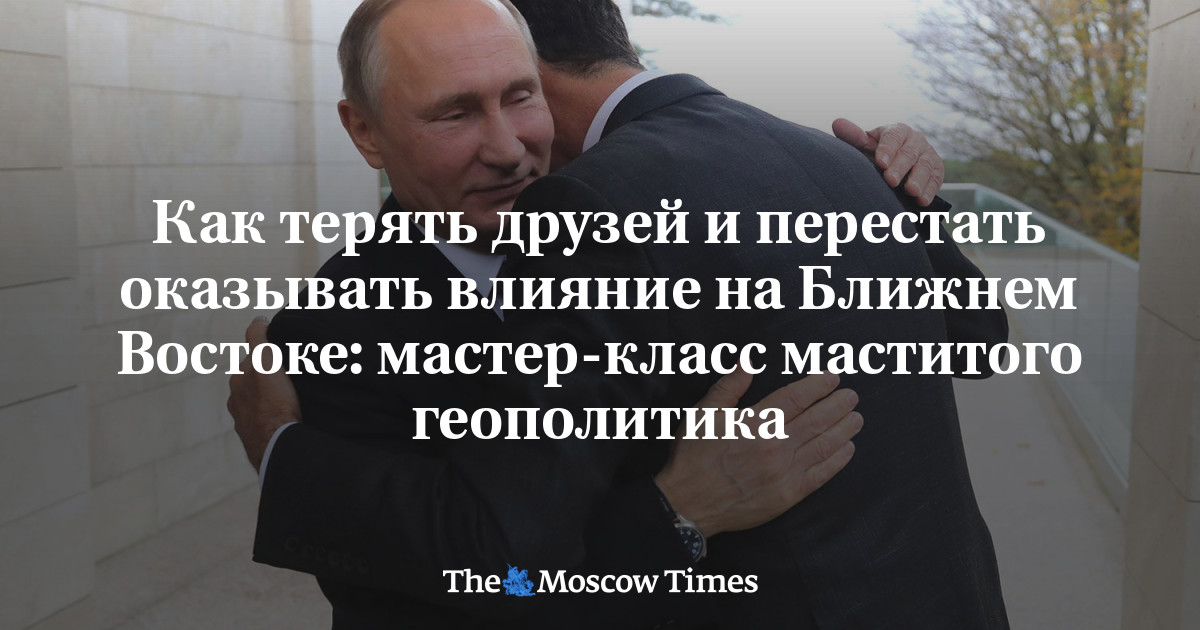
At the end of May, Russian Khmeimim Air Base in Syria was attacked by fighters of the group Hayat Tahrir al-Sham (HTS), whose leader, Ahmad al-Shara (also known as Abu Muhammad al-Julani), six months earlier had overthrown the pro-Russian dictator Bashar al-Assad and seized power in Damascus. On the same day, European Union countries in Brussels agreed to lift all economic sanctions imposed on Syria, following a similar decision by the United States.
The significance of the process launched by Western allies to reintegrate Syria into the global economy is hard to overstate—it amounts to nothing less than a fundamental revision of the entire architecture of relations in the Middle East. Syria, now steadily transforming into an American satellite, has traditionally played one of the region’s key roles.
Just six months ago, it would have been difficult to imagine any country in the Middle East more friendly to Moscow than the Syrian Arab Republic (SAR)—a longtime partner, a loyal and reliable friend first of the USSR, and then of the Russian Federation.
When I graduated from MGIMO in 2005 and entered the postgraduate program there, Damascus University was listed first among the foreign institutions offered for dissertation internships (an opportunity I missed only due to my own financial limitations).
After the 75th anniversary of the end of World War II in 2020, my military novel The Last Frontier (about events in my native Novorossiysk in 1942–1943), by then quite well known in Russia, attracted the most attention from the Arab intelligentsia precisely in Syria, not in Algeria—which was just as close to Moscow and where I was then serving as a Russian consul. In 2021, at the request of the chairman of the General Book Council under the Syrian Ministry of Culture, Tayir Zain al-Din, my novel was translated into Arabic by the Syrian literary translator Adnan Jamous and included in the register of foreign works scheduled for publication in Damascus in 2022. But in February 2022, I openly spoke out against the war in Ukraine, and in May of that year, I left Russia and continued to criticize Putin. At the request of the Russian Embassy in Syria, The Last Frontier was removed from the Executive Plan of the National Translation Project of the Syrian Ministry of Culture.
Thus, even for me—a person who never served in Syria and never once set foot there—this country was always an invisible presence in my professional and personal life, constantly reminding me of itself as the firmest pillar of the centuries-old and seemingly unshakable Russian-Arab friendship. For decades—from my first Arabic class at MGIMO to my last day in the Putin-Lavrov foreign ministry—it seemed to me, as to so many others around the world, that no Russian government, however criminal and incompetent, could ever fully squander the rich potential of relations with Syria and lose this country as a close ally of Moscow…
But the well-known geostrategist in the Kremlin does indeed have a talent for surprises.
How did this happen? How could such an important ally be “thrown away” to a handful of bearded “bandits in sandals”? And what can the Kremlin now expect from the new authorities in Damascus?
Betting on a Bankrupt
Putin decided to intervene in the Syrian conflict in 2015, when the regime of President Bashar al-Assad—a representative of the Alawite community, religiously close to Shia Islam—was on the verge of defeat by fragmented rebel groups. Russian air power and military advisors helped the Syrian army reverse the course of the civil war. Over several years of Russian military support, Damascus (the capital), Aleppo, Homs, and other cities returned to the firm control of Assad’s government. On Syria’s Mediterranean coast in Tartus, Russia’s naval base was reinforced, and near Latakia, the large Khmeimim airbase was established—Russia’s most important foothold for military influence in the Middle East and North Africa.
However, after winning the initial battles and stabilizing the situation, Moscow became bogged down in the Syrian quagmire for the long haul. Despite all Putin’s efforts, Syria remained deeply divided. In the north and east, a de facto autonomous Kurdish region emerged under US protection. In the northwest, in Idlib province, the remnants of Islamist rebels—mainly from the group Hayat Tahrir al-Sham (Arabic: “Organization for the Liberation of the Levant,” HTS)—became entrenched. In the south, discontent simmered endlessly among various minorities—especially the Druze, an Arabic-speaking community whose beliefs differ from mainstream Islam.
Assad’s regime, barely managing to hold the capital, became entirely dependent on external support—from Russian forces stationed in the country and from Iran’s Shia proxies active across the region: Lebanon’s Hezbollah, Yemen’s Ansar Allah (the Houthis), and various Palestinian factions operating in Israel. Syria’s economy lay in ruins. The country continued to be strangled by Western sanctions. Israel regularly carried out precision, painful airstrikes on Iranian targets on Syrian soil, already demonstrating to the world the real “effectiveness” of Russia’s numerous air defense systems.
Having reached the limits of its capacity, Moscow tried to convert military success into political dividends. To that end, together with Turkey and Iran, Russia launched the so-called “Astana Process.” This peace initiative was supposed to cement Russia’s role as the main broker between the official Syrian government in Damascus (Assad) and the armed Syrian opposition.
But by 2023, it had become clear that both the armed conflict itself and all negotiations around it were hopelessly stalled. Fatigue began to set in in Moscow. Moreover, the war against Ukraine, unleashed in 2022, absorbed significant resources and most of the Kremlin’s attention. The burden of the Syrian campaign became an ever-heavier load on Russia’s budget and siphoned off increasingly scarce military assets. Meanwhile, no tangible dividends materialized in the form of lucrative contracts or large investment projects in Syria.
During my time serving in Russia’s Foreign Ministry, in conversations with professional Arabist diplomats, I often heard comparisons between Putin’s Syrian operation and the USSR’s Afghan adventure—a costly but utterly pointless military campaign pursued solely to showcase an illusion of strength on the outer perimeter of its sphere of influence. Like the Afghan war, the Syrian intervention brought Moscow no real economic or geostrategic return.
Obsessed with imperial ambitions, Putin stubbornly continued to prop up the politically bankrupt Assad, whose legitimacy in the eyes of much of the Syrian population had long since fallen to little more than a statistical margin of error. Any alternative political forces with whom it was still possible to build a relationship of trust were conspicuously rejected and demonized by Moscow as terrorists. Even the rapidly growing weakness of Assad’s corrupt regime did not stop Putin’s diplomats from poisoning the well they would suddenly find themselves needing to drink from in 2025.
The Afghan Scenario
The turning point in this new Middle Eastern reality came in the uncertain autumn of 2024. In the United States, to the surprise of many, Donald Trump won the presidential election and returned to the White House determined to fulfill the unfinished plans of his first term. Coincidence or not, just a few weeks after the high-profile American election, a new wave of fighting erupted in Syria.
The long-dormant northwestern front suddenly came alive. HTS forces from Idlib—perhaps inspired by the Taliban’s success in Afghanistan and quite possibly encouraged by covert external support—launched a rapid offensive. Turkey, which formally designates HTS a terrorist organization, demonstratively turned a blind eye to the Islamists’ actions. Simultaneously, in the east and south, scattered pro-American forces—the remnants of rebel units trained by U.S. instructors in the Al-Tanf border zone—also became active. In hindsight, it is clear that Washington and Ankara, while officially backing different Syrian opposition groups, were most likely quietly coordinating their protégés’ operations.
Under attacks from several directions—and to the shock of many observers, amid complete inaction by Russian forces—the Assad regime began to visibly collapse. The giant banners of the Syrian dictator, hung across the country as symbols of his supposedly unshakable power, fell from building facades like dry leaves from trees in late autumn. By early December, after the fall of Hama and Homs and attacks from the south and east, Damascus was encircled. Bashar al-Assad fled the country and, according to rumors, is now hiding in Russia. The heartland of the much-hated Alawite regime—coastal Latakia, which had no hope of leniency from the revolutionary authorities for its many long-standing abuses—was the last to fall. To this day, sporadic outbreaks of brutal violence against supporters of the ousted usurper continue there.
The speed of events unfolding in Syria effectively presented Putin with a fait accompli. He did not dare to engage the advancing anti-Assad forces directly. Russia was forced to evacuate dozens of diplomats and other staff from its embassy in Damascus via neighboring Lebanon. Thus, the experts in Moscow’s diplomatic circles who had long compared Putin’s Syrian adventure to the USSR’s fiasco in Afghanistan were proven entirely correct. It began like Afghanistan—with an unprovoked, poorly calculated intervention on behalf of one side in an internal conflict without clear goals or intentions. It continued like Afghanistan—a decade of pointless military presence that year by year brought only more expense and losses. And it ended like Afghanistan too—with a humiliating retreat.
What caused such a colossal failure? Why did Russia, after all those years propping up Assad’s regime, so quickly lose control over him—and over Syria as a whole? There are three main reasons.
First, strategic underestimation. It seems the Kremlin simply did not believe that the fragmented rebel groups could unite—or, even more so, secure Western backing. This says much about the quality of the foreign-policy expertise in Russian intelligence generally, and the performance of the SVR (Russia’s Foreign Intelligence Service) in particular. Back in 2021, in an interview for Frontline on PBS, the U.S. Special Envoy for Syria, James Jeffrey, said that Washington might “consider HTS a useful instrument in the fight against Assad.” He called the group “the least bad option in Idlib” and already described it as a potential “asset of American strategy” in the Middle East. It is hard to say whether these statements were ever read in Yasenevo (the SVR headquarters), or if so, how seriously they were analyzed—but the fact remains that three years later, events unfolded exactly as Jeffrey had publicly outlined.
Second, Russia’s resource overstretch. Because of the protracted war with Ukraine and economic sanctions, Moscow apparently simply ran out of both military and financial resources to throw into saving its key Middle Eastern outpost.
Third, Russia’s geopolitical isolation. Before the aggression against Ukraine, the Kremlin still retained at least remnants of the old Soviet geopolitical influence, forcing Turkey and the Gulf Arab states (the region’s main players) to grudgingly factor in Putin’s opinion. But by late 2024, that authority had so weakened that they no longer felt obliged to respect it at all. Ankara, which had previously coordinated its Syria operations with Moscow, openly ignored its commitments to the Kremlin at the decisive moment. Saudi Arabia, Qatar, and the UAE, which had recently seemed reconciled with Assad, forgot him the very next day after his overthrow and immediately pivoted to building ties with the new authorities. Even China, which might theoretically have supported Assad, preferred to stay neutral rather than antagonize Washington over an issue it considered “secondary.” And when the Syrian regime began to buckle, Putin stood alone as the only interested party in saving it. But having burned through all his resources and reserves in Ukraine, he no longer had any means to prop up a friendly Middle Eastern dictatorship.
A New Broom Sweeps Clean
The vacuum created after the fall of the pro-Russian regime in Damascus was immediately filled by other forces. Washington, having effectively achieved what it had failed to accomplish since 2011 (the collapse of Assad’s regime), wasted no time positioning itself as the patron of the “new Syria.” Already by late December 2024, the self-proclaimed interim prime minister—and from January 2025, the country’s new president—Ahmad al-Shara (also known as Abu Muhammad al-Julani, the former HTS leader) began receiving direct support from the United States.
U.S. Secretary of State Marco Rubio commented on the first talks between Washington and Damascus representatives at a State Department briefing on May 15, 2025:
“We are seeing positive signals from the new Syrian administration, including a willingness to engage in dialogue with Israel and a desire to expel foreign terrorists.”
The next day, on May 16, he told CNN:
“If the new authorities in Syria are truly ready for peace with Israel and to drive out extremists, we will be prepared to help them do it.”
These two statements effectively marked the dawn of a new Middle Eastern reality: Syria—pro-Soviet and later pro-Russian, which for decades considered Israel and the U.S. its primary enemies—extended its hand to Jerusalem with Washington’s blessing. Thus, historic foes since the Six-Day War (1967) are now announcing a path toward normalizing relations.
This turnaround feels all the more astonishing to me personally, now living in Israel. Just six months ago, I had finished ulpan (Hebrew courses for new immigrants), and I vividly remember that in October 2024—over fifty years after that war, and just a month before HTS’s sudden advance on Damascus—our teacher played an Israeli song from the 1970s. The song was sung from the perspective of a Jewish girl emerging from a bomb shelter after her kibbutz in northern Israel was destroyed by shells from Damascus. Today, however, the Syrian and Israeli capitals have been exchanging not bomb strikes but diplomatic letters with proposals to develop bilateral relations.
Of course, it is still too early to draw definitive conclusions about the new Syrian government’s readiness to join the so-called Abraham Accords (the normalization agreements between Arab states and Israel). Several reports have appeared suggesting Ahmad al-Shara has such plans (in Al-Monitor, The Jerusalem Post, and Reuters), but all have relied on anonymous sources or unverified diplomatic leaks, while no official statements have been made. It is also wise to be cautious about claims that the Syrian-Israeli enmity has simply vanished and that the new Syria is rushing headlong toward reconciliation, especially given reports that Damascus has begun arresting members of Palestinian extremist groups—something Assad would never have done. Most likely, not every action by the new authorities is directly aimed at pleasing Israel or the United States. Yet it is clear that al-Shara, pursuing his own interests, is already signaling at least rhetorical readiness to move closer to Western positions—exactly the opposite direction from Russia.
Turkey, which for decades clashed with Assad, demanded his departure, and actively supported the Syrian opposition, has also moved quickly to seize an advantage. Erdogan now sees himself as one of the main beneficiaries of these changes. Thousands of Turkish troops had long been stationed in northern Syria, controlling the frontline zone, and after Assad’s overthrow, Ankara immediately legitimized its presence. Already in January 2025, Turkish and Arab media reported plans to open a Turkish embassy in Damascus and to appoint a chargé d’affaires (a de facto ambassador in the absence of a formally recognized government). Later, it emerged that the head of Turkish intelligence had secretly traveled to Damascus to meet the new Syrian president.
Thus, Turkey, which previously supported the opposition unofficially, now does so openly. Among other goals, Ankara is trying to shape the new regime to moderate its radicalism.
Recall that HTS began as a splinter group of al-Qaeda, and it is still designated a terrorist organization by the UN, the U.S., and even Turkey itself. However, after seizing power, HTS has been desperate to rebrand itself as a movement with a moderate Islamic ideology, claiming it will respect all ethnic and religious communities. These moves are almost certainly encouraged by Ankara, since they align closely with Turkey’s own public positions.
On February 10, 2025, Turkish Foreign Minister Hakan Fidan stated at a press conference in Ankara:
“The new Syrian leadership must guarantee the rights of all minorities—Christians, Kurds, Turkmens, Alawites—and prevent Syria from becoming a haven for terrorists.”
Responding days later, Ahmad al-Shara told Turkey’s Yeni Şafak newspaper on February 18, 2025:
“This victory [the overthrow of Assad by HTS forces — S.K.] is not only a victory for the Syrian people but also a victory for Turkey.”
It would be simplistic, however, to see HTS merely as Erdogan’s puppets. There is every reason to think Ankara does not have full control, so the longer-term question of Damascus’s flexibility (once al-Shara consolidates power) remains open. For now, though, Syria’s dependence on Turkish support is enormous. Re-establishing basic order and rebuilding the economy will require vast resources—electricity, water, food, and much else Turkey alone can provide. Meanwhile, Turkish construction companies are vying for lucrative contracts to rebuild Syria’s war-torn infrastructure, while Ankara’s political leadership is eyeing a historic opportunity to finally resolve the “Kurdish question.”
The Kurds—Syria’s largest ethnic minority, concentrated in the northeast near the Turkish border—had long been U.S. allies in the fight against ISIS and gained substantial autonomy. But after Assad’s fall, they were left in a precarious position as Washington partially sacrificed their interests to appease Turkey. In April 2025, under U.S. pressure, Kurdish forces withdrew from eastern Aleppo province, allowing the Syrian army to take over. In exchange, Turkey reduced the intensity of airstrikes, and Damascus regained control of key oil fields. The Kurds were promised cultural autonomy and participation in governance, guaranteed by the U.S. and France.
Southern Syria is also changing. The Druze—an Arab-speaking ethno-religious community centered mainly in Suwayda province in the southwest—had long been in conflict with Assad. Now, after his fall, their militias patrol their territory independently. The new Syrian Ministry of Defense informally recognizes Druze committees’ control over 95% of Suwayda. No major clashes are occurring, and intensive negotiations over the region’s status are underway. Strikingly, many issues that were unsolvable under pro-Russian Assad are now being settled in mere weeks.
In December 2024, images of HTS fighters warming themselves around a campfire outside Syria’s abandoned Iranian embassy circulated around the world. Perhaps no more vivid symbol could be imagined of Iran’s collapse—after Russia, Assad’s other main patron—in one of the Middle East’s key countries. After the HTS stormed Damascus, Tehran, like Moscow, lost all its positions. The new authorities have demonstratively distanced themselves from the Tehran–Damascus–Beirut axis and are unmistakably moving closer to the opposing regional bloc led by Turkey, Saudi Arabia, and Egypt, under Washington’s patronage.
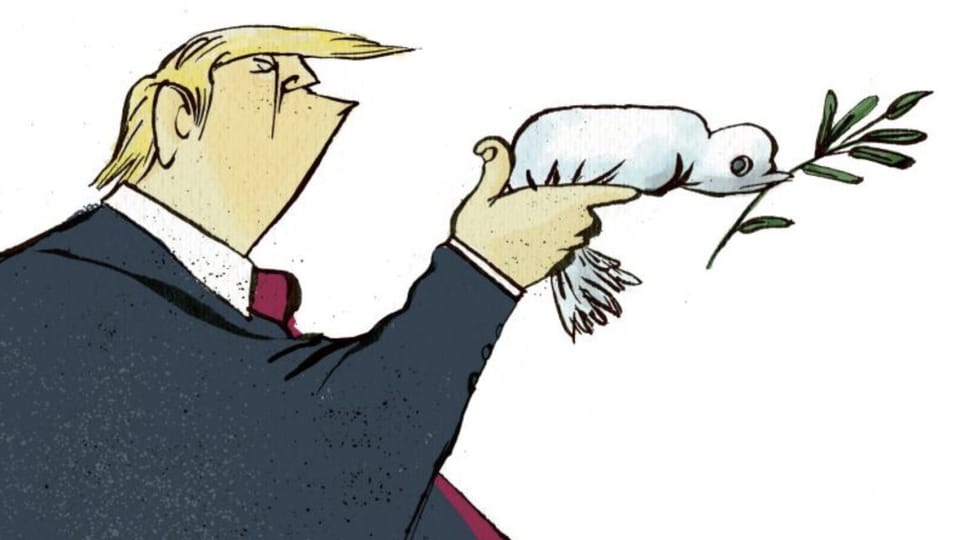
On May 14, 2025, in Riyadh, Donald Trump and Mohammed bin Salman reached agreements with Ahmad al-Shara: the U.S. would receive concessions on Syrian oil and gas fields, while the Gulf monarchies committed to repay Syria’s debts to the World Bank (about $15 million). In addition, Syria was promised (at least partial) lifting of Western sanctions and multibillion-dollar investments in infrastructure—roads, hospitals, schools, energy facilities, and development of ports and logistics centers.
It is obvious that Syria would never have received any of this after all its years of cooperation with Russia.
Syria as a Verdict on Putin’s Foreign Policy
The loss of Syria has undoubtedly become one of Putin’s most devastating geopolitical defeats. In a matter of days, everything the USSR—and later Russia—had been building in the Eastern Mediterranean for more than half a century collapsed completely. At the very least, Russia’s foreign-policy image in the Middle East has taken a severe blow. Moscow is no longer seen here as an influential player by anyone.
It is highly likely that Putin’s allies and partners around the world are now asking themselves a simple question: is it worth relying on Russian guarantees at all?
The direct geostrategic loss for Moscow is also significant. The Russian military has been stripped of a highly convenient foothold in the Eastern Mediterranean. There is still a slim chance that Moscow might retain a limited presence in the port of Tartus—as a naval logistics hub leased from the new regime—but even that prospect is fading as negotiations advance.
Syria’s loss has also put a definitive end to what was, however symbolic, the Russian submarine fleet’s presence in the Mediterranean. In early January 2025, the Naval News website, citing data from Portuguese aviation, reported that the diesel-electric submarine Novorossiysk, previously based in Tartus, had sailed through Gibraltar into the Atlantic. It was the only Russian sub in the entire Mediterranean basin. As for any Russian air presence, it is simply gone—Syrian skies are now controlled by entirely different forces, none of them friendly to Moscow. Putin’s military influence in this part of the world has effectively been reduced to zero.
On the diplomatic front, Moscow has been pushed to the sidelines. Where once every major decision—from ceasefires to constitutional reforms—was negotiated through the Russian-Turkish-Iranian format, now only Turkey remains from that triangle. Beyond Ankara, the capitals that have shaped Syria’s future in recent months are Washington, Riyadh, Abu Dhabi, and Jerusalem. Even European countries—historically almost powerless in Damascus—now look far more influential than Russia.
It is hard to doubt that losing Syria has had a painful impact on the psychological climate inside the Russian leadership. For Putin, the “Syrian campaign” was an essential part of his propaganda doctrine about restoring Russia’s international stature. The Middle Eastern operation’s achievements between 2015 and 2018 were presented to Russians as a major military success: the Russian air force had supposedly crushed ISIS far from home and secured new strategic positions. Today, that narrative is morphing into a tale of serious defeat.
On the one hand, it is almost certain that hidden debates within the Russian elite have intensified over whether this venture was ever worth it—and whether Syria was the only such misadventure. On the other hand, the broad “war party” will obviously use the Syrian case to escalate rhetoric against the “West.” It is possible that this blow will push Moscow to embrace even tighter alliances with Iran and other marginal anti-Western forces. However, for anyone outside Russia, such shifts are unlikely to pose a real threat. Putin clearly has no resources left for any revanche, so he will eventually have to accept the loss of Russia’s former status in the Middle East.
For Syrians themselves, Putin’s defeat means hope for a better future. The fall of Moscow’s proxy has clearly opened a chance for a more just regional order. Assad’s regime has stopped repressing its own people. Leaders of the democratic world and the region’s strongest economies are already negotiating a unified, neutral Syria that guarantees the rights of all ethnic and religious minorities.
The risks of sabotage and spoilers remain, of course—as they always do. But it is equally obvious that the country has at last caught its breath from endless civil war and gained opportunities for reconstruction that were once unthinkable.
Only the abandoned Russian military installations and a few tattered portraits of the fallen tyrant, still clinging to bullet-scarred walls, remain to remind anyone of those grim years just past.
 Сергей Коняшин