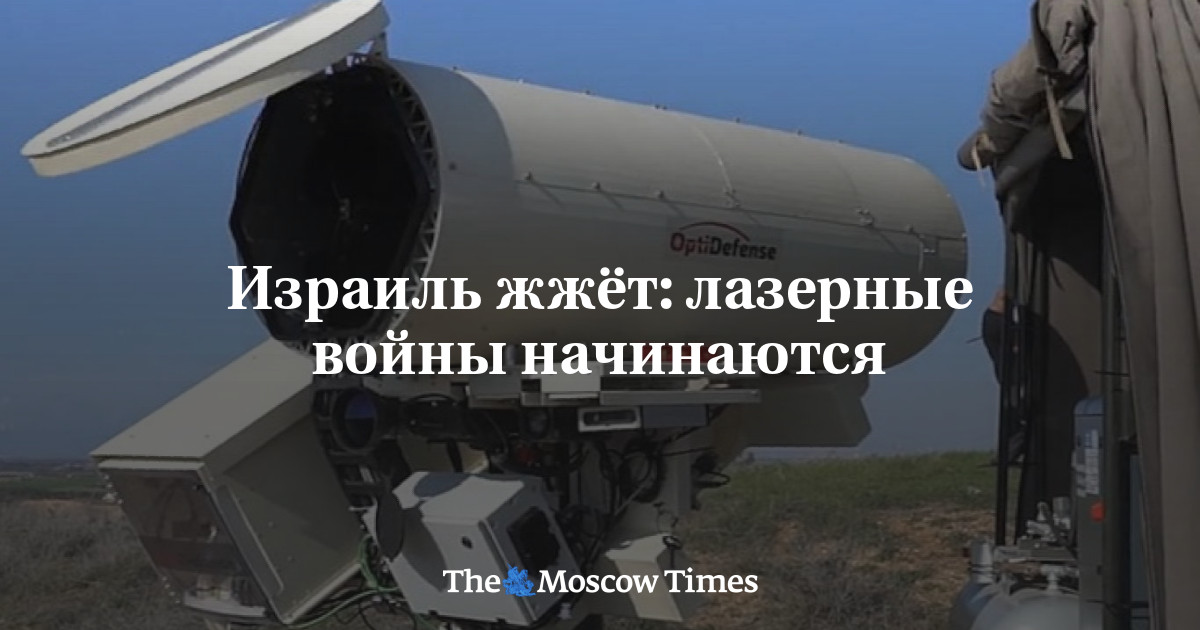
Israel Strikes: The Laser Wars Begin
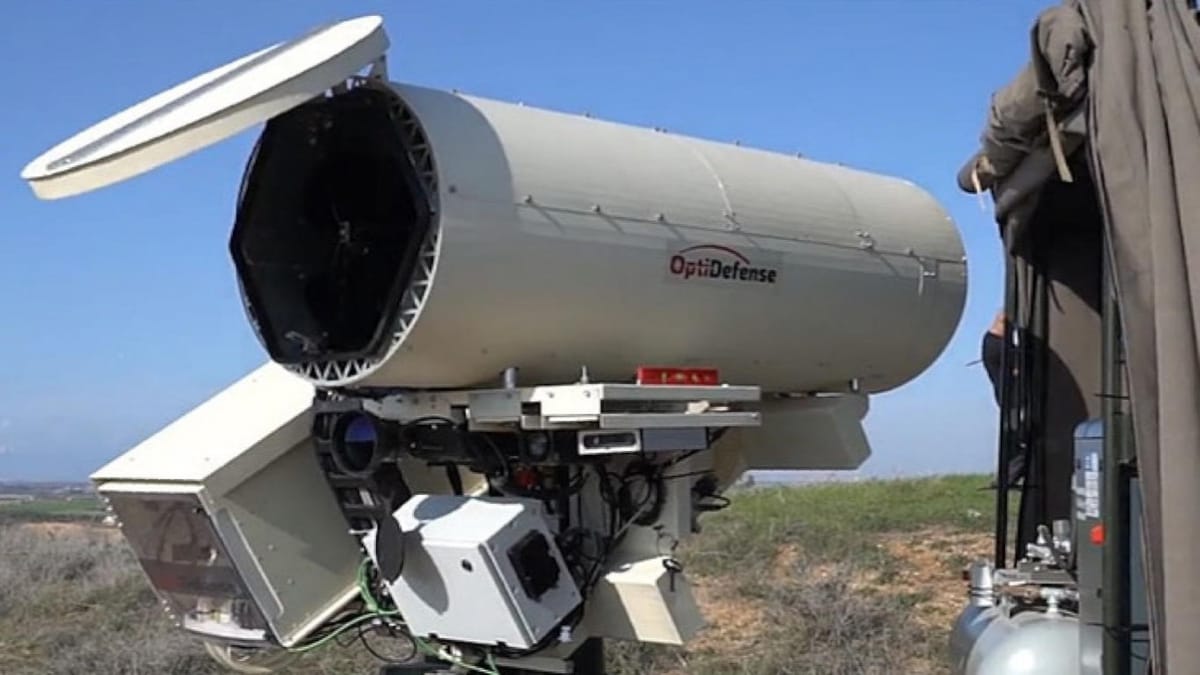
Israel has for the first time used the “Light Shield” laser system (Hebrew: Magen Or, also known as “Iron Beam”) in combat to intercept drones launched by Hezbollah militants from Lebanese territory. This marks the beginning of a new stage in the global development of military technology in general and air defense systems in particular.
It turns out that for at least the past year, dazzling pillars of light have been flashing along Israel’s northern border, marking humanity’s transition to a new military-technological reality. According to official data from Israel’s Ministry of Defense and the defense company Rafael, the new laser system successfully destroyed about 40 enemy drones.
However, any information about the combat use of the “Light Shield” was under military censorship throughout the entire period of active fighting and has only now been declassified in mid-2025.
Why, during all this time, did no one ever capture on camera—or even notice—those very “iron beams,” worthy of rivaling the best examples of science fiction but already present in reality? The reason is that this new weapon, tested in combat, was authorized for use only during the day and in clear weather, when the bright Middle Eastern sun made the laser invisible against the pale sky.
Now that Israeli military censorship has been lifted, Jerusalem has officially acknowledged that, for the first time in history, Israel used a high-energy combat laser to destroy aerial targets. And this experience was deemed completely successful. The experimental system, initially called “Iron Beam” and later renamed “Light Shield,” managed to burn nearly all Hezbollah drones out of the sky. Without exaggeration, this opens a new chapter in the global development of air defense systems.
Baptism by Fire
“The light of Israel will become a fire.” — Isaiah 10:17
As we recall, after the October 7, 2023 attack by Hamas terrorists on Israeli civilians, Israel came under fire not only from the south, from the Gaza Strip, but also from the north—from Hezbollah. The Lebanese terrorist group began launching numerous drones and short-range rockets at northern Israel in an effort to overload and break through the Israeli air defense systems.
I remember well how I was working at a factory in Galilee (in the north of the country) at the time, and during those attacks we had to stop all production and shelter the entire workshop in a bunker. Since almost the entire Israeli army was engaged in fighting in Gaza in the south, it felt to us that much less attention was being paid to our region in the north. But now it is becoming clear that under the extreme conditions of that difficult period, the Israeli military took an unprecedented step—rapidly deploying experimental prototypes of the first laser interceptors in the most threatened areas.
Already on October 15, 2023, a video appeared online showing an Israeli laser burning Hamas rockets over Gaza. At the time, Israeli officials deliberately refrained from commenting, and the prominent local journalist Itay Blumental publicly denied the authenticity of the footage. As a result, many international experts dismissed the video as fake.
In particular, the director of Russia’s Air Defense Forces Museum, Colonel Yuri Knutov, called it a publicity stunt and expressed doubt that anyone could create a laser capable of effectively destroying live missiles. According to him, burning through a missile’s casing with a beam of light was supposedly impossible, since this would require power levels humanity did not yet possess.
But now the Israeli Air Force and the defense company Rafael have officially announced the “impossible”—the first successful combat use of the new laser system. Experimental units were deployed during the current war and indeed managed to intercept dozens of drones and unguided rockets launched by Hezbollah terrorists. For security reasons, the precise times and locations of these successful laser interceptions have not been disclosed. However, statements from Israel’s Ministry of Defense make it clear that these incidents occurred on the northern front in 2024.
Thus, Israel has officially become the first country in the world to successfully use high-energy laser weapons to destroy real combat targets in actual warfare.
The historical significance of this event is hard to overstate. Formally, lasers have been used in war ever since they were invented—but always only as rangefinders, target designators, and other auxiliary tools. Until today, no state in the world had deployed them on the battlefield for the direct destruction of enemy assets. Now, truly effective energy weapons, which once belonged to the realm of science fiction and then to laboratory trials, have confidently stepped into the harsh reality of the Middle Eastern conflict—and passed the test with distinction.
How Does Laser Weaponry Work?
“Fire goes before Him and consumes His enemies on every side.” — Psalm 97:3
The idea of using a beam of light as a weapon has fascinated humanity since ancient times. One need only recall the legends about Archimedes, who supposedly burned Roman ships with mirrors reflecting sunlight. In the 21st century, Israel has assigned the role of “Archimedes’ mirrors” to high-tech laser emitters.
The “Light Shield” uses a laser with a power of about 100 kW, focusing a beam no thicker than a coin across distances of several kilometers. Thanks to a highly precise targeting system, the laser energy concentrates on the target, heating it to critical temperature in a matter of seconds. As a result of short but continuous irradiation, a thin-walled drone burns through and disintegrates in midair, the propellant charge of a rocket detonates, or the target’s electronics fail.
Laser interception offers several unique advantages.
First and foremost is the negligible cost of each “shot.” The entire “Light Shield” ammunition supply is simply electricity. One interception consumes only a few dollars’ worth of power. By comparison, launching a single interceptor missile from the Iron Dome system costs about $50,000–100,000, and for reliability, at least two missiles are usually fired per target.
The second advantage is an effectively unlimited ammunition supply. The beams will keep burning targets out of the sky as long as the system is plugged in. No missile warehouses, resupply, or launcher reloading are needed. A single laser unit can down dozens of targets in succession without interruption, which is especially crucial under massive bombardment.
Third, “Light Shield” units are mounted in standard containers on trucks. The same vehicles carry and operate the generators and the radar guidance station. This makes the system compact and mobile. Finally, the laser hits targets with minimal collateral damage: there is no explosive warhead detonating near the target and no rain of shrapnel falling to the ground afterward. When the laser destroys something, only charred fragments of the target itself fall. All in all, for protecting large cities and important military sites, this new Israeli technology looks like a dream air-defense solution: lightning-fast, precise, inexpensive, and as safe as possible.
Unlike interceptor missiles, which must spend several minutes or at least dozens of seconds flying to the target, the laser strikes at the speed of light—that is, practically instantaneously. As soon as the radar and optics locate and lock onto an object, the beam connects the system to the target and literally starts melting it in flight. “Light Shield” operates silently and, in daylight, invisibly, meaning it hardly reveals its location. A successful interception is marked only by a flash of flame where the target is destroyed.
This is precisely why Hezbollah drone operators had no idea for a long time that Israel had a laser system and could not understand what was happening to their drones and rockets. From their perspective, the devices simply stopped working midair and vanished from radar. Some Israeli bloggers, citing intelligence sources, reported that Hezbollah leadership even complained to their Iranian patrons about the poor quality of the supplied munitions, saying they just broke apart in the air and fell to the ground before even reaching Israeli territory.
However, despite how theoretically simple it may seem, creating such a weapon in reality proved extremely difficult. Lasers require enormous power and highly sophisticated optics. In combat, “Light Shield” must keep its narrow beam locked on a moving target, compensating for platform vibrations, atmospheric distortions, and other adverse factors. This is particularly challenging, given light’s inherent tendency, like any radiation, to scatter in space. Solving this ambitious problem took many years and breakthroughs in electronics and optics. Engineers at Rafael worked on this technology for decades, and only now has it become reliable enough for real combat. Moreover, with a power output exceeding 100 kW, the laser module generates an immense amount of heat, so much of the system also consists of specially designed cooling and power supply components.
Laser vs. Missile
“When you pass through the waters…the fire will not burn you; the flame will not scorch you.” — Isaiah 43:2
Can we now say that Israel’s new combat laser will become the ultimate weapon against rocket attacks and drone raids? Unfortunately, not even close. Alongside its obvious advantages, the “Light Shield” has many critical drawbacks that, at this stage of development, prevent laser weapons from fully replacing traditional air defense systems.
First of all, its capabilities are severely limited by its rather modest range. While the legendary Iron Dome can intercept targets at distances of up to forty kilometers or more, the “Light Shield” is currently able to engage objects only up to nine kilometers away—meaning exclusively within direct line of sight. As a result, high-altitude missiles and especially ballistic warheads remain far beyond the reach of the laser “umbrella.” In its present form, it can therefore serve only as a means of short-range, point defense.
Another important factor is weather. Light is extremely sensitive to rain, dense fog, low clouds, smoke, and so on. Any particles filling the air in large quantities (water, dust, etc.) strongly scatter the laser beams passing through them, greatly reducing their effectiveness. That means that in severe weather or in the heavy smoke that inevitably accompanies large battles, conventional interceptor missiles remain much more reliable.
There are also purely technical limitations. Despite its theoretical rapid-fire capability, the laser system still needs pauses, because after a series of high-energy shots, the system’s power output can drop. So continuous fire may be limited by the resilience of the components. Power supply is also critical. For uninterrupted operation, the “Light Shield” requires either powerful generators or a constant connection to a stationary grid. This, in turn, ties the system to fuel sources or industrial infrastructure to some degree.
Finally, the laser attacks the target “head-on,” making it especially effective against drones, small aircraft, and primitive unguided munitions on which the beam can be concentrated and steadily maintained to heat them to destruction. High-speed maneuvering missiles or munitions with thermal protection will be much harder to burn through. The enemy, in turn, can complicate matters further by eventually employing reflective coatings, aerosol screens, and other countermeasures.
Thus, the laser by no means replaces but rather complements existing air defense systems. In clear weather and at short range, it can intercept some targets and save the expensive interceptor missiles of the Iron Dome. But in all other situations, the main burden will still fall on long-range missiles, anti-aircraft artillery, or aviation. Even so, Israel’s introduction of this new weapon into combat service will undoubtedly give fresh momentum to the eternal struggle between “sword” and “shield” around the world.
“Light Shield” Above the “Iron Dome”
“Take up shield and armor; come to my aid.” — Psalm 35:2
Israel has traditionally built its missile defense as a deeply layered system. At its lowest level operates the legendary Iron Dome, which intercepts short-range unguided rockets and mortar shells. Above it are David’s Sling batteries, designed to counter medium-range missiles and cruise missiles. Higher still stand the Arrow-2 and Arrow-3 systems, capable of destroying ballistic targets at high altitudes.
However, the recent conflicts have revealed the existence of another air defense layer that had often escaped the attention of militaries accustomed to thinking in terms of past wars. This is the so-called “ground tier,” intended to address the smallest, closest, and most numerous modern threats—short-range rockets and, above all, small attack drones. This is precisely the tier that the Light Shield now protects.
The “Operation Iron Swords” war (launched in response to the Hamas attack on October 7, 2023) showed that Israel’s adversaries are increasingly relying on critical saturation of its air defense through massive salvos of swarms of cheap loitering munitions. Destroying a homemade Palestinian rocket costing a few hundred dollars or a dirt-cheap drone with an interceptor missile worth tens of thousands creates a serious economic imbalance for the defending side. A laser, on the other hand, which destroys a target for just a few dollars, upends all the arithmetic of the old war model and radically shifts the advantage toward Israel by depriving the terrorists of their once-primary asset: the low cost of their attacks.
The Light Shield is integrated into the same radar networks as the Iron Dome. It is usually deployed around cities and IDF positions to automatically engage low-flying targets before they can leave the near-defense sector. The idea is that the laser will eliminate most of the simplest and crudest enemy drones and rockets, preserving the expensive interceptor missiles for more sophisticated and dangerous threats. This will make Israel’s air defense more economical, more effective, and—most importantly—more sustainable in a prolonged conflict. The first successes of the Light Shield have already inspired its creators to expand the use of this new technology.
Daniel Gold, head of MAFAT (Israel’s Directorate of Defense R&D), who was among the founders of the Iron Dome, reports that his organization, together with Israeli defense companies, is now developing not only ground-based systems but also airborne (pod-mounted on fighter jets) and naval (mast-mounted) laser platforms. While the ship-based versions are still considered a promising next step, airborne lasers have already entered early laboratory testing.
Appetite Comes During War
“Nation will rise against nation, and kingdom against kingdom.” — Matthew 24:7
The combat debut of the “Light Shield” was the logical continuation of the path Israel’s defense industry has followed over the past decade and a half. The deeply layered “shield” against rocket barrages was increasingly running into the burden of escalating costs, until the effort to repel Palestinian and Arab attacks had become ruinously expensive for Israel’s budget. But testing the new laser system in real combat provided developers with what they could never have seen in the sheltered conditions of a test range: invaluable telemetry data on how the system performed in the dusty, smoke-filled, interference-heavy layers of atmosphere over Gaza and Galilee.
However, Israel’s lead in the laser race does not mean it is the only serious player in this field. The Eastern European front shows how quickly war absorbs everything that just yesterday looked like bold futurism: precision-guided GMLRS, swarms of FPV drones, hypersonic missiles in close combat, anti-drone rifles, and much more. Ukraine’s announcement of its own combat laser, “Trident,” likewise did not arise out of a romantic longing for science fiction but out of pure accounting necessity—exchanging expensive surface-to-air missiles for cheap quadcopters year after year is simply unsustainable.
The United States, China, India, the United Kingdom, and many other countries have long been heading down the same road. The Americans are refining their naval Laser Weapon System (LaWS). The British are field-testing the airborne “Dragon Fire.” The Chinese are developing dual-use lasers to disable orbital satellites. And even Moscow—mired in corruption and military setbacks—still tries to keep a seat at the table of this technological race, boasting about something between concepts and projects under the cryptic names “Peresvet” and “Zadira.” For the first time since Reagan’s “Star Wars,” so-called directed energy weapons are ceasing to be just a futuristic prop and are seriously entering the arsenals of general staffs around the world.
And this picture seems to confront the world with an unpleasant question: are real wars turning into marketing exhibitions of defense industry achievements? On the one hand, every intercepted shell undeniably means a life saved—a direct humanitarian benefit. On the other hand, the battlefield of any armed conflict now inevitably becomes a kind of “trade show of military capabilities.” And the more intense the conflict, and the more engineering novelties it brings, the more tempting it becomes for arms manufacturers to showcase their products “in action.” This grim reality accelerates a vicious circle: a new system forces the enemy to look for an asymmetric workaround, and when that is found, it pushes developers toward an even more original—and costly—response. In this way, the escalation of armed conflict can gradually cease to be a strategic or political decision and turn into a commercial competition among the big players of the arms business.
The war of the 21st century already looks less like a clash of soldiers and more like a contest between engineers and programmers. Victory now often comes not from the size of one’s forces, but from an innovative technical solution or the novelty of the algorithms applied. The “Light Shield” is one of the first—but likely far from the largest—symbols of this emerging era. Before our eyes, advanced technology is making armed confrontation simultaneously more effective for individuals and more troubling for humanity as a whole.
 Сергей Коняшин