Putin's Next War: Who's Next on His List?
Belarus appears to be preparing for a new war, and NATO fears Moscow's next strike. Anxiety is growing in all countries along the perimeter of Russia's borders, from the Baltics to Kazakhstan. Is it possible that the Ukrainian "special operation" could escalate into a Third World War as early as this year?
The unprecedented war in Ukraine for the 21st century is not over yet, but new clouds seem to be gathering over the world. In early August, the Belarusian Ministry of Defense proposed amendments to the legislation on martial law, allowing it to be imposed not only in the event of an attack on Belarus itself, but also in the case of an "armed attack on the Union State" – meaning on Russia as well. Almost simultaneously with this, the first echelon of Russian troops arrived in Belarus to participate in the large-scale "Zapad-2025" exercises. These maneuvers are the largest since the invasion of Ukraine. And they are already causing alarm worldwide – will this become a traditional cover for Russia to unleash another war?
Ukrainian intelligence directly warns that under the guise of these so-called "military exercises," a covert formation of strike groups is likely taking place, as was the case, for example, on the eve of the invasion of Ukraine in 2022. At the same time, ominous warnings and predictions are being heard in the West. Yes, NATO Secretary-General Mark Rutte noted that "the danger [from Russia - S.K.] will not disappear, even when the war in Ukraine ends." According to his assessment, Russia will be ready for war against the alliance within the next five years. So, even while losing in Ukraine, the Kremlin, it seems, is already choosing its next target.
Where to Next?
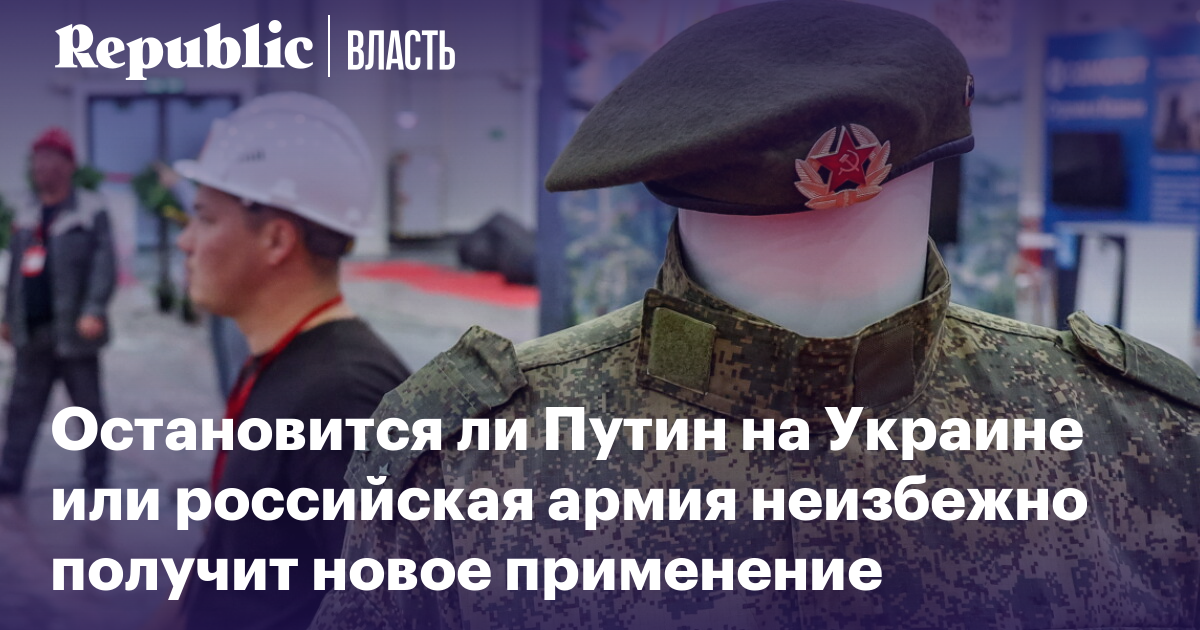
Paradoxically, even if a ceasefire is reached or at least announced on the Ukrainian fronts tomorrow, it will not only fail to bring genuine peace, but could potentially lead to an even greater military-political catastrophe. For Putin's regime – and specifically for Putin himself – the current round of confrontation with what he broadly understands as the "West" is too important to be the last. The Kremlin is clearly not going to disarm and is dragging out the peace talks under various pretexts. Therefore, if the Russian army suddenly gets a respite and maintains its combat readiness, it will quickly find new applications on other fronts in the Kremlin dictator's campaign to continue his imperial revanchist campaign.
Unfortunately, history is full of examples of how Moscow resolves internal crises through external conflicts. Rising tensions with the outside world – and war even more so – inevitably unite the population, distract it from economic problems, but most importantly, it prevents the overgrown army from remaining idle.
So, where might the "Putin horde" turn its bayonets after – or instead of – Ukraine? In recent months, there have been many alarming signs. The first thing that stands out is the rapid militarization of Belarus. Against this backdrop, the Baltic countries are already openly talking about an increased threat, and NATO Secretary-General Rutte is calling for a significant strengthening of the alliance's defense capabilities, directly stating that the Kremlin is rapidly increasing its military production and is clearly preparing for a clash with the democratic world.
Especially since the war in Ukraine has objectively highlighted many weaknesses in the security systems of Western countries – while NATO states are deliberating for months about how much air defense can be transferred to Kyiv, numerous echelons of attack drones from China, shells, missiles, and even soldiers from North Korea are arriving in Russia non-stop. Russia is finding allies and interacting with them much faster than the bureaucracy of the fragmented Western countries is. And this allows the Kremlin to shift the military balance in its favor again and again. Although the combined economy of NATO is, of course, dozens, if not hundreds of times larger than Russia's, according to some estimates, in 2023–2024, Russia produced four times more weapons than all the Alliance countries combined.
Therefore, it's not surprising that against this backdrop, intelligence agencies from many countries are already almost openly warning that Putin's new war is only a matter of time. Even at the current pace, the Russian military leadership is capable of creating a powerful grouping of troops in the western direction by 2029, and sooner, of course, if it accelerates. Despite being technologically behind the Ukrainian Armed Forces, the Russian army is already prioritizing the mass production of drones – the most promising type of troops in future wars, something the vast majority of NATO countries still don't do. Additionally, Russia's potential mobilization resource is at least five million people, which allows for planning large-scale conflicts against Western countries even considering Russia's traditional, ineffective "meat assault" tactics.
Yes, of course, right now Moscow is bogged down in eastern Ukraine and is likely not ready for a direct confrontation with NATO. However, various kinds of hybrid operations and local provocations are exactly what the Kremlin is perfectly capable of and has extensive experience in. And it's likely that this kind of aggression could be the start of Putin's next war.
The Baltic Corridor
Perhaps the most obvious and dangerous option is an attack on the Baltic states, where Russian and NATO interests directly clash. The Baltic republics – Estonia, Latvia, and Lithuania – are tiny countries in terms of territory and population. NATO membership formally places them under the protection of Article 5 of the alliance's charter. However, this is precisely what attracts Putin the most to the Baltic shores. On the one hand, NATO countries are obliged to come to the aid of an attacked ally, but on the other hand, the form and scale of this assistance remain entirely at the discretion of each member. Therefore, in Putin's view, there is no danger that an attack on a small Baltic country would provoke a full-scale war between Russia and all of NATO – he believes that no one would risk a nuclear strike for the sake of a hypothetical Estonia with a combined population smaller than some European cities.
Furthermore, the Baltic region is vulnerable not only politically but also geographically. Russia's Kaliningrad exclave on one side and Moscow-loyal Belarus on the other are effectively squeezing the Baltic Sea in a pincer movement. The Suwałki Corridor separating them is a narrow 65-kilometer stretch of the border between Poland and Lithuania, blocking which could easily cut off the entire Baltic region from the rest of Europe. Meanwhile, to the west of it, Russia already has a major foothold – a powerful Russian military grouping, including missiles and special forces, is stationed in Kaliningrad, which can be quickly supplied and supported from the territory of Belarus if necessary. It's worth remembering here that the invasion of Ukraine in 2022 also began with strikes from the territory of Belarus.
Let's not forget about the so-called "internal front" either – the significant Russian-speaking communities within the Baltic countries themselves. For example, the Estonian city of Narva is almost entirely Russian-speaking – about 90%. And this is Estonia's long-standing "Achilles' heel." At any moment, the Kremlin could use the worn-out pretext of "protecting Russian speakers" as a reason for provocation. Especially since Russian propaganda has already started spreading narratives about the alleged "oppression of Russians" in the Baltic states by local "fascists" in power. In light of this, Estonia was even forced to build additional fortifications on the Russian border, fearing a repeat of the "Crimean scenario."
Russia's direct military activity in the Baltic region is also noteworthy, where the Russian navy has significantly increased its provocations – ships have repeatedly fired warning shots at NATO vessels in the Baltic Sea, and Russian fighter jets have dumped fuel on alliance reconnaissance drones. In addition to this, cyberattacks on the infrastructure of the Baltic countries are being recorded – meaning that a hidden war is already underway in some areas.
All these factors could very well make the Baltic states – or one of the countries in the region – a potential victim of new Russian aggression. This scenario is the riskiest of all possible ones, as it effectively means a direct confrontation between Russia and NATO. However, if we assume that Putin is seriously trying to intimidate Europe with nuclear escalation, he might be the most likely candidate.
Transnistrian Fuse
Another possible direction of attack is Transnistria, a small pro-Russian enclave within Moldova, which has remained a "frozen conflict" for three decades but could be unfrozen at any moment. Russian "peacekeepers" have been stationed there since the early 1990s, and Moscow de facto controls the entire region that has seceded from Moldova, which the Kremlin considers its exclusive zone of influence. During the 2022 invasion, Russian troops had already attempted to break through to the Transnistrian border from southern Ukraine. Then, as we remember, the plan to break through a "corridor" to Transnistria via Odessa failed. But who can guarantee that Moscow has abandoned this task for good?
Especially since warning signs in this region are becoming more frequent. Yes, the Russian side openly states its "special concern" about the situation around Transnistria, and in July 2025, Dmitry Peskov emphasized that Transnistria is included in some plans of Western capitals – allegedly, the EU and NATO are hatching insidious plots regarding this region. It's clear that the Kremlin is preemptively justifying any actions it takes there as defense. Furthermore, there have been reports of Russia's plans to increase its military contingent in Transnistria to 10,000 people. This was stated, in particular, by the Prime Minister of Moldova, citing intelligence data. If this happens, Ukraine will face a serious threat on its western side – a new "rear" front that will divert significant, already scarce, resources and reserves from the east. And this would be not only a catastrophe for Kyiv but also a serious dilemma for NATO member Romania – whether or not to enter into open war with Russia to protect its close ally Moldova.
The scenario of a new conflict in Transnistria could develop along the lines of the war in Donbas. A formal pretext could be a provocation – an incident on the border or within Transnistria itself, followed by accusations against the Moldovan authorities of "genocide." After this, Russia traditionally introduces a "limited contingent" or reinforces the existing one – supposedly to guard military warehouses in Kolbasna, where huge stockpiles of ammunition have been located since the Soviet era, which could be put to immediate use.
The Moldovan army is small and would obviously not stand alone in an open confrontation with Russia. Therefore, if the fighting spreads to Moldovan territory, the West will face a difficult dilemma: should it intervene in the conflict for a non-NATO country? Most likely, NATO will not do this and will not directly enter into open conflict with Russia, limiting itself to providing Moldova with humanitarian aid and weapons, as well as a few resolutions at the UN. And that's exactly what Putin needs – another hot spot that diverts the forces and attention of the international community, where he doesn't have to confront NATO directly.
Thus, the Transnistrian scenario looks no less appealing to the Kremlin than the Baltic one. Firstly, it allows for the destabilization of two states simultaneously – Moldova and Ukraine – without a formal attack on NATO. Secondly, Russian propaganda gains a new resonant narrative for domestic propaganda purposes. Thirdly, this would force Kyiv to spread its resources thin, making it easier to achieve goals in eastern Ukraine. Therefore, if Moscow's calculations involve dividing threats by forcing Ukraine's Western allies to put out fires on multiple fronts simultaneously, Transnistria would be ideal for this.
The Transcaucasian Flank
The South Caucasus has always been a zone of Moscow's influence. For decades, Russia has essentially been the sole and undisputed arbiter between Armenia and Azerbaijan, maintaining a balance of power through the CSTO structures and its own peacekeepers in the region. However, as a result of the latest Armenian-Azerbaijani escalation, which led to the complete defeat of the unrecognized Nagorno-Karabakh, the Kremlin's position behind the Caucasus Mountains has dramatically weakened. Armenia was mortally disappointed in its northern "ally" and openly accused Moscow of inaction. As a result, Nikol Pashinyan is now openly seeking patronage in the West and is deliberately distancing himself from Russia. Azerbaijan, on the other hand, is emboldened by victory and is increasingly demonstratively pursuing an independent – read, anti-Russian – policy, relying primarily on Turkey's support. Russia's authority and Putin's personally have effectively been nullified in both countries.
Against this backdrop, there was an unprecedented escalation of relations between Moscow and Baku – in July 2025, mass unprovoked arrests of Azerbaijanis took place in Yekaterinburg, two of whom were tortured to death by Russian police. In response, Baku detained alleged FSB agents and canceled all Russian cultural events. Old grievances also resurfaced immediately – for example, the incident near Grozny when Russian air defense shot down an Azerbaijani civilian plane. Thus, the air around Russian-Azerbaijani relations is already electrified enough that the smell of direct confrontation is clearly noticeable in it. And under certain circumstances, this confrontation could escalate into a military one.
And even if Putin himself (for example, fearing Turkey's intervention on Azerbaijan's side) doesn't dare to go to war, possible local interethnic incidents could provoke it. It's worth remembering that there is still a Russian military base in Gyumri, Armenia, and Russian peacekeepers in Karabakh. Therefore, if another shooting suddenly breaks out on the border between Armenia and Azerbaijan, Putin might try to use it to regain his lost influence in the region. For example, to introduce additional "peacekeeping" forces under the pretext of the need to cease fire and attempt to demonstrate strength.
I think a scenario where the Kremlin might openly play against Armenia is also possible. Russian propagandists have repeatedly accused Pashinyan of betrayal and working for the United States. Therefore, if unrest begins in Armenia (and discontent over the failures in Karabakh is indeed growing there, it must be admitted), Moscow could try to provoke a change of power or impose military assistance from the CSTO on Yerevan, as Kazakhstan, for example, did in early 2022.
In any case, the Caucasus region remains extremely unstable. The interests of too many players – primarily Russia, Turkey, Iran, and Western countries, including the United States – are very closely intertwined in this region. Therefore, any accidental collision could potentially escalate into a serious crisis, including a military conflict. Furthermore, for Putin, such a conflict, like any other in the current circumstances, could become a convenient situational maneuver, distracting attention from Ukraine. However, the Kremlin would have minimal control over the consequences of such a move.
The Kazakh Border
The largest former USSR state that maintains close ties with Russia is Kazakhstan, a resource-rich country with the longest border with the Russian Federation (about 7,600 km). Along this border, about three million ethnic Russians live in Kazakhstan, and Russian authorities have repeatedly hinted at the artificiality of Kazakh statehood and the historical belonging of the country's northern regions to Russia. And although formally the Kremlin considers Kazakhstan its CSTO ally, it is closely monitoring internal processes there and conducting active espionage and intelligence work.
Therefore, Astana (the capital was renamed back from Nur-Sultan in 2022) is trying to strike a balance. On the one hand, she avoids direct criticism of Moscow, but on the other hand, she doesn't approve of the war in Ukraine either, maintaining neutrality. At the same time, Kazakhstan is demonstratively strengthening relations with China and Turkey, and is even transitioning its language's alphabet to Latin script – symbolically distancing itself from the so-called "Russian world" and strengthening Kazakh national identity. All of this is certainly very painful blows to the imperial ambitions of Putin, who makes decisions alone in Russia. Therefore, if at some point he decides that the southern neighbor finally needs to be put in their place, a "Donbas" scenario is not ruled out in the northern regions of Kazakhstan.
Especially since there are already signs of potential civil destabilization there. Specifically, Kazakhstan is introducing draft laws on "foreign agents" – essentially a copy of similar Russian repressive measures that could provoke discontent among a segment of society. Rhetoric against "non-traditional values" is intensifying, which is dividing society – one can recall the recent scandals surrounding LGBT activists and feminists, which were accompanied by aggressive counter-protests with slogans about "imposing alien ideas." Some see Moscow's hand in this – allegedly, the Kremlin may be preparing fertile ground for a possible crisis by dividing Kazakh society along its sore spots. And overall, this is reminiscent of the situation in Ukraine before 2014, isn't it? However, despite this, even in February 2022, few people believed that Russia would send tanks into Kyiv. Therefore, the scenario of an invasion of Kazakhstan is also not science fiction. Despite all the deterrents from China or the West, this plan, however adventurous it may seem, also fits perfectly within the Kremlin's imperial logic.
From a practical standpoint, it might look something like this. In one of the northern regional centers – for example, Petropavlovsk or Ust-Kamenogorsk – pro-Russian protests are erupting, demanding autonomy, independence, or annexation to the Russian Federation. A "people's militia" appears to protect Russian speakers. Clashes with the local police are starting. Moscow is declaring a "humanitarian catastrophe" and sending a "limited contingent" to protect Russian-speaking citizens. Simultaneously, a referendum on the independence of Northern Kazakhstan is announced, after which Russian troops occupy the border territories.
Undoubtedly, a military campaign in Kazakhstan could prove even more difficult and bloody for Russia than the adventure in Ukraine. Nevertheless, the "Kazakhstan scenario" cannot be completely ruled out. If Putin feels he is losing the last vestiges of control over Central Asia, he is capable of going all-in. And it seems that in Kazakhstan itself, they already understand this well. It's no coincidence that they are fortifying the border in advance and trying to accommodate a small number of Russian relocations and opposition figures, to make it harder for the Kremlin to declare them all "Nazis" (a traditional tactic of Kremlin propaganda). But time will tell if these measures will be sufficient.
The Chinese Threat
The scenarios discussed above, despite their uniqueness, were completely similar in one aspect: Russia invariably acts as the aggressor in them. At the same time, few people are currently considering that Russia, exhausted by the war in Ukraine, is itself becoming vulnerable to external attack. Therefore, I think we shouldn't rule out the possibility that the next war will begin not where Putin plans to start it, but where Putin's Russia itself becomes a victim of aggression. In this case, the discussion can only be about China, of course.
The Kremlin has always implicitly – and, apparently, not without reason – feared Beijing's ambitions in the Far East. This is particularly evident in a recent FSB report leaked to the media, where China is explicitly named as one of Russia's most dangerous enemies. Although Moscow and Beijing publicly call each other strategic partners, in reality, both countries view each other as, if not enemies, then at least serious regional competitors, including for territory. For example, on Chinese maps of the Far East, the modern Russian city of Vladivostok is often marked with its old Chinese name – Haishenwai.
Of course, Beijing is acting quietly for now – gradually buying up Russian resources, extending land leases, bringing in its workers to the Far East, and encouraging the resettlement of Chinese diasporas in Russia. However, as Russia's defense capabilities are depleted and economic problems worsen within China itself, the Communist Party leadership might well decide on a short, victorious war with its critically weakened northern neighbor to consolidate domestic support. Therefore, although Taiwan is generally considered the most likely target of Chinese aggression in the near future, the possibility of a Chinese invasion of Russia's sparsely populated and resource-rich Far East cannot be ruled out.
Especially since, from a military perspective, a land invasion of Russian territory would be easier than a naval landing on Taiwan. The Russian army has been seriously weakened by the conflict in Ukraine. Yes, according to estimates by the Stockholm International Peace Research Institute (SIPRI), over 60% of all its pre-war resources and reserves, including modern weaponry, have already been lost. While Taiwan, effectively under US protection, still maintains its very modern and well-equipped armed forces. Furthermore, given Putin's current status as a global pariah, the reaction of the developed democratic world in the event of a Chinese attack on Russia would obviously be much more restrained than it would be to similar actions against Taiwan.
The economic attractiveness of the Russian Far East is another factor that could fuel China's ambitions. The region is rich in natural resources such as oil, gas, and minerals, which are also of immense strategic value to China.
What to expect?
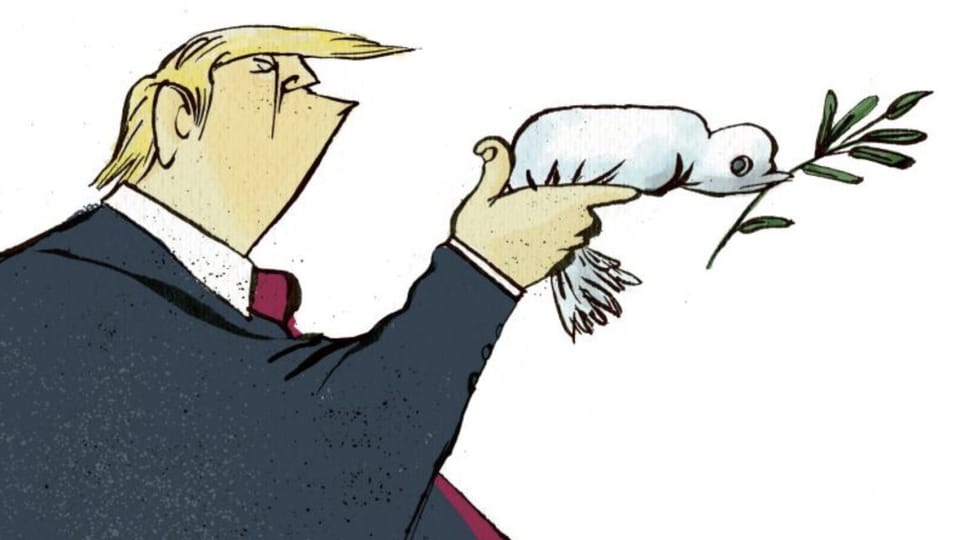
The world may now be on the brink of further dramatic events, comparable in their impact on global security to the current Russo-Ukrainian war. Western leaders are desperately seeking to end the war in Ukraine through negotiations – which effectively means without inflicting a critical defeat on the Russian army and, consequently, leaving Putin with a military machine hardened by years of fighting.
Kyiv has long warned that after Ukraine falls, the Kremlin dictator's next target will be the European Union. However, the Kremlin itself has never hidden that it views the current war with Ukraine as just one stage in a larger confrontation with the "collective West." Therefore, a new war is likely unavoidable.
History has repeatedly shown that the aggressor is always stopped only by reciprocal force. Therefore, Putin can only be countered by relying on a shared determination to strengthen collective security and not waiting for him to attack someone else. Especially since the countdown to Putin's new war is already underway. And everyone is wondering who will be next.
 Сергей Коняшин