Storm in the Gulf, or What to Expect from Iran's Arab Neighbors After Its War with Israel?
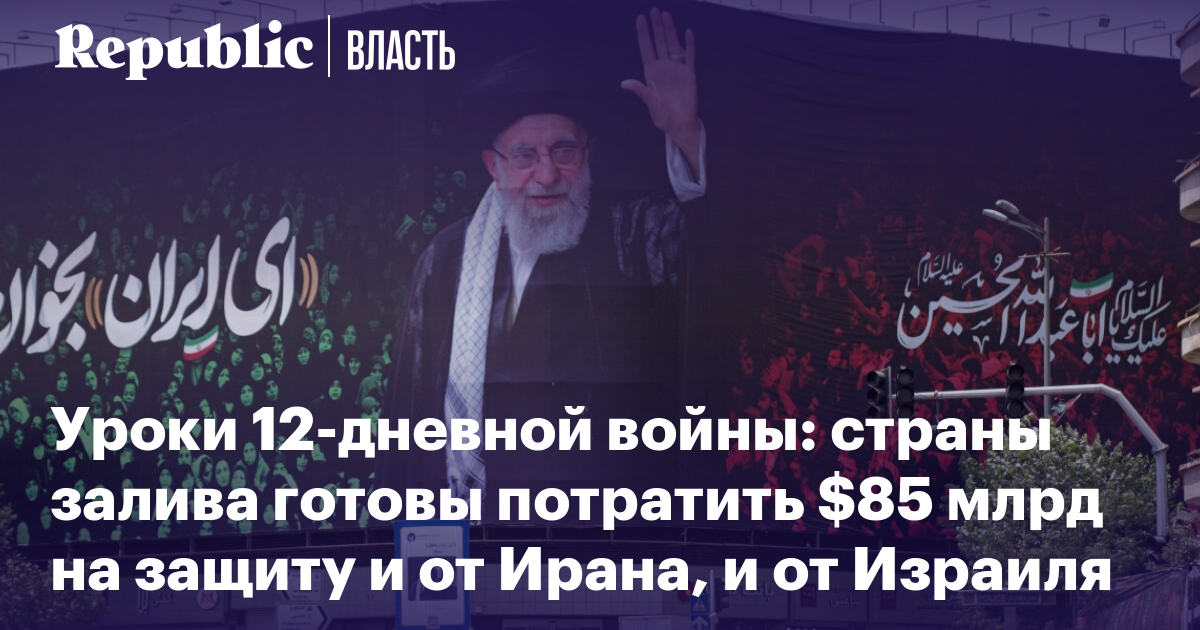
Three months after the end of the first open war in history between Israel and Iran, the Arab monarchies of the Persian Gulf have begun actively implementing large-scale plans to strengthen regional security. According to defense industry insiders, a detailed roadmap for the creation of an integrated missile defense system worth over $85 billion will be presented at the GCC defense ministers' summit scheduled for this October in Doha. This initiative was a direct consequence of the June events, when a 12-day conflict between Iran and Israel nearly drew Gulf countries into a regional war and forced them to fundamentally reconsider their entire security architecture.
In June 2025, the Israeli-Iranian conflict escalated into open war for the first time in history. The Israeli Air Force suddenly struck key Iranian nuclear facilities and military infrastructure. Jerusalem justified the move by the need to stop the Iranian ayatollah regime from developing nuclear weapons. The United States supported its Middle Eastern ally and joined the operation on June 22, launching airstrikes against Iran's underground nuclear facilities.
Tehran unsuccessfully attempted to respond with limited missile and drone strikes on Israeli territory, and for the first time launched a symbolic ballistic missile strike on the American Al-Udeid Air Base in Qatar. Hundreds of people were killed in Iran and several dozen in Israel during the 12-day escalation, after which a fragile ceasefire was announced, mediated by the US, starting on June 24th.
However, despite its short duration, this conflict had a noticeable impact on the situation in the Middle East and North Africa, primarily on the positions of the Arab monarchies of the Persian Gulf, one of the largest suppliers of oil to the world market.
Caught Between a Rock and a Hard Place
The Gulf Arab monarchies (the six countries of the so-called Cooperation Council: Saudi Arabia, the UAE, Qatar, Bahrain, Kuwait, and Oman) have taken an extremely cautious – and in some ways even ambiguous – public stance from the very beginning of the conflict. On the one hand, officially, they unanimously condemned Israel's military actions as an unacceptable escalation that violates Iran's sovereignty. Their statements emphasized their commitment to the UN Charter and the inadmissibility of "unprovoked attacks" on a sovereign state. Even Riyadh and Abu Dhabi, traditionally staunchly opposed to Tehran, publicly condemned the Israeli attack, although a decade ago they were quietly encouraging the idea of strikes against Iran as the "main threat" in their region. At the same time, Gulf countries emphasized the need for urgent de-escalation and a return to diplomatic methods. For example, the Saudi Foreign Minister immediately called his counterparts in Tehran, urging them to refrain from further military steps in favor of dialogue.
On the other hand, many in these Arab monarchies breathed a sigh of relief at the damage Israel inflicted on Iran's nuclear and military program, which potentially threatened them as well. It is at least logical to assume that the Gulf leaders could only quietly applaud such a clear and serious weakening of their largest regional rival. After all, there has been a long-standing, if not outright hostile, extreme mutual suspicion between Shia Tehran and the Sunni monarchies of the Persian Gulf (which they call the Arabian Gulf).
At the same time, it was vital for the Arabs to prevent their region from being drawn into a major military conflict, which would be fraught with problems for their oil exports – their main source of income. And the proximity of American bases on the territory of some of them, along with oil and gas facilities being targeted by Iranian missiles, made them potential targets for Iran if this conflict were to extend even slightly beyond the bilateral Israeli-Iranian air strikes. Therefore, as noted by a Chatham House expert, condemning Israel's strikes was the only way for diplomats from the Gulf countries to stay out of that war.
It is important to note that the positions of the Arab monarchies regarding Iran have evolved significantly in recent years. While in the past (especially in the 2010s), Saudi Arabia and the UAE were tacitly pushing Washington towards a hardline scenario against Tehran, they now seem more inclined towards military de-escalation and dialogue with Iran. In 2023, with China's mediation, Riyadh and Tehran completely restored diplomatic relations after years of animosity. And two months before the war, in April 2025, Saudi Defense Minister Prince Khalid bin Salman even visited Tehran for talks with Iran's top military and political leadership.
This line of improving relations is clearly part of a risk reduction strategy towards Iran, as the drone and missile attacks on Saudi oil facilities in 2019 vividly demonstrated the extreme vulnerability of the Gulf countries to any military strikes. Realizing this, Iran's Arab neighbors are now trying not to provoke it openly and are signaling at every opportunity that they will not be accomplices to any third countries in their attacks on Iran. For example, during the June crisis, Saudi Arabia, Qatar, and Oman directly prohibited the United States from using their bases and airspace to strike Iran. And Washington, apparently respecting this position, launched its strikes against Iran without using its facilities in these countries.
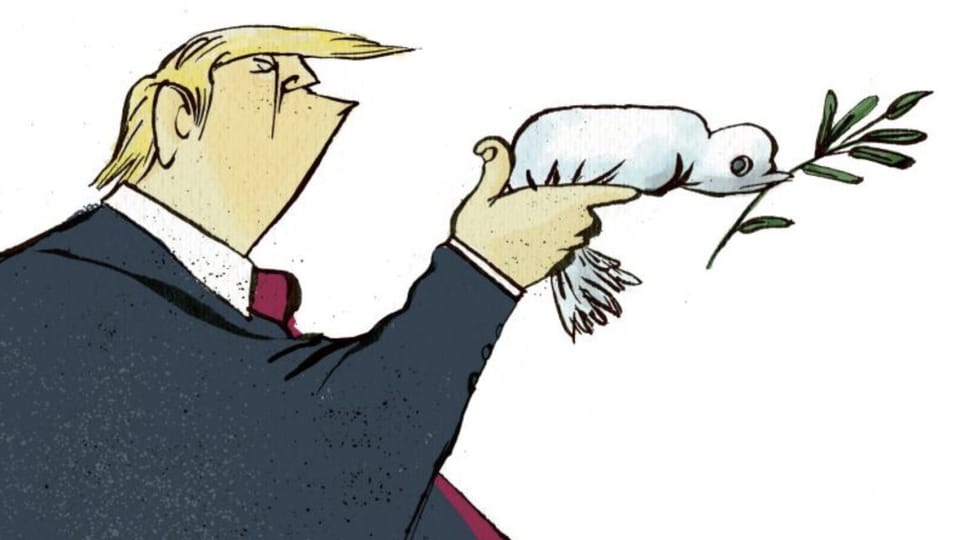
Meanwhile, the Gulf Arab countries, actively utilizing their diplomatic channels, were trying to play the role of mediators. Oman, for example, which has long been mediating in nuclear talks between Iran and the US, has hastily offered its platform for new negotiations. According to Reuters, Tehran itself requested mediation from Oman, Qatar, and Saudi Arabia, asking them to persuade Washington to help bring about a ceasefire. Riyadh and Doha conveyed to the Trump administration the concerns of countries throughout the region about the Iranian-Israeli escalation turning into a full-scale multilateral war. And their efforts were not in vain – in the end, the US president took on the role of guarantor of the ceasefire, and the Gulf capitals were able to maintain their image as neutral peacemakers.
It is also significant that the process of gradual normalization of relations between a number of Arab monarchies and Israel, which was taking place within the framework of the so-called "Abraham Accords," was demonstratively put on hold after these events. While there were talks before the war about a possible historic agreement between Saudi Arabia, Israel, and the United States, after the war began, Riyadh made it clear that there could be no rapprochement without progress on the sensitive Palestinian issue for Iran.
Thus, Israel's war with Iran significantly strengthened the Saudi line of caution. Prince Mohammed bin Salman clearly does not want to sacrifice the role of a neutral player and drag his kingdom, the largest Arab country in the Gulf, into the conflict for the sake of an alliance with Israel. Riyadh believes that premature "Abrahamization" without resolving the Palestinian issue would simply strengthen Israel's military-political dominance in the region without any benefits for Saudi Arabia.
Military Lessons
The war on their doorstep has forced the Gulf Arab countries to seriously reconsider their understanding of security. In the first few hours after the Israeli strikes, all six monarchies put their armed forces – primarily, of course, their air defense and missile defense systems – on high alert. And their fears were not unfounded – although Iran focused its retaliatory missile and drone fire on Israel, and later on American targets, the risk of accidental attacks or provocations by Iranian proxy groups (primarily the Yemeni Houthis) remained high in the early days of the war. Radar surveillance of the airspace was conducted non-stop.
Additional anti-missile batteries have been deployed in some capitals to protect oil refineries and ports in case Iran attempts to attack them. Fortunately, direct strikes on infrastructure in the Gulf countries were avoided. Tehran clearly did not seek to open a new front against its neighbors, understanding that this would give the US a pretext for a full-scale response.
Nevertheless, with the start of the first Iran-Israel war, the alarm bell rang once again for the Gulf Cooperation Council (GCC). The long-standing dream of the Gulf monarchies – the question of a collective self-defense system – has once again become a relevant topic. Especially since Iran's massive missile and drone attack on Israel clearly demonstrated the effectiveness of the layered air defense system built jointly with the United States.
The Gulf states have reached a logical conclusion – it's time to stop dragging their feet and urgently create a unified regional early warning radar and missile defense system, as without a common information space, the Gulf countries remain virtually blind individually in the face of a missile threat. For example, if the Iranian strike on Al-Udeid Air Base in Qatar had been more extensive, Doha's neighbors would have had to defend themselves "blindly" – because their radars and interception systems are still not integrated into any network for data exchange.
Therefore, the topic of an integrated GCC air defense system will likely come to the forefront after the June events. Consultations have already been held with military experts from all six countries, and the US proposals for supplying a unified early warning system and integrating American Patriot or THAAD complexes with the national military systems of the Gulf states are being carefully studied. Of course, such a complex anti-missile defense architecture is not a quick undertaking. However, the political will to implement this task has clearly strengthened on the shores of the Persian Gulf.
The United States, acting within the framework of informal agreements with Gulf partners, also strengthened the region's defenses during the conflict. Washington quickly deployed additional missile defense batteries to its bases in Qatar, Kuwait, and Bahrain to help cover critical infrastructure in allied Arab countries. This, in turn, allowed Israel to redistribute its resources more optimally, as the American THAAD systems in the Gulf took on part of the interception burden of some of the missiles, allowing the Israeli Iron Dome and David's Sling systems to focus on protecting their own cities. This rapid coordination between the US, Israel, and the Gulf monarchies unexpectedly demonstrated the allies' ability to act as a united front in the event of a major regional war.
Perhaps it's worth mentioning separately the historic arms deal concluded between the US and Saudi Arabia in the context of the Iran-Israel events. On May 13, 2017, a month before the war, a record 42 billion package of contracts was signed in Riyadh during Donald Trump's visit – the largest in the history of American-Saudi military cooperation. The package included modern air defense and missile defense systems, combat aircraft, drones, communication systems, as well as long-term commitments to training Saudi military personnel. The White House positioned this deal as "unprecedented confirmation of Washington's commitment to the security of its partners."
This move was undoubtedly intended to further bind Riyadh to the United States in light of the growing threat from Iran. After the war, the relevance of these supplies only increased. The new weapons are intended to close the gaps identified in Saudi defenses and convince them that America is still the main guarantor of regional and global stability. In addition to Riyadh, military cooperation between the US and other Gulf monarchies is strengthening. For example, consultations are underway regarding large shipments of weapons to the UAE and Qatar, primarily in the field of air defense.
Oil Under Threat
As is well known, security issues for Arab oil and gas exporters are inextricably linked to economic risks. Therefore, the Iran-Israel conflict immediately impacted the oil market – oil prices soared in the first days of the hostilities. Yes, the jump in Brent quotes approached 8% – from approximately $69 to $77 per barrel. Investors were understandably factoring in the risk of supply disruptions from the Middle East, fearing that the Strait of Hormuz, a key artery through which up to 20% of global oil traffic passes, could be blocked as a result of the war.
Some forecasts sounded quite alarming – for example, if export terminals (such as Iran's Kharg Island) were hit, or if Iran attempted to block the strait, prices could confidently rise towards almost 00 per barrel. However, the worst-case scenarios were avoided. Just two weeks later, when the shaky ceasefire came into effect, prices gently retreated and returned to almost pre-war levels.
Nevertheless, the Iran-Israel war clearly exposed all the vulnerabilities of the oil and gas infrastructure of the Arab countries in the Persian Gulf. Iran loudly reminded the world of its trump card, threatening to close the Strait of Hormuz. For the GCC countries, this was the worst nightmare. They wouldn't be able to unblock the strait on their own – their navy is insufficient to counter the Iranian Navy. In this matter, they would have to rely solely on the United States. However, US intervention in the conflict would also be fraught with the risk of an Iranian strike against the Gulf countries themselves. And the Gulf leaders are well aware of this dilemma. It's no coincidence that information emerged in the midst of the fighting that Iran, through intermediaries, conveyed the condition that it would not attack the tankers, terminals, and other oil and gas infrastructure of its Arab neighbors if they distanced themselves from supporting Israeli strikes against Iran.
Therefore, it is natural that one of the consequences of the June 2025 stress test for the Gulf states was an increased interest in alternative export routes that bypass the Strait of Hormuz bottleneck. Bypass oil pipeline projects were implemented before, even before the war. For example, the Saudi East-West pipeline to the Red Sea or the Emirati "Abu Dhabi - Fujairah" pipeline to the coast of the Gulf of Oman. Now, however, talk of increasing their capacity and building new bridges has noticeably intensified. While such projects were previously often considered economically questionable, after the war they began to be discussed in the context of strategic necessity and financial security – the less oil and liquefied natural gas that passes through the Strait of Hormuz, the fewer levers of pressure Iran will have over its neighbors. Additionally, given the experience of cyberattacks and navigation disruptions recorded around the Strait of Hormuz during the conflict, Gulf oil and gas companies are also strengthening their cybersecurity and shipping control measures.
Thus, it can be said that the June events prompted the Gulf monarchies to become even more actively involved in economic diversification. For example, for Saudi Arabia, the "Vision 2030" program, aimed at reducing dependence on oil and developing new industries, has long been a top priority. Crown Prince Mohammed bin Salman is currently focused on mega-development projects – from the futuristic city of NEOM to attracting investment in technology and tourism. Any war near its own borders directly threatens these plans, scaring away investors and causing capital flight. Therefore, they see peace and stability as the key to successful diversification of the Gulf elite.
From "sheriff" to "partners"
American policy in the Middle East is entering a phase of significant adjustment, if not a radical shift, in light of the latest escalation in tensions between Iran and Israel. Washington, on the one hand, has clearly demonstrated its willingness to firmly support Israel – its key ally – even at the cost of an open confrontation with Iran. In this sense, the direct US military intervention (Operation Midnight Hammer on June 22) showed that the Donald Trump administration is following the traditional White House line of ensuring Israel's security. On the other hand, the Americans clearly had to take the interests of their Arab partners into account as well. This led to a noticeable dilemma during the conflict: the White House simultaneously declared its support for Israel's right to self-defense while emphasizing that it did not seek to expand the war and was open to negotiations.
Now, after the war, Washington seems to be trying to rebuild trust with the Arab monarchies, which was somewhat shaken by the Israeli attack it supported. And one of the most notable tools for this is the record military contracts already mentioned with key GCC states, primarily Saudi Arabia. The Americans' calculation is obvious: by expanding the defensive capabilities of the Saudis and their neighbors, the US wants to both allay their fears and tie them to itself for years to come through military equipment maintenance and personnel training. Not to mention the direct increase in their role in deterring Iran.
Additionally, the Trump administration is apparently not abandoning its plans to expand the Abraham Accords. The current American president has repeatedly called the establishment of diplomatic relations between Israel and leading Arab countries one of the central goals of his Middle East policy. Last July, the US Special Envoy for the Middle East, Steve Witkoff, held working meetings in the Middle East, urging the parties to resume dialogue on normalizing relations. In Washington, they apparently seriously believe that deeper integration of Israel into regional blocs and the formal conclusion of defense alliances (including the mutual defense treaty with Saudi Arabia that was discussed earlier) will finally detach the Gulf monarchies from the influence of strong geostrategic competitors – primarily Russia and China – and thus create a unified anti-Iranian front.
However, after the June War, these plans were met with a harsh reality. As mentioned above, Riyadh and other Gulf Arab capitals have paused and are now setting strict conditions (primarily progress in the Palestinian settlement) for continuing any ties with Israel. Therefore, the US will likely be forced to adjust its priorities and, instead of hastily pushing through normalization deals, will focus on practical military cooperation with its Gulf allies and on containing Iran through existing alliances.
An updated concept is already taking shape – a kind of Middle Eastern counterweight to Iran, where the Gulf countries play the roles not of bystanders, but of active participants. This refers to the creation of multilateral security mechanisms – for example, a regional missile defense system involving the United States and the GCC countries (possibly including Israel in the future, if politically acceptable). Washington plans to covertly encourage cooperation between Arabs and Israel at the military level: intelligence sharing about missile launches, joint missile defense exercises, etc. This approach will allow us to avoid sharp corners while strengthening common approaches and practices in the face of Iran's missile and nuclear program.
The energy aspect of the US strategy cannot be overlooked here either. For Washington, as is well known, it is vital to prevent disruptions in the global oil market. After the 2019 attacks on Saudi Arabian oil refineries, the US experienced firsthand that instability in the Persian Gulf affects global gasoline prices and, consequently, the wallets of American consumers. Therefore, after the recent US war, the US will likely strengthen coordination with Riyadh and Abu Dhabi on production management within the framework of "OPEC+".
In the very first days of the Iran-Israel war, the Americans asked Saudi Arabia for guarantees that it would significantly increase production if necessary to compensate for a possible Iranian withdrawal from the market. And although the crisis quickly passed, such swift synchronization of efforts sent a clear signal – the US is seriously counting on its Gulf partners to help keep the energy market from shocks, and they, in turn, are ready to show flexibility to help their main ally avoid economic turmoil.
At the same time, the American side appears likely to continue its restrained diplomacy towards Iran. Following the cessation of hostilities, a possible return to indirect negotiations on the nuclear program was announced. From the perspective of the Gulf monarchies, US participation in any dialogue with Iran, as long as it doesn't lead to new aggression, is an unequivocal good. Therefore, Washington will try to take into account the concerns of the Saudis and their Arab neighbors, giving them a role – albeit privately and informally – in discussions about future agreements with Tehran.
More broadly, the US role in the region has noticeably transformed since the Iran-Israel war. It seems the era of Washington's complete hegemony in the Middle East is gradually coming to an end. First and foremost because interest in endless wars and a highly costly presence in the Middle East is clearly waning within the United States itself. Especially considering that their focus is clearly shifting towards competition with China in Asia today. However, it was equally evident that the 12-day June War also showed that it is still difficult to do without American military power during major geopolitical upheavals. Neither the Israelis nor Iran's Arab neighbors could have achieved the results they gained through joint action with the United States on their own.
Therefore, I think in the coming years, the US will try to shift from the role of "sheriff" to the role of "partner" in the Middle East – meaning, while remaining a security guarantor, they will involve regional players more in maintaining order and security, rather than acting alone. For the Gulf countries, this will mean needing to show more initiative instead of waiting for Washington to do everything for them. A trend towards the redistribution of responsibilities is already forming – monarchies are taking on more responsibility for their own defense (funding it, participating in coalitions), while the US continues to provide them with a missile defense "umbrella" and critical military technology.
Russia's Sphere of Influence
For Russia, the Middle East crisis in June 2025 was a significant test of its claims to influence in the region. And the results of this check were, to put it mildly, contradictory. Moscow, which positions itself as a partner of all key players – Iran, Israel, and the Arab countries – has encountered a clear problem.
From the very beginning of the conflict, the Kremlin unequivocally condemned the actions of Israel and the United States. The Russian Foreign Ministry stated that there were "unprovoked strikes against a sovereign state," a violation of international law, and warned of the risk of further escalation. At the same time, Russia called on all parties to a diplomatic resolution of the conflict and offered its mediation services. In phone calls with the leaders of Israel, Iran, and the UAE, President Vladimir Putin expressed his readiness to "provide a platform for dialogue" and contribute to a peaceful settlement. At the St. Petersburg Economic Forum, Putin noted that Russia is in constant contact with both Tehran and Jerusalem, and is making its own proposals for a settlement, although it "does not seek to impose its mediation on anyone."
However, with these statements, Moscow's influence on the development of events was essentially limited. Firstly, unlike the US, Russia has no leverage over Israel. Secondly, although Moscow and Tehran signed a "Strategic Cooperation Agreement" earlier this year, it contains no mutual defense obligations. Therefore, the Kremlin, itself bogged down in its most difficult war in Ukraine, immediately made it clear that it was not going to fight on Iran's side. Moreover, Russia wasn't even in a hurry to increase military aid to Tehran. Therefore, Iran's expectations that a large northern ally would supply them with advanced weapons (such as modern aircraft or air defense systems) were not fully met.
Especially since, despite close ties with Iran (coordination in Syria, defense deals, drone purchases, etc.), the Kremlin simultaneously maintained good working contacts with Israel as well. And considering the latter's immense military power, Moscow clearly wouldn't want to turn Jerusalem into another enemy.
In the end, as is well known, Russia limited itself to rhetorical support for Iran and general calls for peace. However, she clearly failed to play a real role as an "external arbiter." Washington was the main mediator, and the ceasefire was secured through US-Iran communication channels with the participation of Qatar and Oman.
From the perspective of Russia's economic interests, the war had a dual effect on it. On the one hand, the surge in oil prices amid the fighting brought Moscow obvious financial benefits. Carnegie experts noted that this favorable situation helped the Kremlin balance the budget without a deficit. For two weeks, Russia, the largest exporter of energy resources, was making windfall profits from high oil prices, which was particularly convenient for it given Western sanctions.
Additionally, while the world's attention was focused on the Middle East, a further bonus for Moscow was the distraction of the US and Europe from the war in Ukraine, which slightly eased international pressure on Russia – at least, that's how it was perceived in the Kremlin. However, these gains were short-lived. The oil market quickly stabilized, and global media interest returned to Ukraine almost immediately after the end of the Israeli-Iranian confrontation.
However, the strategic losses look much more significant for Russia. Iran, as a close partner of Moscow, suffered serious damage in that war. His nuclear program and military potential have been set back by months, if not years. Moreover, Russia's large-scale economic projects in Iran are under threat. In 2022–2024, Russia invested billions of dollars in Iranian oil and gas fields, becoming the largest foreign investor there. Moscow viewed Iran as a crucial link in bypass logistics routes and even planned a joint gas hub on Iranian territory to supply its gas to Asia [85]. If the war were to drag on or Iran's infrastructure were to suffer more damage, all these investments could simply go up in flames in the conflict.
Throughout the entire 12 days of the war, Russia essentially watched helplessly as its ally was being struck, unable to help him in any way to save its investments. I don't think you need to be a prophet to assume that Tehran will now seriously and for a long time consider the reliability of Moscow as a partner and ally. And the first signs of this cooling have already appeared – disappointed with the prospects of an alliance with Russia, Iran is now drifting more and more into China's sphere of influence.
It is noteworthy that the Arab Gulf states maintained contacts with Russia during the Iran-Israel war, but did not place high hopes on them. I think Russia will continue its cooperation with Riyadh and Abu Dhabi through the OPEC+ framework one way or another. For example, by coordinating oil production – which, incidentally, was evident again after the war, when Russia and Saudi Arabia synchronously extended voluntary production cuts to support price levels. Most likely, relatively large investments by Emirati funds in Russian assets and other economic ties will also be maintained. The Gulf Arab monarchies value Moscow's independent stance and alternative technologies (such as nuclear energy or weapons). However, on matters of military security, Arab regimes still rely and will continue to rely solely on the United States. And the Iran-Israel war has only strengthened this trend.
After the Storm
Overall, the Arab monarchies of the Persian Gulf weathered the regional crisis with minimal losses, but they learned several serious lessons from it. Thanks in large part to cautious diplomacy and skillful maneuvering between Washington and Tehran, they managed to avoid being directly drawn into the war. Now they face an equally ambitious task: to strengthen their economic and military resilience in case of new shocks. Therefore, in the near future, we will likely see an accelerated deployment of a regional air defense system, deeper intelligence cooperation between Arab states, Israel, and the United States, as well as intensified efforts towards political settlements for the remaining conflict zones – Yemen, Lebanon, the nuclear issue, etc.
And although the threat of a direct military conflict between Iran and Israel may seem largely exhausted to some of us today, the risk of its resumption still remains. After all, its root cause – the Iranian nuclear program – has still not been resolved or eliminated. Consequently, the Arab Gulf countries will be forced to continue walking a tightrope, trying not to lose their balance. But their balance in the modern world depends on a great deal...
 Сергей Коняшин