The Jihadist Banner over the Sahel, or What to Do When Terrorism Becomes a Homeland?
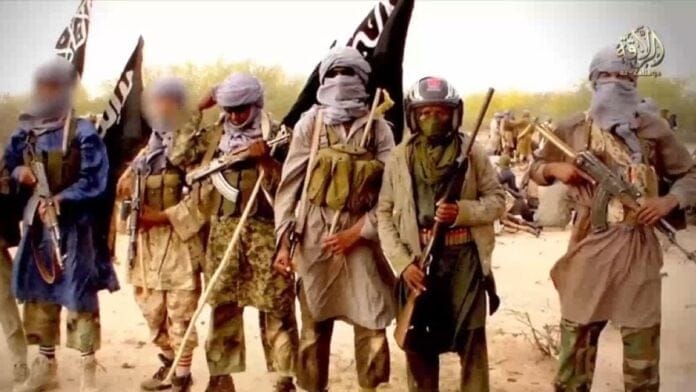
As Western countries, former colonial powers, lose their influence in the Sahel and local states are shaken by coups, a new jihadist monster appears to be growing on the African continent. Won't it turn out that in the coming years, we will look back with nostalgia on the times when the main terrorist threat was al-Qaeda or ISIS?
It's not easy to fully translate the name "Jama'at Nusrat al-Islam wal-Muslimin" into English, preserving all its nuances of meaning. Primarily due to the breadth and multilayeredness of the lexical meaning of the Arabic word "nusra[tun]". In different contexts, its range can extend from helping someone or supporting something to victory or another kind of triumph – both directly over an enemy in war and in a more abstract sense. Therefore, let's clarify the meaning of this name as follows: "A group (association, fighting brotherhood) in support of and assistance to the Islamic religion and Muslims for their victory over their enemies, both spiritually and in the material world." However, further in the text, we will use the English abbreviation JNIM, which is already well-established today.
Jihad with a Human Face, or Che Guevara's Heirs Under the Banner of Islam
So, JNIM is not just one of the many Islamist groups operating in the Sahel today. By mid-2025, it had evolved into the largest extremist force in sub-Saharan Africa and already controls vast territories. There, JNIM is actively implementing all traditional Islamic practices of life, religious education, and social relations, including Sharia justice, and is even forming its own tax system – also, of course, in the old Islamic style. Specifically, in the territories under its control, JNIM is establishing a simplified system for collecting "zakat" (a religious tax for the benefit of the ummah – the Islamic community), resolving disputes, assisting in protection against marauders, etc.
This kind of "jihad with a human face" became particularly attractive to some locals against the backdrop of repression by pro-government militias and constant ethnic cleansing. Therefore, for a portion of the population, JNIM doesn't appear as an occupier, but as a protector and guarantor of minimal order. Thus, in the political vacuum that has emerged in the Sahel as a result of accumulated distrust of state institutions, and after the weakening of European and international influence, JNIM is confidently transforming into a kind of proto-state – with very distorted by modern standards, but nevertheless its own security forces and mobilization mechanisms based on ethnic and religious networks, and even a semblance of an administrative infrastructure. Essentially, what we now have is no longer just an armed movement, but an alternative form of state power rooted in the realities of local communities.
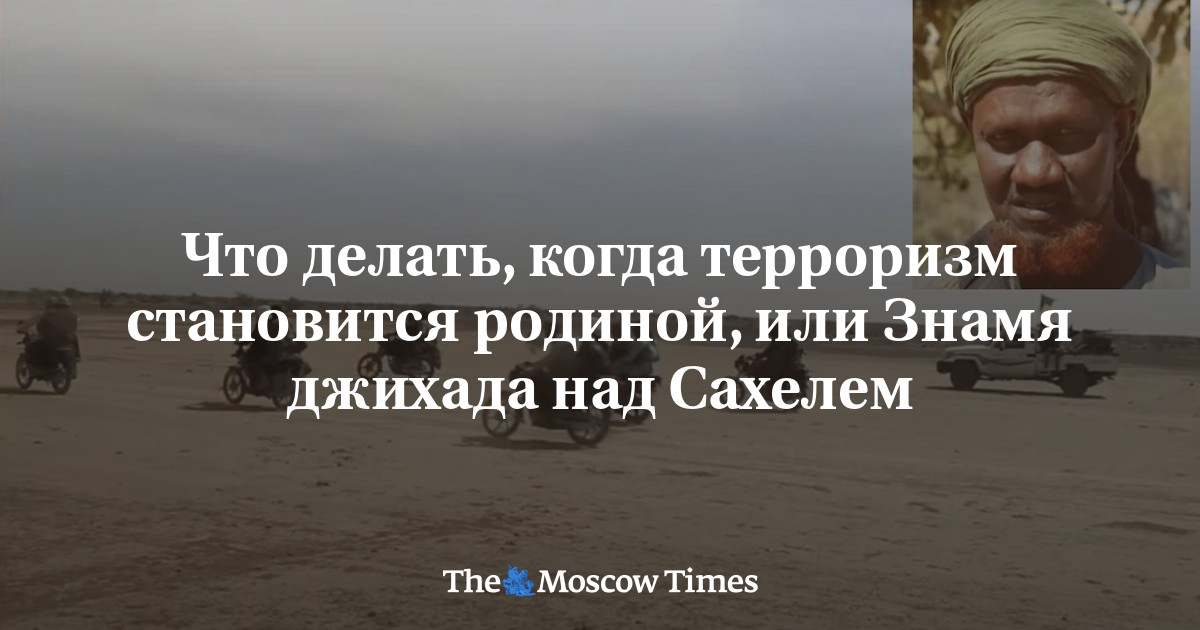
Her "zone of influence" currently extends from the central part of Mali to northern Benin, where it borders Niger. And this zone continues to grow due to the weakness of local governments, which are unable to control even major transportation arteries within their own territories. Yes, the group has been conducting large-scale operations in the regions of Djibo (Burkina Faso), Tillaberi (Niger), Timbuktu (Mali), and others for several years, actively using mobile motorcycle columns and ambushes, as well as conducting active propaganda work through agitators in villages. Essentially, this is Che Guevara's tactics, which proved successful in Latin America in the mid-20th century. The increase in JNIM activity in the "three borders" area – Mali, Burkina Faso, and Niger – is particularly indicative. Here, the group is fiercely competing with the Islamic State in the Sahara (ISIS) for control of gold mines and logistical corridors. Despite fierce resistance, including targeted airstrikes by local authorities supported by Russian military experts, JNIM is operating quite aggressively and successfully, demonstrating high mobility, adaptability, and the ability to quickly regain combat readiness.
Against this backdrop, Russia could be almost the only counterweight to JNIM, which maintains a real presence and influence in the region. Since 2023, Moscow has been increasing its military presence in Mali by supplying equipment there (primarily aviation and drones), as well as by sending advisors. On the one hand, this intervention is effective (by local low standards, from the perspective of the host country), but on the other hand, it is fraught with serious strategic risks. Each new attack on a column of Russian mercenaries and each new JNIM manifesto proclaiming them as the new colonizers is a significant blow to Moscow's image among a large segment of Muslims, and not necessarily the most peaceful ones. And it must be said that JNIM is quite adept at using the Russian presence in the Sahel as a factor for the ideological mobilization of its supporters. European crusaders, they say, simply replaced the French flag with the Russian one, but their goal of oppressing Muslims remains the same, and only we, JNIM, by the will of Allah, can protect you from them – so join our ranks quickly and fight against the invaders!
On the one hand, after the collapse of the European (primarily French) civilizational development project in the Sahel, a unique window of opportunity is now opening for Russia. On the other hand, after the Islamists gained strength, the cost of mistakes also increased. Especially since Moscow keeps stumbling over the same Islamic pitfalls. It is obvious that under conditions where all decisions in the country are made by only one person, who is objectively very ignorant about Middle Eastern and African affairs, effective policy in this direction cannot be expected. Thus, the Sahel becomes another test of strength for Moscow's new foreign policy adventure.
A New Caliphate in the Sands of the Sahel, or What Are the Jihadists Building Their Republic On?
Formed in 2017 as a coalition of several jihadist groups operating in the region, most of which splintered from al-Qaeda, JNIM quickly became an independent and powerful regional actor. Its core was initially formed by three small radical groups: Ansar al-Din (Supporters, or Defenders, of the Faith), al-Murabitun (Those Standing Guard, or Those on the Front Lines), and the Malian wing of Al-Qaeda in the Islamic Maghreb (AQIM). The initiator of the merger was the influential Tuareg field commander Iyad Ag Ghali, who, along with the charismatic preacher Amadou Koufa (a representative of the West African Fulani people), became one of the reformers of the jihadist strategy in the Sahel – a departure from the model of "nomadic" terrorism and a move towards "sedentary," meaning tied to captured territory, insurgent resistance.
From its inception, JNIM developed a governance model based not only on brute force but also on trust-based integration into the daily lives of local communities. In the areas currently controlled by the group – rural areas of Mopti, Ségou, northern Timbuktu, as well as northern Burkina Faso and western Niger – it has essentially formed a parallel state administration, including courts (Sharia), a security apparatus (popular militias), and even the foundations of an economy (distribution of some war spoils among its supporters). This hybrid system of governance through fear and patronage has made JNIM more than just another gathering of terrorists; it has become a prominent political and military entity with quasi-state functions, which must now be reckoned with not only by local official governments but even by foreigners.
By mid-2025, the group has around six thousand active fighters, as well as hundreds of illegal agents on the ground. It operates through so-called "katibas" (Arabic, plural; singular katiba - combat brigade), organized geographically. Alongside the aforementioned "Ansar al-Din" and "al-Murabitun," which were formed primarily by people from the Maghreb, the largest and most influential JNIM katibas today are also considered to be "Katibat Masina" (Masina Brigade) from central Mali and the confederation of jihadist groups known as "Ansar al-Islam" in Burkina Faso. These armed groups are actively coordinating their actions, using common rear bases, and exchanging intelligence and weapons. This decentralized yet cohesive approach provides JNIM with significant flexibility and high resilience even in the face of heavy losses.
It should also be emphasized that JNIM's influence extends far beyond their direct military presence. The Jama'at actively uses propaganda, including in local languages (Fulani, Bamana, etc.), to recruit members, including from the poorest and most marginalized segments of the population, many of whom not only do not know Arabic but sometimes have a very superficial understanding of Islam itself. Specifically, among the tribes of the large nomadic Fulani people, JNIM found its main social base, offering them an ideology of religious equality, protection from ethnic cleansing, and quasi-judicial justice in areas where official state structures had long lost all control.
The Black Flag over the Gray Zone, or the Laboratory of Terrorist Statehood
In 2022, after years of intensive counter-terrorism efforts, France finally concluded its Operation Barkhane, which had lasted since 2014, and withdrew its contingent from the Sahel countries (primarily from Mali). Following its departure were MINUSMA (the UN peacekeeping mission), which did not extend its mandate that expired on June 30, 2023, as well as American instructors and security companies, who were unwelcome guests for the new authorities in countries that had experienced a series of coups d'état. JNIM began to rapidly strengthen, capturing some military garrisons in northern Burkina Faso, laying siege to Timbuktu, carrying out a major massacre in Djibo, and inflicting heavy losses on the armies of the region. In fact, that's when the qualitative transformation of the traditional Islamist guerrilla network into a sustainable proto-state entity occurred in territories from Mali to Benin.
The hybrid nature of the JNIM management model – specifically, its ability, rare for jihadists, to combine religious fanaticism and brutal terror with socio-political flexibility and economic pragmatism – makes it far more dangerous than previous "traditional" decentralized terrorist organizations like al-Qaeda or the Islamic State (formerly ISIS). Unlike the latter, for example, JNIM, while not proclaiming the need to build a truly Islamic caliphate regardless of existing state borders, is essentially already doing just that.
For millions of people living in the "gray zones" of the Sahel, JNIM has become a kind of homeland. The fighters of the Jama'at already control the most important roads, markets, water sources, and in some places even mineral deposits. They judge, defend, execute, and mobilize West Africans into military units often more fairly, better, and more effectively than "official" countries do. At the same time, every instance of arbitrary action by pro-regime militias or their Russian allies, every civilian killed or home destroyed, only strengthens the Islamists' position. Jihad as performed by JNIM is much more than just a holy war. This is a qualitatively new form of organizational and political order in Russia's allied countries, where the previous order had not even been completely destroyed.
Thus, the situation that has developed across a significant area of the Sahel almost perfectly matches all the characteristics of the so-called "triple collapse effect" described by modern researchers (Akhremenko et al., 2019; Efremova, 2018): institutional (state collapse), military (army disorganization), and diplomatic (loss of external control). The armies of the region – Mali, Burkina Faso, Niger – were demoralized and largely depleted of their combat readiness after a series of military coups and the loss of access to Western aid. Coordination between them has practically ceased. For the new elites, maintaining power in the capitals was more important than fighting terrorism in the provinces. As a result, JNIM gained not only room to maneuver but also time to strengthen its positions, redistribute its forces, and forge local alliances with ethnic and religious communities.
Against this backdrop, Western powers, including the United States, quickly lost their former tools of influence in the Sahel. The actual withdrawal of the European and international presence from the region turned out to be less of a planned strategy and more of a forced reaction to public discontent and the rise of anti-French sentiment. After losing their field bases, restrictions on satellite and radio reconnaissance, and the cessation of direct contact with local military personnel, Washington and Paris have virtually lost sight of and control over everything happening on the ground. JNIM, on the other hand, taking advantage of the resulting uncertainty and its influence over the local population, significantly strengthened its control over key logistical and economic hubs, including illegal ones – such as smuggling and drug trafficking routes.
Upon closer examination, the rapid successes of JNIM cease to appear unexpected or the result of the exceptional charisma and talent of its leaders. It is clear that the rise of African jihadism is a direct consequence of the strategic shortsightedness, political weakness, and military indecision of Western countries. The problem isn't even that the modern democratic world has effectively lost its influence in the Sahel and control over the processes taking place there. Much more serious is that along with this, he is rapidly losing the global strategic initiative, which Russia is already successfully seizing (with what consequences for itself is another question), and behind whom China traditionally stands.
Therefore, JNIM is no longer just a military or religious threat. This is a powerful political factor capable of significantly altering the balance of power on a global scale. Well, and of course, another reminder of the need to seriously support the existing security architecture in the region you are interested in, if it is important to you. Otherwise, someone else will quickly take your place.
The African Taliban, or How Does Terror Fuse with the People?
The collapse of the international presence in the Sahel was not just a turning point in modern African history – it paved the way for the total degradation of the entire regional security system. It is natural that the power vacuum that arose was quickly filled not by democratic institutions – where would they come from in the Sahel without European support? – but by jihadist networks: primarily JNIM and its closest competitors from the "Islamic State in the Sahel" (ISIS) – an equally passionate jihadist group. Because of this, JNIM was ultimately unable to achieve complete freedom of action in the politically unstable territories it controlled.
Since the end of May 2025, ISIS has launched active offensives in the "three borders" area (Mali, Niger, Burkina Faso), where it has captured a number of key points, including water sources and gold mines near In-Tilit. JNIM militants were driven out of a number of positions. ISIS seized their motorcycles and vehicles (popular pickup trucks in Africa, essential for maneuver warfare in the desert), as well as their water supplies and livestock. In response, JNIM conducted a successful ambush against ISIS near Gabero, demonstrating that it had not lost its ability to inflict painful counterattacks. However, the redeployment of its forces in favor of the front in Burkina Faso left positions in Mali exposed, which ISIS militants, who traditionally operate more brutally and uncompromisingly, immediately took advantage of. All these clashes, as is customary locally, were accompanied by mass and brutal killings of civilians and sexual violence against women and girls. However, despite occasional setbacks, JNIM continues to maintain influence in a number of strategically important areas – particularly in Burkina Faso, where the group's brigades participated in successful attacks on Djibo and Solle.
International analysts and human rights defenders note that over time, clashes between JNIM and the Sahel branch of the Islamic State are becoming increasingly fierce and are gradually extending beyond the mere armed rivalry between the two jihadist groups. Increasingly, this is a struggle between religious concepts and governance models – the rigidly centralized, messianic terror characteristic of ISIS, and the hybrid, highly adaptive, insurgent self-governance offered by JNIM. While ISIS militants sow chaos in pursuit of power through brutal intimidation – mass executions, violence, looting, and cruel public punishments – JNIM operates much more subtly and gently. Their strategy is to infiltrate the social fabric, embed themselves in the daily lives of rural communities, and almost completely dissolve into them, with the expectation that when JNIM merges with the people, the entire population becomes JNIM. This is particularly noticeable in Mali and Burkina Faso, where state institutions have long lost all credibility among the population.
Furthermore, there is a noticeable difference not only in their approaches but also in the target audiences of both groups. If ISIS, inheriting the values of ISIS and appealing to Islamic radicals around the world, aims for extremely demonstrative violence and maximum global resonance, JNIM is focused solely on the local communities in the regions it controls, often intervening in purely local, almost unknown conflicts – for example, regional inter-ethnic disputes between the Fulani people and the Dogon and Mossi peoples. Therefore, while ISIS is primarily gaining international fame and mostly media support, JNIM is securing a steady flow of actual live recruits and the loyalty of a significant portion of the local population.
The group deliberately and purposefully cultivates the image not of a fighter for the ideals and purity of Islam as a religious concept, but of a fighter for the interests and protector primarily of Muslims themselves – specific people with their specific problems. Where ISIS burns the homes and villages of those who violate Sharia law, JNIM offers resolution of disputes through Sharia courts, assistance to the poor, and protection from criminals and bandits. As a result, many residents of the region, tired of the abuses of the legitimate army and police or the looting by pro-government militias, view JNIM as the lesser evil. As a result, JNIM is often spared the need for direct confrontations with its opponents and integrates seamlessly into local structures – from the "shura" (council of elders) to trade networks.
However, beneath the mask of such "populism," the traditional fanatical Islamist ideology is still hidden. The ban on secular education for boys and on any education for girls, early forced marriages, public executions of criminals and "apostates," and the use of brutal corporal punishments (such as cutting off the hands of thieves or stoning unfaithful wives) are also an integral part of JNIM's Sharia practice. In a way, JNIM's social contract with the population under its control is reminiscent of the Afghan Taliban's approach – being helpful to people as long as they submit without question, but becoming brutal and merciless if they refuse to acknowledge the supremacy of Allah's authority.
Tactics without Strategy, or Why Do Russians Keep Repeating Others' Mistakes?
Against the backdrop of the geopolitical vacuum left by the departure of Western powers, Russia remains almost the only major force that is not just observing the situation in the Sahel but is actively intervening in it. Since 2023, Russian military infrastructure has been deployed in Mali, including Mi-24 attack helicopters, Su-24 strike fighters, reconnaissance and attack drones, as well as a group of Russian military experts. This configuration allows Russia to advise and support local authorities in their fight against various jihadists, including JNIM structures, particularly in the Sebabougou, Sandaré, and Boulikessi areas.
Russia is trying to build its intervention on the principle of minimal physical presence. Unlike the heavy and protracted French operation "Barkhane," the actions of the Russian Aerospace Forces in the Sahel are based on targeted support, precision, mobility, and close coordination with local partners. This allowed Moscow to position itself as a responsible ally that does not interfere in its partner's internal affairs and is able to offer African governments an alternative to the West's neocolonial paternalism.
However, the effectiveness of Russian military aid is quite limited. It is clear that the brute force of foreign mercenaries can never replace the lost political influence and full-fledged work with the population. Without these essential elements, any tactical victories remain temporary. Especially since, lacking a clear strategy and even a final goal for its military presence in the Sahel, Russia is acting more opportunistically than systematically.
Moreover, JNIM itself has repeatedly shown that it is not only not afraid of the Russians, but also knows how to fight them. Over the past year and a half, the group has carried out a number of successful attacks on convoys where, according to available information, fighters from the Wagner PMC were located. In their sermons, JNIM emirs directly call Russia their enemy – the new "crusader" who has taken France's place. Thus, for the jihadists themselves, Russia's limited and ineffective intervention in the Sahel is not so much a problem as a powerful ideological stimulus and unifying factor. After all, they now have a specific, tangible enemy against whom they need to unite, appealing to historical memory of colonialism and the desecration of the Islamic faith.
Thus, to seriously (and not just in reports to Putin) change the course of events in the Sahel in its favor, Moscow will have to pass the test of genuine multi-level involvement in the affairs of African countries. Specifically, to combine strikes with political diplomacy, offer allies significant economic assistance (primarily for infrastructure reconstruction), invest in education, logistics, the public administration system, and so on. Dialogue with religious and ethnic communities is particularly important, without which any external presence will inevitably be perceived as an occupation.
JNIM has already proven it can do this, while Putin's Russia has not. Moreover, jihadists are just as good as Moscow at exploiting the image of the "outsider," especially since objective political reality is clearly on their side in this case. Therefore, if Russia truly wants to establish itself in the region, it will have to genuinely become "one of them" – not just for the elites in Bamako, but also for rural sheikhs, street vendors, imams of destroyed mosques, and unemployed youth. Otherwise, Russia risks repeating the path of Western countries – achieving tactical victories, only to lose the strategic game completely afterwards.
 Сергей Коняшин