Trump the Peacemaker: Many "Finished" Wars, One Result
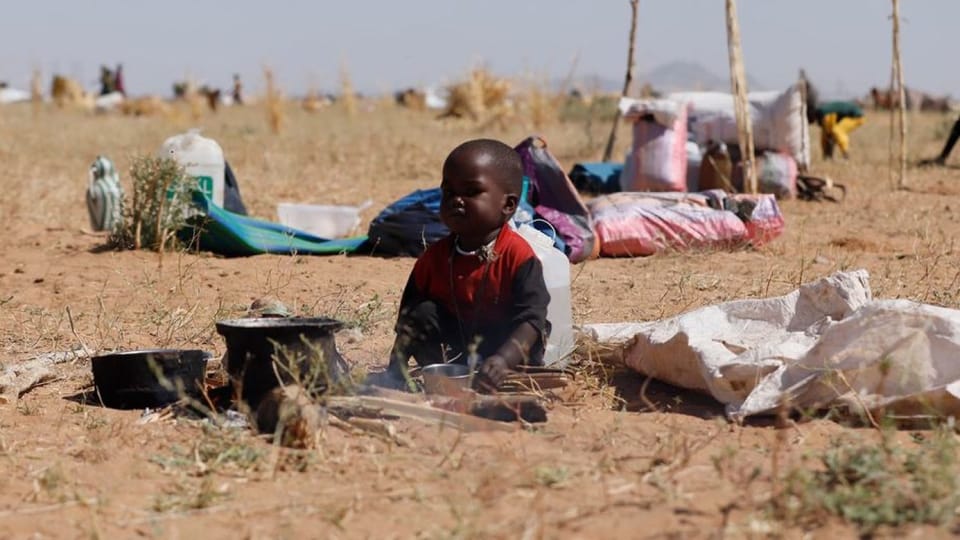
Schoolyards in the Congolese province of South Kivu have been turned into transit points for refugees. Black women are sitting on bales of belongings. Dirty children are sleeping on spread-out cardboard. Tired men are standing at the gate and looking toward the roads. If you want to live, you can't go back to where they came from. There are hundreds of such courtyards throughout eastern Congo. And there are hundreds of thousands of such people just in the last few weeks. In total, there are already millions of them across the country.
Thousands of miles away from these African slums, on the border of Thailand and Cambodia in Southeast Asia, a similar scene unfolds: columns of cars packed with belongings, military checkpoints, and artillery fire echoing behind refugees of a different race – Asian. Three hundred thousand people were driven from their homes, first in July 2025 – and now again in December.
Despite the vast distance between the epicenters of these two major humanitarian disasters and the completely different skin color of their victims, these military conflicts have something in common. Both of them have already been the subjects of Donald Trump's peacemaking triumph. Their complete settlement was loudly proclaimed to the whole world from Washington.
Therefore, at a time when the American president's team is desperately pushing "their" scenario for another peaceful settlement in the Russian-Ukrainian war, we decided to check the current status of some of his already implemented peacekeeping initiatives in different parts of the world – in Africa, the Middle East, and Southeast Asia. Three different conflicts, three sets of reasons, three peace agreement signing ceremonies. But with only one consistently recurring result...
DRC-Rwanda: A Treaty Without a Main Participant
June 27, 2025, Washington. The foreign ministers of the Democratic Republic of Congo, Thérèse Kayivamba (Kayivamba Wagner), and Rwanda, Olivier Nduhungirehe, met in the Oval Office of the White House. Next to them are Secretary of State Marco Rubio, high-ranking representatives from Qatar, France, and the African Union. Firm handshakes under the lenses of television cameras, signatures on the document. Donald Trump delivers a speech full of pompous clichés: historic moment, one of the most terrible wars, magnificent triumph, beautiful day for peace, and so on.
The agreement looked solid and convincing: an immediate ceasefire, the withdrawal of Rwandan troops from Congolese territory, the disarmament of rebel groups, the return of refugees, an international peace monitoring mechanism... The Americans didn't hide the pragmatic side of the issue either. The deal, they say, opened a direct path for US investment in the richest deposits in eastern Congo – gold, copper, lithium, cobalt.
While Washington celebrated the arrival of long-awaited peace, in North Kivu province, they simply continued shooting, paying no attention to the signed documents. Hostilities did not cease for a single day. During the first week after the Trump agreement was signed, heavy fighting broke out in three provinces simultaneously: Ituri, North Kivu, and South Kivu. At least a hundred civilians have died in rebel-controlled areas. Another ceasefire was announced on July 29th. And it also collapsed within a matter of days. In November, the Congolese government signed a separate agreement directly with the M23 rebel movement. And the very next day, the M23 launched a new offensive, capturing additional territory in South Kivu.
By December 2025, rebels had captured the city of Uvira on the border with Burundi, a strategic hub controlling access to the large Lake Tanganyika. Now the M23 holds both key provinces in the east of the country. In the first few days of December alone, over two hundred thousand people fled South Kivu. According to estimates from some NGOs, the total number of internally displaced persons in the DRC has already exceeded six million – more than the population of half of the European countries.
Why did Washington's triumph turn into a humanitarian disaster? The answer is simple: the people who are actually fighting weren't at the negotiating table. For example, the M23, an armed group still waging war in eastern Congo, was not a party to the June agreement at all. Her representatives did not sign any documents in the Oval Office. Rwanda formally denies supporting the M23, although this connection has been repeatedly documented by UN experts and Western intelligence agencies (Prigozhin's Wagner PMC is perhaps the closest analogy for Russians). As a result, while Congo accuses Rwanda of violating the treaty and Rwanda accuses Congo, the M23 is meanwhile capturing more and more cities.
The second clear failure of the Trump agreement is the lack of an enforcement mechanism. The document didn't specify who would punish offenders and how. Furthermore, it did not specify clear troop withdrawal schedules or a mandate for international forces capable of monitoring the document's implementation. And this is despite the fact that UN armed peacekeepers (the MONUSCO mission) have been present in the region for a long time. However, none of the American mediators seem to have even remembered them. This is the "quality" of modern American diplomacy, which, when I was a student at MGIMO in the early 2000s, was taught to us in relevant lectures as a "benchmark."
Finally, the agreement did not address or resolve the infamous "root causes" of the conflict. Eastern Congo is thirty years of endless war, compounded by a complex web of ethnic conflicts, resource struggles, and regional power rivalries. Dozens, if not hundreds, of armed groups are fighting there, and the state barely controls its own territory. Therefore, I think no African donkey, trudging dejectedly along the broken roads of the city of Goma, would ever vouch for the reliability of Trump's ceasefire with the same degree of confidence as the American president himself.
However, serious analysts and experts understood everything from the very beginning. Yes, Gervan Naidoo from Oxford Economics specifically noted that the American agreement does not address the structural causes of the conflict and therefore cannot lead to sustainable peace. Researchers from Refugees International pointed out that the agreement lacks effective monitoring and accountability measures for its violations, and therefore, there are no mechanisms for its enforcement. The Just Security analytical center reached the logical conclusion: the agreement that Trump proudly promoted "did nothing to change the trajectory of the war." Thus, Trump's diplomatic victory in Congo exists solely on paper and has no chance of becoming a reality.
Gaza: Stabilization Instead of a Solution
On November 17, 2025, an event occurred that the Trump administration routinely hailed as another outstanding victory for the American president. They say that for the first time in a long time, the world has consolidated around the American initiative for the Middle East. On this day, the UN Security Council voted in favor of resolution 2803, supporting the American plan for a Gaza settlement. 13 votes in favor, two abstentions – China and Russia.
Trump's initiative had a cumbersome name: "Comprehensive Plan to End the Conflict in Gaza," and it proposed a multi-stage solution. The first phase is stabilization: ceasefire, prisoner exchange, humanitarian aid, infrastructure restoration. The second phase is political settlement, but, truthfully, not immediately, but sometime later, upon the fulfillment of certain conditions.
According to this plan, the Gaza Strip should be placed under effective international control, with the United States and Israel playing a key role. To achieve this, a special body is being created, a kind of "Peace Council." It is headed, of course, by Donald Trump himself. By 2027, this body will take over the administration, security, and reconstruction of the war-torn enclave. All Palestinian armed groups are subject to disarmament. Any combat activity is suppressed by the forces of a coalition that doesn't yet exist – Americans, Egyptians, and even specially selected (by whom and from whom, I wonder?) Palestinian police officers. Israel, however, retains "overall security control" and will only leave Gaza when it considers the threat eliminated. The plan also promises that a dialog about a "horizon for Palestinian statehood" could be launched someday (but, presumably, might not be launched). But this is only on the condition that the Palestinian Authority proves its loyalty, effectiveness, and commitment to peace.
So, if you ignore one small detail, everything sounds great. The only problem is that this trifle is the opinion of the multi-million strong Palestinian people. Hamas and most Palestinian factions immediately rejected the second phase of the plan, of course. The Palestinian National Authority, the official governing body in the West Bank, cautiously "welcomed" the ceasefire efforts but predictably did not endorse the political aspect. The Palestinian delegation was conspicuously absent from the vote in the UN Security Council. No real Palestinian representative in the world agreed to the proposed terms. As a result, Trump's plan for the future of Gaza was "agreed upon" entirely without considering the opinions of those who actually live in Gaza.
Human rights organizations and international law experts predictably raised the alarm. The largest international human rights federation, FIDH, stated that resolution 2803 effectively blocks the prospects for Palestinian statehood. Carnegie Endowment analyst Zabah Hassan attempted to frame the issue even more harshly: the US, he claims, is pushing a new norm where humanitarian pauses and preventing massacres become bargaining chips for imposing political conditions. And in his opinion, this will make the world less safe for weaker nations.
If we think in terms of opposing stabilization to settlement, Trump's plan clearly offers the former while indefinitely postponing the latter. Perhaps one doesn't need to be a professional Middle East expert to understand that the conflict in Gaza is not technical. This isn't a logistical issue that can be solved with proper administration. This is a complex of issues involving historical memory, religious heritage, property rights, national identity, state sovereignty, and many other factors.
In the end, the first phase of the plan – a ceasefire and hostage exchange – was indeed implemented by the end of 2025. But then the problems started. Countries that had promised to provide troops for international peacekeeping forces began to withdraw from the mission. The notorious Qatari television channel "Al-Jazeera," for example, is currently actively promoting the narrative that Trump's plan will not bring peace to the Palestinians, but will only divide their homeland and bury all hopes for Palestinian sovereignty.
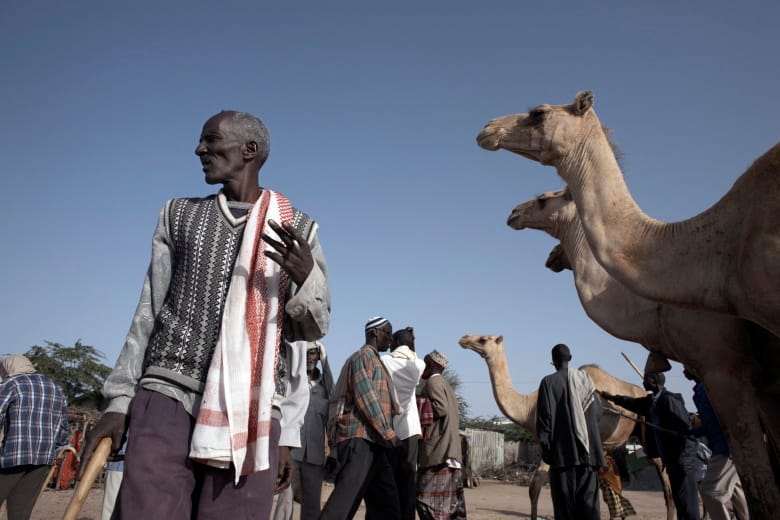
As an Israeli citizen, I can, of course, argue endlessly with that assessment. However, it's difficult to argue with the logic behind framing the problem: if a significant portion of people perceive the agreement not as a compromise, but as a defeat and humiliation, then, understandably, they will do everything they can to find a way not to comply with it and to have it annulled. If not today, then in a year. If not by political means, then by others. Therefore, any camel tied to a palm tree on the outskirts of Rafah understands that such a diplomatic construct will never lead to sustainable peace either, and a new war under these conditions is only a matter of time.
Thailand–Cambodia: Ceasefire in Exchange for Tariffs
On July 24, 2025, the most serious clashes in over a decade began on the border between Thailand and Cambodia. Multiple launch rocket systems, tanks, infantry – events were unfolding rapidly and inexorably.
The conflict erupted over a long-standing dispute regarding the ownership of the territories around ancient Hindu shrines, primarily the Preah Vihear temple complex. This dispute has been ongoing for decades, periodically escalating into a hot phase. The last serious clashes were recorded in 2008–2011.
In the first few days of the 2025 escalation, dozens of military personnel and civilians on both sides were killed. Three hundred thousand civilians fled from the border areas under the roar of cannon fire. Washington's reaction was immediate. Just two days after the fighting began, Donald Trump announced that he was in contact with the leaders of both countries. He issued a strict ultimatum: the US will not pursue any trade deals with either Bangkok or Phnom Penh while they are at war. The US economic leverage initially seemed to work. Both countries are heavily dependent on the American market, so both were interested in continuing investments and maintaining trade preferences.
As a result, on July 28, four days after the fighting began, the parties formally announced a ceasefire. Trump immediately took credit for this, saying that Thailand and Cambodia had accepted his initiative to end the conflict, and trade talks would resume as a reward for the peace achieved. In August, Cambodian Prime Minister Hun Manet nominated Trump for the Nobel Peace Prize. In October, on the sidelines of the summit in Malaysia, the American leader secured an expansion of the agreements. The parties agreed on plans for troop withdrawal and the exchange of prisoners of war – 18 Cambodians returned home. It seemed the peace process was finally moving in the right direction...
However, insightful experts warned that Trump's plan wouldn't work here either. Specifically, because this deal did not address the main subject of the dispute – the question of ownership of the churches and the surrounding territory. Millennial shrines cannot be bought with tariff benefits. Until this conflict is resolved, any ceasefire will always be hanging by a thread. And any provocation is capable of tearing him apart.
Such a provocation was the incidents with the mines. In November, Thailand announced the suspension of the peace plan. Bangkok accused the Cambodian military of secretly planting new mines along the border – several Thai soldiers were killed or injured in explosions. Cambodia, of course, denied everything. However, trust, already fragile, has collapsed. The Thai army command has seriously discussed the need to "weaken Cambodia's military potential for years to come," essentially announcing the possibility of a preemptive strike.
On December 8th, the war resumed. The sides accused each other of the attack. Tanks and heavy artillery were brought into action. In the first five days of the new phase – from December 8th to 12th – at least 20 people were killed and over 260 were injured. Hundreds of thousands of border residents are once again on the roads. The July agreement and the October understandings – everything turned to dust with the first shots of the renewed war.
Trump tried to intervene again. On December 12, he called the prime ministers of both countries and announced on social media that the parties had allegedly "agreed to cease fire and return to the original peace agreement." However, the living reality turned out to be much more complex than a short presidential post. Thai Prime Minister Anutin Charnvirakul confirmed the fact of the conversation with Trump – but didn't mention a new agreement in a single word. He only told journalists that "the conversation went well." At the same time, Anutin clarified that he had asked Trump to pressure Phnom Penh, saying that Cambodia should first cease fire, withdraw its troops, and remove the mines.
The position of the Thai Foreign Minister sounded even more puzzling. He stated directly in an interview with Reuters that "tariffs should not be used to coerce Thailand [into making certain decisions - S.K.]." The message of his statement is quite clear: Bangkok is not going to trade its sovereign interests for American trade preferences in the future. In July, the economic pressure worked, perhaps only because it caught both sides by surprise. Now, however, the Thai elites have clearly drawn conclusions. And now, concessions under pressure are perceived by them as humiliation.
It's also telling what Trump didn't do in the December call. According to Anutin, the American president "did not exert pressure" and did not threaten new tariffs. This clearly indicates that the lever that worked once turned out to be a one-time tool. Now, it seems even the elephants lazily digging in the wet earth around Preah Vihear have understood that Trump "has no more cards," meaning Thailand can continue to act tough without looking back at Washington.
Anatomy of the Peace
We examined three completely different conflicts. On three different continents. With three completely different sets of reasons and circumstances for engaging in hostilities. And in all these cases, we see the same picture: Trump triumphantly reports the achievement of a peace agreement – and the war continues. Nevertheless, the American leader's peacekeeping efforts are not entirely useless. They allow us to analyze the reasons for the failures of his peace agreements in greater depth, in order to better understand exactly how not to make deals between opposing sides.
Firstly, any agreement only works when it is signed by those who are genuinely interested in peace and who are physically capable of ending the war. If a key player is left out of the negotiations, the agreement becomes a worthless piece of paper. In the Congo, the M23, a large armed force controlling two provinces, was left out of the negotiations. In Gaza, an entire people found themselves in the same situation. Here's the first lesson: when signing a peace agreement, make sure you've chosen the right signatory.
Secondly, a lasting peace is ensured not by peace treaties, but by the inevitability of violence being used against their violators. Any contract that can be broken without consequences will inevitably be violated. As we can see, in none of the cases we examined was any working mechanism created to compel violators to peace. There were no clear troop withdrawal schedules, international monitoring forces, or sanctions for violating the agreement in Congo. In Gaza, the plan relied solely on the "goodwill" and the verbally declared willingness of the Palestinian Authority to submit to external administration – without the immediate establishment of enforcement mechanisms against terrorists. In Southeast Asia, the only leverage was American tariffs, but even that leverage proved to be a one-time and ineffective measure. Having used it in July, Washington was unable to exert the same pressure just six months later. This leads to the second lesson: a contract without a proper enforcement mechanism has no more legal force than a child's letter to Santa Claus placed in the freezer before New Year's.
Thirdly, every armed conflict always has its "fuel" – a deep-seated reason that sustains the antagonism or hatred between the parties toward each other. In the Congo, it's a struggle for resources, ethnic tensions, and regional rivalries. In Gaza, the issues are religious-historical identity and statehood. In Southeast Asia, it's a territorial dispute with a powerful ideological and symbolic charge. In none of these cases did Trump even attempt to eliminate or reduce the "root causes" of the conflicts. Therefore, the third lesson is: no matter how many agreements you sign, if there's still something left to burn, it will continue to burn.
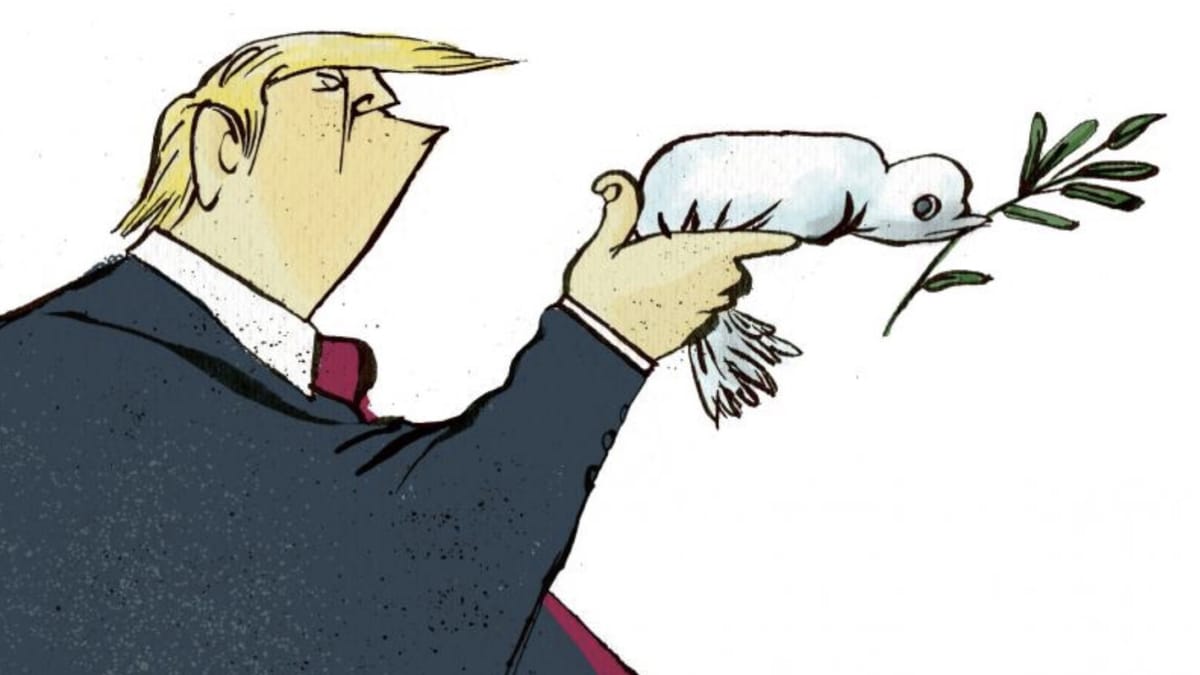
If you take a closer look at Trump's actions, it gives the impression that he's making his deals in reverse order. First, he celebrates the achievement of a peace agreement widely and pompously, making loud, beautiful statements. Then he tries to sign something that vaguely resembles what he's already described. And only after someone signed his peace plan does he start dealing with the actual settlement issues.
What should a "healthy person's peace agreement" ideally look like? An inductive analysis of Trump's diplomatic failures in 2025 allows us to identify at least a few key groups of questions that should not be left unanswered before developing peace initiatives.
Who is sitting at the negotiating table? Did those who are actually fighting or controlling the fighters sign the agreement? If a key player is absent, it doesn't matter how solemn the ceremony was or how historic the signing moment was.
Who was left behind? Are there forces capable of disrupting the agreement but not bound by its terms? If so, they'll definitely ruin it.
What constitutes a breach of contract? Are there clear criteria outlined in the agreement: what actions constitute a violation and what actions do not? If the wording is vague, each side will interpret it in their favor. And that's a sure sign of impending collapse.
What is the price of breaking the agreement? What will happen to those who break the agreement? How serious will their problems be?
Who is the guarantor and who is the controller? Is there an external force interested in upholding the agreement and capable of enforcing it? Or is everything just based on the intermediary's word?
Has anything been decided on the merits? Does the agreement address the root cause of the conflict? Or is it simply a pause in the current hostilities?
Do the people on the ground agree with the agreement? Do the populations on both sides perceive the agreement as an acceptable compromise? Because if someone hasn't accepted the peace that has been achieved, they will continue to look for a way to disrupt it.
What will happen to the contract in a month? Half a year? A year? Does the agreement have a schedule for its implementation, a specific "roadmap" – with dates, actions, measurable results, etc.?
If there are no clear answers to any of the above questions, you are not facing the world. At best, this is just postponing the war.
There's a lot of talk around Ukraine right now about a quick peace. Multiple copies are breaking over different plans with varying numbers of points. And diplomats around the world are asking about each of them: will it work after it's signed? In my opinion, Trump himself answered this question a long time ago with his own peacemaking efforts. Just "study the technical details" more carefully – and everything will immediately fall into place.
 Сергей Коняшин