The UN Is on the Brink of Collapse. But Should We Worry?
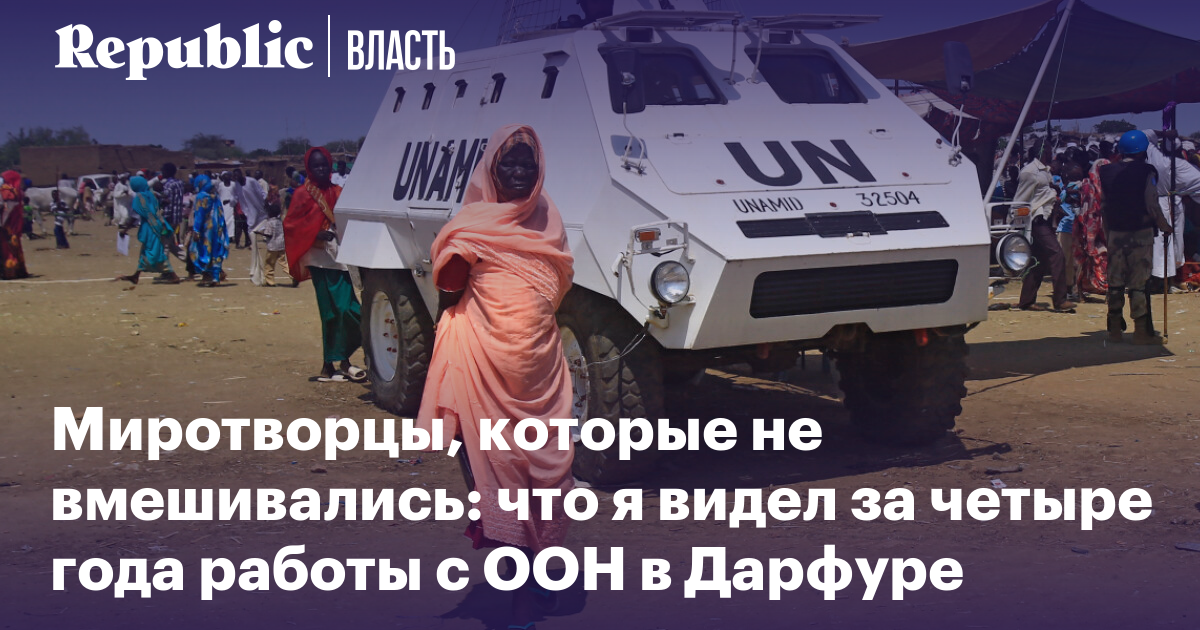
António Guterres is warning of the UN's imminent financial collapse, and the media are framing the news as a looming tragedy. Yet few stop to think that the real tragedy tends to occur where the UN arrives, not where it is absent. I spent four years in Sudan working alongside colleagues from UNAMID, the largest peacekeeping mission in the organization's history — and I will explain why the UN's collapse is no cause for worry, even if its Secretary-General is entirely right.
In November 2014 I arrived in Khartoum as a Russian diplomat in charge of the so-called "Darfur dossier" — the set of issues surrounding the settlement of the genocidal armed conflict in Darfur (a region in western Sudan). The first thing I read in the Sudanese newspapers laid out for me before the ambassador's daily morning briefing was a report that UNAMID, the peacekeeping mission deployed in Darfur, was still officially insisting that it had supposedly found no evidence of the mass rape of more than 220 women and girls by Sudanese soldiers in the village of Tabit, 40 kilometers from its own headquarters.
The shameful absurdity of that news was that abundant evidence of the brutal rapes in Tabit had by then already been gathered and published by several human rights organizations. Yet the largest peacekeeping mission in UN history — one the world was spending more than $1.5 billion a year to maintain — had found nothing. The "Tabit incident" stayed with me throughout all four years of my work in Sudan, like the background hum of international bureaucratic mendacity: something you get used to but that never quite stops turning your stomach.
Eleven years later, on January 28, 2026, UN Secretary-General António Guterres sent the organization's 193 member states a letter warning of the "imminent financial collapse" of the body entrusted to him. By then UNAMID no longer existed. Having squandered more than $10 billion to no avail, the mission had wound down and pulled out of Darfur. Almost immediately afterward, Sudan plunged into a new — and even more horrific — civil war, which in September 2024 the United States classified as genocide. The second genocide in twenty years in the very place where, for years (2007–2020), the UN had maintained the largest and most expensive peacekeeping mission in its entire history. So — is it worth worrying that an organization like this might cease to exist?
What Are We Paying For?
To gauge the scale of Guterres's concerns, a few figures will suffice. As of today, member states' arrears on the UN's regular budget have reached $1.568 billion. That is twice last year's figure — and an all-time record. Debt on peacekeeping operations already stands at roughly $3.7 billion. In light of this, the organization's 2026 budget has been cut by 7%, to $3.45 billion. Yet if the current trend holds, there may not be enough money for ongoing operations as early as July.
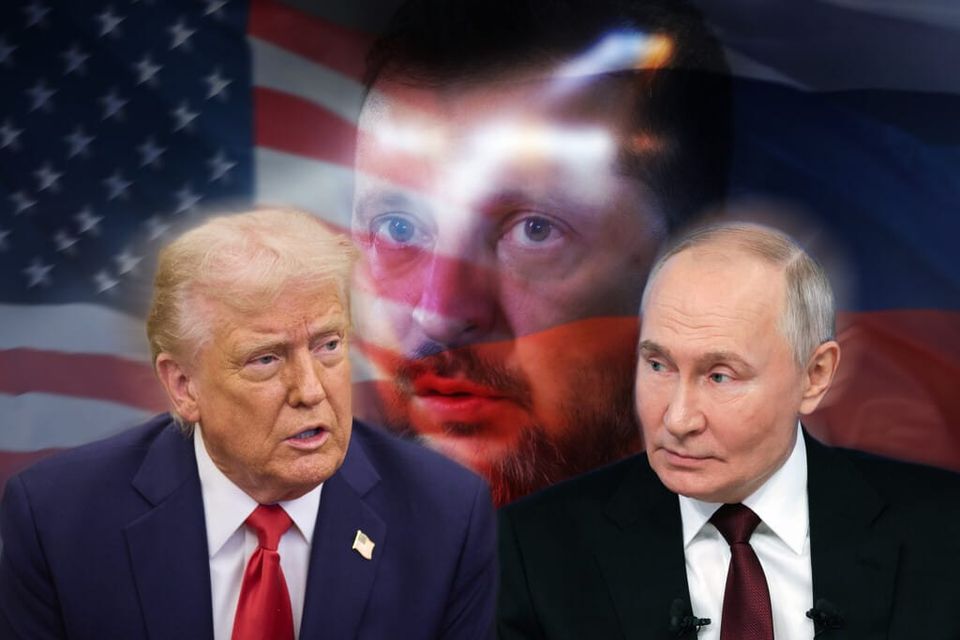
So what is happening to what was once the most influential and authoritative international forum on the planet? First and foremost, the United States — the largest contributor, which previously covered 22% of the regular budget and more than 26% of the peacekeeping one — is systematically scaling back its involvement in the organization's work. And this is no passing whim of the current administration alone, but a long-building, bipartisan trend.
During Trump's first term (2017–2021), US Ambassador to the UN Nikki Haley secured a $285 million cut to the organization's budget, ended funding for UNRWA, and pulled Washington out of UNESCO and the Human Rights Council. The Biden administration tried to partially restore the United States' former standing at the UN, but Congress never appropriated the full sums needed to pay down the accumulated arrears. Trump's second term, which began in January 2025, was marked not by piecemeal cuts but by the radical dismantling of the entire US presence at the UN.
In January and February 2026, the United States withdrew from 66 international organizations, including 31 UN bodies, and conducted a meticulous audit of all American participation in international organizations. The 2026 US budget allocates just $300 million in UN dues — one-fifth of Washington's obligations. Peacekeeping contributions, meanwhile, have been zeroed out entirely.
US Ambassador to the UN Elise Stefanik calls the organization "a corrupt, inert, and paralyzed institution." Jim Risch, chairman of the Senate Foreign Relations Committee, puts it even more bluntly: does continued US participation in the UN make any sense at all for the American people? One can, of course, argue with both officials' wording and their motives. But the substance of the question they raise — "What are we paying for?" — is hard to call groundless against the long list of the organization's recent "achievements."
As fate would have it, I was able to observe all these "achievements" firsthand, dealing directly with UN apparatchiks during my diplomatic service. Specifically, from November 2014 to November 2018 I held the combined posts of political officer, consul, and press attaché at the Russian Embassy in Sudan. My main area of responsibility was the "Darfur dossier": monitoring the peace settlement, taking part in field visits by delegations of the UN Security Council's 1591 Committee (the sanctions committee on Sudan), and maintaining contacts with UNAMID representatives, the Sudanese authorities, the diplomatic corps, journalists, and nongovernmental organizations.
And as a former diplomat who spent a long-time working side by side with UN peacekeepers, I want to tell you the telling story of a mission I knew well — UNAMID, whose work plainly reflected all the flaws and vices of the "parent" organization. Having watched it operate from a handshake away, I can state with full confidence that UNAMID was not one of global diplomacy's failures, but rather its truest embodiment. If the largest and most expensive peacekeeping mission in human history (over $10 billion, 13 years of operation, more than 23,000 personnel at peak deployment, the toughest possible mandate under Chapter VII of the UN Charter) could not protect the local population — or even itself — from armed gangs, then the problem clearly lies not in its methods or its resources. The problem lies in the organization itself.
Three Parts of One Crisis
The UN today faces a great many problems, but I would single out three principal ones, nested inside one another like matryoshka dolls and reinforcing each other. The outermost — the financial crisis — is visible to the naked eye: record debts, shrinking budgets, the departure of the largest donor. The middle one is a crisis of trust: member states are increasingly unwilling to pay for a structure whose effectiveness they can neither verify nor measure. And finally, the innermost — and perhaps the most important — is a crisis of organizational architecture. In other words, today's UN is built in such a way that it simply cannot work any differently than it does now.
In the General Assembly, each of the 193 member states has one vote. Tiny Tuvalu, with a population of eleven thousand, votes on equal terms with the United States. That in itself is not a problem — the principle of sovereign equality has its own logic. The problem arises when that principle collides with financial reality. Countries that contribute a pittance to the organization's budget can not only impose a global agenda that others pay to carry out — they do so regularly.
A similar problem afflicts the Security Council. There, in essence, all decisions are made by just five permanent members — the United States, the United Kingdom, France, China, and Russia — each of which holds a veto. The result is inevitable paralysis on any issue that touches the interests of even one of these five countries.
Long-suffering Darfur is a textbook case in this respect. For a decade, Russia and China (the traditional friends of every usurper of power) consistently softened the sanctions pressure on Omar al-Bashir's regime, blocking or gutting every resolution that might have curtailed his freedom of action. The reasons varied — from economic interests to geopolitical solidarity with a pariah African leader. But the outcome was always the same: the Security Council, formally created to prevent mass atrocities, was turned into their unwitting guarantor.
Another major problem is bureaucratic unwieldiness. Strictly speaking, the UN is not a single, unified organization but rather a conglomerate of dozens of agencies, funds, programs, and specialized bodies, often with overlapping mandates, which compete directly with one another for funding, staffing, and other resources. And none of them is accountable to a single center of command. The Secretary-General, contrary to popular belief, does not run the UN. He merely presides over it — that is, he performs largely representational and protocol functions.
All these problems constantly render the UN effectively incapable of action — above all in the very field that most demands responsible and decisive action: peacekeeping.
Rwanda, 1994. The UN force commander, General Roméo Dallaire, sends New York the famous "genocide fax." An informant from President Habyarimana's inner circle warns that the Interahamwe militia is planning the extermination of the Tutsi people and is capable of killing up to a thousand people in twenty minutes. Dallaire requests permission for a preemptive raid to seize the weapons caches. The office of Kofi Annan — then Under-Secretary-General for Peacekeeping Operations — denies the request, on the grounds that Dallaire's proposal exceeded his mandate. Three months later, with the genocide already under way, the Security Council votes not to reinforce the UNAMIR mission but to cut it — from 2,500 troops to 270. The outcome is well known: between 800,000 and a million killed in a hundred days.
Srebrenica, 1995. Between the Bosnian Serb army and eight thousand Muslims in a UN "safe area" stand 450 lightly armed Dutch peacekeepers. The commander requests air support. His request is denied because of the "dual-key" system, which required the simultaneous consent of both the UN and NATO. Over the following days, around eight and a half thousand men and boys were shot dead, the victims of the largest mass killing in Europe since the Second World War.
South Sudan, 2016. During the fighting in Juba, UNMISS peacekeepers simply flee their posts. Women leaving the camps in search of food are subjected to mass sexual violence by government soldiers — right inside the mission's area of responsibility. An independent inquiry by General Patrick Cammaert would later record "a chaotic and ineffective response caused by a lack of leadership." Translated from veiled bureaucratic language, that means cowardice, desertion, and the outright failure to follow orders.
The Democratic Republic of the Congo. The MONUSCO mission has been present in the country since 1999. The cumulative cost of maintaining it has already exceeded $9 billion. In November 2012, rebels of the M23 movement seized the city of Goma — a regional capital with a population of more than a million. This happened right before the eyes of fifteen hundred well-armed peacekeepers, who offered no resistance whatsoever. Since then, the number of major armed gangs in the country has grown from ten to more than a hundred. And all of this in the immediate presence of the MONUSCO mission, which remains there to this day.
And of course one cannot fail to mention the notorious MINUSMA in Mali. In 2023, the local military junta simply drove the UN peacekeepers off its territory by force, killing 311 people in the resulting clashes.
The above is not a list of UN failures. At least, the organization's own leadership does not regard any of these cases as failures, and so it plans each new operation without regard for the negative consequences of the previous ones. And yet the common structural causes of these failures would seem to be obvious: mandates backed by neither resources nor political will; rules of engagement that effectively rule out any meaningful intervention; dependence on the consent of the host state — that is, the very government that is itself the source of the violence; and much more.
In 2014, the UN Office of Internal Oversight Services (OIOS) carried out an assessment of how the mandates to protect civilians were being implemented. The results give serious pause. Peacekeepers intervened in only 20% of cases in which civilians were in immediate physical danger. In other words, in 80% of cases they did not intervene — that is, they made no attempt whatsoever to prevent the mass killings and acts of violence taking place right before their eyes. The reason for this was also stated quite plainly: UN peacekeeping missions provide for punishments for action, but none for inaction. Is it any wonder, then, that irresponsible do-nothings at the UN build careers five times more successfully than those who actually accomplish something?
221 Reasons Not to Trust the UN
The UNAMID mission was unique from the very first days of its existence. Created by Security Council Resolution 1769 of July 31, 2007, it became the first and only hybrid mission in history run jointly by the UN and another international organization — the African Union. This arrangement was the product of a telling compromise: Khartoum flatly refused to accept a purely UN mission, seeing it as an encroachment on its sovereignty, while the African Union, whose AMIS mission was already in Darfur, was too weak — both financially and organizationally — to carry a mandate on its own. UNAMID's forced hybridity became an additional source of disorganization: a double chain of command, double reporting, and a double opportunity to shift the blame.
At peak deployment, UNAMID had more than 23,000 personnel — more than the armed forces of most African states. Its peak annual budget of $1.51 billion, in fiscal year 2012–2013, then accounted for 21% of the UN's entire peacekeeping budget. UNAMID cost more than, say, the entire defense budget of Kenya or Ethiopia. The mission's total cost over the thirteen years of its existence — exceeding $10 billion — is comparable to the GDP of countries like Montenegro and the Maldives combined.
The mandate granted to UNAMID under Chapter VII of the UN Charter — the toughest of all possible — included protecting civilians, supporting the peace process, ensuring safe access for humanitarian aid, promoting the rule of law, and a great many other wonderfully proper and high-sounding formulations. On paper, UNAMID had everything: personnel, money, authority, international support. In practice, however, this arsenal proved utterly useless.
On October 30, 2014, soldiers of the Sudanese Armed Forces stormed into the village of Tabit in North Darfur. Thirty-six hours later, the next day — October 31 — they left the village, where over the preceding twenty-four hours no fewer than 220 women and girls had been raped. Tabit lay 25 miles — that is, an hour and a half at an unhurried drive — from UNAMID headquarters in El Fasher. Yet the peacekeepers made no attempt to reach Tabit, either during the violence or afterward. Only on November 4 — four days after the attack — did they dispatch their first patrol to the village. It was almost immediately stopped by Sudanese troops, who barred it from entering. The peacekeepers complied and, meekly turning around, went back to their base.
Only on November 9 — that is, ten days after the incident — did a UNAMID team arrive in Tabit, escorted by Sudanese security officers who tightly controlled all of its contacts with the local population. By then, of course, every trace of the crimes had been carefully swept away, and every victim had been intimidated in advance and coached to say "the right things." The next day, November 10, UNAMID issued an official statement claiming that the mission had "found no evidence and received no information confirming the allegations [of rape — S.K.]."
From conversations within the diplomatic corps and from my meetings with UNAMID representatives, I grew increasingly certain that the peacekeepers themselves fully understood how false their report was. The bravest among them admitted in private conversations that their report had documented not the absence of crimes but the absence of evidence for them. The evidence came later — and not at all from the organization that was directly responsible for gathering it and received lavish funding to do so.
In February 2015, Human Rights Watch published the report "Mass Rape in North Darfur," based on more than 105 interviews conducted outside Tabit, since access to the village itself remained restricted. The report directly confirmed 221 specific cases of rape. How many crimes went undocumented no one knows to this day. Two Sudanese (Arab) soldiers, interviewed separately, testified that their commanders had given them a direct order to rape the African women.
From the publication of the human rights groups' report until the very end of my Sudan posting in November 2018 — throughout which I dealt extensively and closely with UNAMID and with colleagues from other embassies responsible for the "Darfur dossier" — I never once heard of the peacekeeping mission auditing its own mendacious November report, opening any kind of disciplinary inquiry, or finding, punishing, or dismissing a single person responsible for that "miscalculation."
And the explanation is very simple. UNAMID did not "miscalculate." It made a predictable bureaucratic choice — to declare the absence of any crimes by the army of its host state, even if those crimes happened to have been documented. After all, to spoil relations with Khartoum meant putting at risk the peacekeepers' access to Sudanese territory, where their entire infrastructure was deployed — with its vast, utterly unaccountable assets, high salaries, prestigious posts, and meteoric careers in the world's largest international organization. What fool would want to lose all that over a couple of hundred raped Negresses?
Scorched Earth, Poisoned Air
A little more than a year after the events in Tabit, in January 2016, the Sudanese Armed Forces launched a large-scale military operation against the opposition movement the Sudan Liberation Army–Abdul Wahid (SLA-AW) in the Jebel Marra massif — the last stronghold of active armed resistance in Darfur. By July of that year, according to the UN's own estimates, more than a quarter of a million people had been forced to flee their homes.
In September 2016, Amnesty International published a report with the epic title "Scorched Earth, Poisoned Air." Over the course of six months, the organization documented what was happening in Jebel Marra using satellite imagery, laboratory analysis, and hundreds of interviews. That work made it possible to identify by name 367 of those killed, 95 of them children. One hundred seventy-one villages were completely destroyed or seriously damaged. At least 30 punitive attacks were recorded involving chemical weapons — mustard gas and similar toxic agents. The estimated number of deaths from the chemical attacks, in the human rights group's assessment, ranges from 200 to 250. Most of the victims were children, whose bodies are the least resistant to the effects of blister agents.
Throughout the Sudanese military's operation, UNAMID systematically reported to UN headquarters that it was being denied access to the conflict zones in Jebel Marra. This was regularly confirmed before the Security Council by the head of the UN Department of Peacekeeping Operations, Hervé Ladsous: the mission, he claimed, was "consistently denied access [by Khartoum — S.K.]." And what did UNAMID's leadership do to establish the truth? The answer "nothing" would be inaccurate, because this time it decided not even to try to learn the truth.
The UN–African Union Joint Special Representative for Darfur — that is, UNAMID's de facto head — Martin Uhomoibhi, at a September 2016 meeting with Sudan's foreign minister, declared that "UNAMID had received no information about the use of chemical weapons in Darfur." Unlike in the Tabit case, this was said not even before, but several days after, the publication of the human rights report — one containing exhaustive evidence of the Sudanese army's crimes (satellite images, laboratory analyses, eyewitness testimony, and so on), available to any internet user.
Uhomoibhi's successor — Jeremiah Mamabolo — went even further. "No UNAMID staff member has seen a single Darfuri harmed by chemical weapons," he declared. Yet Mamabolo himself was publicly calling for "unrestricted access [for peacekeepers — S.K.] throughout Jebel Marra," thereby acknowledging that the peacekeepers had had no such access. So perhaps that was the very reason they had not seen any victims?
They Just Stood Watching
Tabit and Jebel Marra might still look like isolated episodes, torn from their context, had a person not come forward who proved that all such cases are part of an entrenched system.
Aicha Elbasri worked as UNAMID's press secretary — that is, its official spokesperson. In April 2013 she resigned from the mission on ethical grounds and handed over thousands of confidential documents (internal reports, encrypted cables, email correspondence, and much else) to the Foreign Policy journalist Colum Lynch. In April 2014, Lynch published a series of investigations under the overall title "They Just Stood Watching." Elbasri's documents and Lynch's investigation laid bare not isolated lapses but the systematic concealment by peacekeepers of numerous crimes committed by the government of Sudan.
September 2012, Kutum, North Darfur. An Arab militia guns down local residents right in front of UNAMID peacekeepers who, according to the documents Elbasri provided, "watched and took photographs." In the mission's official report, the incident is euphemistically described as "an exchange of crossfire." A month earlier, at Tawila, a convoy of some hundred and fifty military trucks deliberately transports soldiers and militiamen to attack villages — straight through UNAMID's area of responsibility. After their homes are destroyed, more than five thousand people flee. But neither the local police nor UNAMID, as always, reports any of it.
Perhaps the most sophisticated weapon in the peacekeepers' hands was not the rifle but the computer keyboard. In their reports, a brutal genocidal war turned into vague "sporadic clashes." Indiscriminate bombing of inhabited villages, into neutral "airstrikes." Systematic mass rape, including of children, into the sterile "sexual and gender-based violence."
In October 2014 — that is, shortly before the events in Tabit — the UN finally conducted an internal investigation into Lynch's reporting and produced the so-called "Cooper Review" (a report named after the head of the commission, Philip Cooper). The commission, which never once set foot in Darfur, examined 16 incidents and identified five cases in which UNAMID staff had concealed evidence of the government's guilt: the suppression of verified reports of attacks and rapes near Tawila; the concealment of well-founded evidence that soldiers had killed around 70 unarmed civilians at Hashaba; the failure to record that a Sudanese military helicopter had threatened to strike a UN convoy; and others.
One would think the Cooper commission had thereby acknowledged that UNAMID's reporting was being fabricated. And yet the final conclusion stated, all the same, that there was "no evidence of deliberate concealment." As usual, no one was punished. UNAMID's chief of staff, Karen Chalyan (a former classmate of our Russian ambassador at MGIMO, the Moscow State Institute of International Relations, and now himself Russia's ambassador to Equatorial Guinea — mentioned here: https://republicmag.io/posts/114741), whom the United States, France, and the United Kingdom had demanded be removed, kept his post. Elbasri called the Cooper Review "a cover-up of a cover-up" — which is precisely what it was.
In April 2016, Elbasri testified before the Africa Subcommittee of the US House Committee on Foreign Affairs. Under oath, she stated that the leadership of the Department of Peacekeeping Operations in New York, including its head Hervé Ladsous, and of the Department of Field Support, including Ameerah Haq, had been informed of what was happening in Darfur but had taken no action. As early as December 2012, the former head of UNAMID, Aichatou Mindaoudou, had privately admitted to Elbasri in an email that the mission's reporting was being crudely manipulated in the interests of its senior staff and had long had nothing to do with carrying out the peacekeeping mandate as such.
A Barefoot Man in a Clean Shirt
The Status of Forces Agreement (SOFA), signed between the UN and the government of Sudan in 2008, guaranteed UNAMID "full and unrestricted freedom of movement throughout Darfur, without delay and without any requirement to obtain travel permits or prior clearance." In practice, that guarantee was not worth the paper it was printed on. Al-Bashir's regime systematically violated every clause of the agreement. The routine refusal of flight clearances for UNAMID aircraft, customs delays of cargo, visa restrictions on personnel, and the blocking of humanitarian convoys carrying water and food to the mission's bases, where refugees were sheltering — all of this was the absolute norm.
In March 2009, the International Criminal Court (ICC) issued a warrant for the arrest of Omar al-Bashir. After that, the number of obstruction incidents — that is, the deliberate creation of obstacles to the peacekeeping mission's work by the Sudanese — tripled: from five cases a month to eighteen in March alone. Khartoum's provocations were brazen and demonstrative enough. The day after the warrant was issued, Sudanese fighter jets buzzed the mission's headquarters at low altitude. The regime then expelled thirteen international NGOs from the country and revoked the licenses of three domestic ones — at a stroke stripping Sudan of more than 40% of all international humanitarian personnel. The pariah regime of one of Africa's most odious war criminals not only did not fear the UN — it openly wiped its feet on it.
In theory, the instrument for pressuring al-Bashir was supposed to be the Security Council's 1591 Committee — the sanctions body for Sudan, in whose field delegations I repeatedly took part. In practice, however, this mechanism too proved powerless and useless. The committee's Panel of Experts conscientiously documented violations of the arms embargo: unauthorized deliveries of Russian Su-25 ground-attack aircraft acquired via Belarus; Chinese markings on shell casings found at the sites of attacks on peacekeepers; and more.
Yet over the entire lifetime of the 1591 Committee, only four individuals were ever added to the sanctions list. Sudan, of course, immediately refused to sanction them in any way, to freeze their assets, and so on, citing the need for "a court ruling." And after the committee's chairman, in December 2017, reported to the Security Council on the continuing acts of obstruction and the cross-border smuggling of weapons through Libya and South Sudan, certain members of the Panel of Experts began to be regularly denied Sudanese visas altogether.
After the Tabit scandal, in 2014, Khartoum tightened its control over the peacekeepers still further. Several senior UN staff were expelled from the country, and UNAMID's human rights office in the capital was shut down. Earlier that year, in April, Sudan's National Intelligence and Security Service (NISS) refused to allow the emergency medical evacuation of a wounded Ethiopian peacekeeper, Mehari Baraki, from Mukjar to Nyala. As a result, he died for want of medical care. The UN gave no response whatsoever.
Just how well the people of Darfur understood who was supplying their government with the weapons later used to kill them — and why — I had the displeasure of seeing for myself.
On April 18, 2018, our delegation — a group of diplomats accompanying a field trip of the 1591 Committee — set out from Khartoum for Central Darfur. On our itinerary was a visit to the Hassa Hissa camp for internally displaced persons, near the town of Zalingei.
From the very first minutes of the meeting it was clear that the residents of Hassa Hissa were embittered and fairly aggressive — even toward us, foreign diplomats. They declared, talking over one another, that the Sudanese authorities, for all their fine posturing before the international community, were still oppressing them. The Janjaweed (an Arab nationalist armed gang) — albeit under a different name — still existed and was operating right outside the camp walls. This kept people from even going out for water to the wells located outside, which was critically important, since the sources inside the camp met no more than half of the settlement's needs. According to the camp's residents, every man who went out the gate was killed, the women raped, the children abducted.
The most fervent among them cursed the entire international community up and down — for having utterly betrayed them in the face of al-Bashir's regime — and even our group personally, which had flown in, as they saw it, straight from calm, rich, comfortable New York.
"I have never once in my life been on an airplane," a frail little old man of perhaps a hundred, who could barely stay on his feet, shook his stick indignantly, "but even I know — I've been told — that inside they show films and feed you for free. So you come here not to solve our problems, but to eat for free and watch American films with naked women on the plane!" he raged, in front of the delegation's leader, Joanna, who had an excellent command of Arabic, and her assistant Carolina — evidently counting on the English translation to smooth over the incoherence of his accusations.
"Our wise Sheikh Abdallah speaks the truth!" echoed a barefoot young man in very dirty, torn shorts and a very clean, ironed shirt — evidently saved especially for our arrival. "How can you help us when you yourselves are to blame for everything that happens here? China and Russia are our two chief enemies!" he shouted, choking with rage, pointing in turn at Shi Gang from the Chinese embassy and René Carlsen from the Dutch one, who, in his view, presumably looked more Russian than I did. "All the weapons the Janjaweed uses to kill us are either Chinese or Russian: assault rifles, machine guns, grenades, cartridges, mortars, tanks, helicopters — all of it supplied to al-Bashir by China and Russia!"
At a certain point it became clear that the situation was getting out of hand. The peacekeepers guarding us called the transport convoy right up to the awning under which the gathering was taking place, swiftly loaded us into armored vehicles, and drove us to the airfield, from which we flew straight back to Khartoum via El Fasher.
The barefoot young man in dirty shorts and a clean shirt from the Hassa Hissa camp had, of course, never in his life read the 1591 Committee's Panel of Experts reports on expensive laid paper bearing the UN logo. But, as it turned out, he knew perfectly well, even without them, everything that panel recorded. And perhaps more. The people of Darfur understood perfectly who was arming their killers, and why UN representatives flew out to see them. Not at all to solve their problems — but only to lend more weight to their own mendacious reports, in the interests of an international bureaucracy that had long since stopped giving a damn about them.
Muhammad from El Geneina
At the peak of its spending, in fiscal year 2012–2013, UNAMID's annual budget exceeded $1.5 billion. Even after the mission began winding down in 2018, it continued to devour around $386 million — more than the defense budget of half of all African states. According to SIPRI, in 2024, after a marked rise in military spending on the continent, 28 of the 54 recognized African states spent less on national defense than UNAMID had in its last full operational year. In the mid-2010s, when defense budgets were far more modest, the gap looked even more dramatic.
Where did all this money go? The answer is easy to find in the audit documents of the UN Office of Internal Oversight Services (OIOS), which reveal not mere inefficiency but the almost total absence of any controls whatsoever — something that at times closely resembles Putin-style corruption in present-day Russia.
According to the 2019 OIOS report, the post of head of UNAMID's contracts unit sat vacant for more than 14 months; there was no strategic procurement planning; and for seven years running — beginning in 2012 — the mission failed to recover from contractors the cost of services provided to them, which amounted to an inexplicable "gift" of $34 million. The largest contracts in UNAMID's portfolio were managed directly from New York (more than ten thousand kilometers from Darfur). Meanwhile, the Department of Field Support never once, in all its years of operation, conducted a "cost-benefit" analysis, exposing the UN, in the auditors' own words, to "unjustifiably high prices and unwarranted overhead costs."
In the 2021 report the picture is no better. UNAMID was storing $50 million worth of unused supplies in six warehouses and in roughly four and a half thousand shipping containers. The mission's own report of September 2020 classified these supplies as "surplus" — that is, paid for with UN money without justification. When UNAMID was liquidated, the mission handed over to the government of Sudan, free of charge, 4,703 items of property with a purchase value of $62 million. The documentation of the transfer of these assets, as the auditors delicately put it, "was not maintained consistently."
But the figures from the audit reports are merely the tip of the iceberg. Beneath it lies a far more substantial question: who benefited from the UN's structures working precisely this way?
On June 24, 2015, as part of a joint Russian-British delegation — yes, there were such times! — I visited UNAMID's combined camp in El Geneina, the capital of West Darfur. Among those who received us was the camp's chief, Muhammad Tal, a veteran of the UN bureaucracy whose center of gravity had long since shifted from his native Jordan to the United States. I remember how, with the air of a connoisseur who navigated New York's dining scene like a native Manhattanite, he recommended to my British colleague Ishtiaq Ghafoor the best burger joints on Fifth Avenue.
The prospect of UNAMID's withdrawal was already being discussed back then, and Ishtiaq and I could plainly see how deeply the subject troubled Muhammad. The number of peacekeeping missions in the world was rapidly shrinking at the time, so his continued employment within the UN system was by no means guaranteed. And this worried Muhammad greatly, because his family's entire life rested solely on his UN passport, his bureaucratic status, his enormous salary, and his generous benefits. His children were studying at prestigious American colleges; his wife was building a small business in the United States. The dissolution of UNAMID — or more precisely, the loss of his job within the UN system and the need to return to Jordan — would have meant, in Muhammad's own words, an enormous personal tragedy for their whole family. This was what worried Muhammad so much. Not the fate of the hundreds of thousands of African families awaiting the end of genocide and famine — the very thing he had been sent to Darfur for. But the fate of one single other family: his own.
And so, for as long as the UN exists, people like Muhammad Tal will always have an interest not in resolving conflicts but in prolonging them — because war creates jobs for them with fabulous salaries, enormous benefits, and prestigious international status. And the entire modern UN bureaucracy consists, wholly and completely, of such "Muhammads."
The Legacy of the UN's Peacekeepers
On June 29, 2017, the Security Council adopted Resolution 2363, launching the phased drawdown of UNAMID and its withdrawal from Darfur. By December 2017, the military component was to be reduced to 11,395 personnel and the police component to 2,888. Eleven field bases — Mellit, Malha, Umm Kaddada, Muhajeriya, and others — were to be closed entirely. By June 2018, a further reduction was planned, to 8,735 troops and 2,500 police. And finally, on July 13, 2018, UN Security Council Resolution 2429 radically cut the troop ceiling to 4,050 — less than one-fifth of the peak strength — and set out the procedure for final withdrawal.
The overthrow of the Sudanese dictator al-Bashir in April 2019, and the massacre in Khartoum that followed on June 3 of that year, briefly delayed this process but did not halt it. In December 2020, Resolution 2559 terminated UNAMID's mandate entirely, and the physical withdrawal of the last units was completed on June 30, 2021.
The emptied bases, barracks, firing ranges, and other UNAMID infrastructure were handed over to the government of Sudan. Some of it was immediately taken over by the Rapid Support Forces (RSF) — the direct heirs of the Janjaweed militias that had unleashed the genocide in Darfur in the early 2000s, which was the very reason peacekeepers had to be brought into the region in the first place. The local African communities, understanding what awaited them once they lost even so nominal a protector as UNAMID, staged mass protest demonstrations against the peacekeepers' departure. But the UN bureaucracy remained unmoved.
The dissolution of UNAMID was driven by two main causes. The first was mounting pressure from Khartoum. Throughout the final years of its existence, al-Bashir's regime consistently sought UNAMID's withdrawal. Hardly a single one of my meetings with local diplomats at Sudan's Ministry of Foreign Affairs went by without this question being raised. The Sudanese were obsessed with the desire to demonstrate "evidence of the normalization of the situation," so as to throw off as quickly as possible a foreign presence in Darfur that had long weighed on them. After all, superfluous witnesses were a serious hindrance to their continuing to impose on the local African population all the delights of the "Arab world" in the spirit of its traditional, primitive values. The second cause was donor budget fatigue. The first Trump administration applied unprecedented pressure to cut peacekeeping budgets, and UNAMID — the single largest expense — became its first target. The slashing of the mission's budget from $1.51 billion to $386 million over five years had nothing whatsoever to do with the situation in Darfur, which had traditionally always been bad. It was dictated solely by Washington's political and economic plans, in which there was no place for oppressed Africans.
At the moment the UNAMID mission closed, Darfur counted 2.6 million displaced persons. At the moment of its deployment thirteen years earlier, there had been 2.1 million — that is, half a million fewer. In other words, after the UN peacekeepers, the situation in the region entrusted to them had become worse than it had been before them.
Less than two years after UNAMID's departure, in April 2023, a new civil war broke out in Sudan — the most severe in its entire history since independence in 1956. In September 2024, the United States officially recognized what was happening in Darfur as genocide — the second in twenty years. It was being carried out by the armed gangs of the RSF — the direct heirs of the Janjaweed, greatly strengthened by the permanent infrastructure of the former peacekeeping bases that had fallen into their hands for free, infrastructure the UN had invested millions of dollars to build and fortify.
António Guterres is not the worst Secretary-General in UN history. Hervé Ladsous and Martin Uhomoibhi are not the worst heads of peacekeeping operations. Karen Chalyan is not the only official who concealed the truth. Muhammad Tal from El Geneina is not the only UN bureaucrat for whom the continuation of the conflict meant the preservation of his career. The problem is not the people at all. The problem is the structure itself, which cannot work any other way.
Guterres's lamentations about the UN's approaching financial collapse are presented by the media as a tragedy — the world, supposedly, is losing a unique international organization. But where do its strength and uniqueness lie? In the fact that, with colossal funding, it failed to prevent the genocide in Rwanda, the mass killing in Srebrenica, and twenty years of violence in Darfur? Would much really change if it actually ceased to exist? The UN's tragedy is not that it is running out of money. The tragedy is that it is rapidly losing the trust of its own members and its ability to protect people.
Should you and I worry if the UN is gone tomorrow? Personally, I would not put that question to Guterres. I would put it to the residents of the Hassa Hissa camp — those of them who are still alive. They know the answer to this question far better than the bureaucrats holding forth from lofty podiums in New York. But their answer, of course, we will never hear…
 Сергей Коняшин