Putin's "Epic Abstention" vs. Trump's "Epic Fury"
There is a good way to betray an ally without uttering a single bad word about him or taking a single hostile action against him. You need only stay silent at the right moment. On March 11, 2026, that is exactly what Putin did.
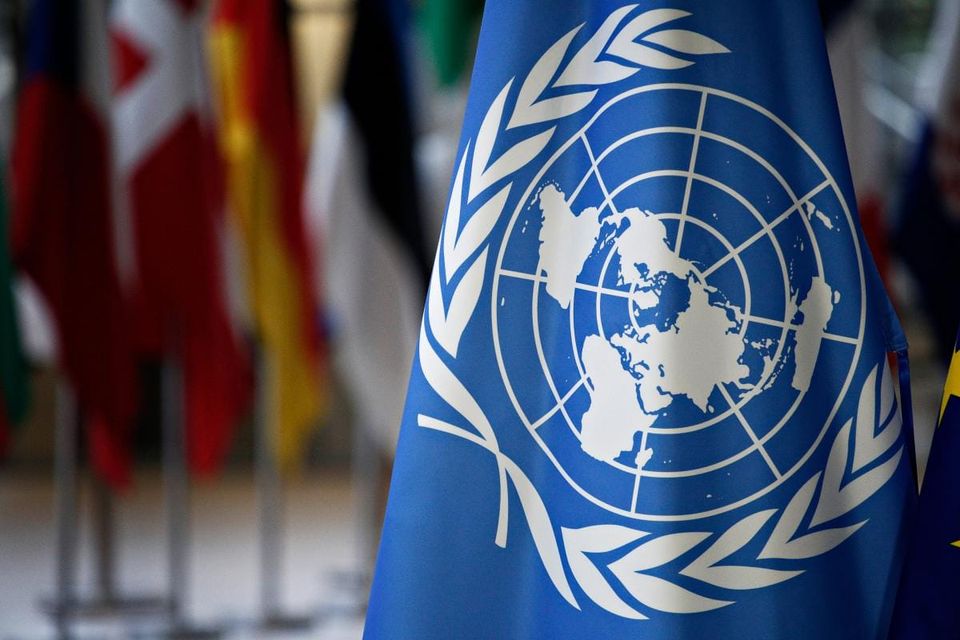
That day, Russia's permanent representative to the UN, Vassily Nebenzia, speaking in the Security Council chamber, called the Bahraini resolution on the war in Iran biased, one-sided, and wholly failing to reflect the real picture of events in the Middle East. He then pressed the button on his voting console — and on the large results screen, beside the Russian flag, the word "abstained" appeared. Not "against," but precisely "abstained." In diplomacy, the gap between these two positions is wider than the Grand Canyon — like the difference between a close friend and an indifferent bystander.
Contrary to a widespread stereotype, abstaining in a UN vote is far from a merely "neutral" stance. In the hard legal logic of the Security Council, such neutrality stands in direct opposition to the option of exercising the veto — a highly effective instrument for protecting allies. Broadly speaking, this is the very reason permanent membership with veto power exists. But only for those countries that truly can, and are not afraid to, use it. Abstention under such conditions is a clear display of weakness, however neatly it is wrapped in the tidy diplomatic formula of a "measured and responsible position."
So when, exactly, did Putin decide that his road no longer ran together with Iran's? When Shahed drones began falling on Ukraine, Tehran was evidently still regarded in the Kremlin as a close comrade-in-arms. But once Iranian missiles came raining down on Dubai and Doha — apparently no longer? The precise date on which Putin's attitude toward his alliance obligations to the Persian ayatollahs shifted is, of course, unknown to us. The consequences of that decision for the whole of Russia's Middle East policy, however, are plainly visible to the naked eye.
Thirty-Eight Days That Shook the Middle East
On the night of February 28, 2026, American strategic bombers and more than two hundred Israeli aircraft carried out numerous strikes on Iran's nuclear facilities, command centers, and the residences of its leadership. The American part of the campaign was called Operation Epic Fury, the Israeli part Operation Roaring Lion. Formally these were separate but operationally coordinated air campaigns aimed at destroying Iran's military, nuclear, and political infrastructure. Iran's Supreme Leader (rahbar), Ali Khamenei, was eliminated in his own bunker in the very first hours of the operation. Practically the entire command of the Islamic Revolutionary Guard Corps (IRGC) met the same fate.
One might have expected that this was precisely the fateful moment for Putin to step into the war. After all, only recently he had had military bases in Syria and a powerful hybrid presence in Libya; the "comprehensive strategic partnership" with Iran, signed in January 2025, was in force; and he maintained certain business ties with the Gulf monarchs. For many years he had sought to cast himself firmly as an indispensable regional player.
Yet the very first explosions of a serious Middle Eastern war involving two of the world's strongest armies quickly shook all the cheap tinsel off the chimera of Putin's grandeur. The Security Council vote of March 11 was no chance episode against the backdrop of a major regional crisis. In it, as the sea is reflected in a single drop of water, one could see the full impotence of Putin's Middle East policy — from its pointless multi-vector approach to its structural hollowness, from its profound crisis of professional expertise to its inability to convert loud declarations into concrete action.
Behind Nebenzia's vote — cast on Putin's instructions in March 2026 — lies a long history of the systemic decay of Russian diplomacy and the erosion of the Kremlin's standing in the Middle East. All of this had, of course, been unfolding long before the Second Iran War, which merely made previously hidden problems obvious to everyone. At the same time, this is also the story of how Volodymyr Zelensky is steadily becoming one of the new influential players in the Middle East — despite the bloody, existential war on his own soil.
Resolution 2817 was introduced by Bahrain on behalf of the Gulf Cooperation Council (GCC) and Jordan. It drew 135 co-sponsoring states — a record for the entire history of the Security Council. The document condemned Iran and its attacks on its neighbors. The United States and Israel were not mentioned in it at all. Putin publicly called the resolution "biased and one-sided" — and it was precisely this position that Nebenzia relayed in New York. But, as it turned out, only in words — not in the vote. The resolution passed with 13 votes in favor and two abstentions — Russia and China. Neither of these two veto-wielding permanent members of the UN Security Council used that power to defend a country each had for years publicly called its strategic ally.
Whether trying to "save face" or pursuing some other aim of his own, Putin simultaneously introduced a draft resolution of his own — calling on all sides to cease fire immediately, but without naming or condemning anyone. The result of the vote on this Russian resolution: four votes in favor against the nine required — less than half the minimum. Tellingly, even Bahrain — with which, by the Kremlin's official rhetoric, Moscow enjoys "a partnership" — did not back Putin's draft, in effect confirming that for Bahrain the demand to condemn Iran outweighed diplomatic courtesy toward Moscow.
Zelensky's Offensive on the Far Frontiers
Because Iran had been decapitated before it could mount any response whatsoever to the American-Israeli attack, by the end of the very first day of the war it was clear that the Islamic Republic was incapable of delivering any commensurate retaliation against the states that had struck it directly. Guided by an alternative logic not obvious to the outside observer, the surviving Iranian military began firing indiscriminately at virtually all of its nearest neighbors — none of whom had taken any part in the war. The Middle East plunged into a geopolitical confrontation on a scale it had never seen in its modern history: beyond Israel, Tehran began bombing all six Arab monarchies of the Persian Gulf, and Jordan into the bargain.
At the territory of the United Arab Emirates alone, several hundred ballistic missiles and more than two thousand drones were launched. Dubai's airport and the seaport of Jebel Ali — the region's largest transport hubs — came under fire. In Saudi Arabia, Iranian missiles struck the Ras Tanura refining complex; in Qatar, the Al Udeid air base; in Bahrain, the headquarters of the U.S. Navy's Fifth Fleet. Damage and casualties were recorded in every country attacked, including even Oman, whose pointedly proclaimed neutrality did nothing to spare it from the Iranian strikes.
Within mere weeks of the war's outbreak, the Gulf states found themselves in a predicament for which they had never prepared. By available data, at the onset of the Iranian attacks Bahrain's stockpile of interceptors for its Patriot air-defense systems stood at less than 13% of normal levels, and those of the UAE and Kuwait at no more than 25%. And when these ran out, help for the Arabs came, as so often happens, from an entirely unexpected quarter.
That help, however, was "unexpected" only to the outside observer. Zelensky had taken his first serious steps in countering Putin's presence on the soil of third countries long before the first Iranian missile salvos hit Dubai. Back in 2024, Ukraine opened a "second front" against Russia in Mali — a poor African country that, after the departure of French troops and the UN peacekeeping contingent, had become one of Moscow's most convenient "fallback airfields" in the Sahel. Ukrainian intelligence openly acknowledged at the time its role in the rout of a Wagner PMC column near Tinzaouaten in July of that year. Formally, that success cost Kyiv a rupture of diplomatic relations with Mali and Niger; in practice, those relations had never given Ukraine anything.
The sacred irony of that situation was that among the Russian "military specialists" working in the Sahel alongside Wagner fighters — and later the Africa Corps — were a fair number of veterans of the war in Ukraine, who turned against the Malian rebels the very tactical and technical skills they had acquired in the war against Ukraine. Are Russian servicemen truly fated to die at Ukrainian hands even in Africa?
Libya deserves separate mention. According to an investigation by the French broadcaster RFI, corroborated by the Associated Press citing Libyan officials, Ukraine has maintained a confirmed military presence in the west of the country since at least October 2025. Its base near the town of Mellitah (about 50 km from Tripoli) is equipped with runways and has direct access to the sea.
On March 3, 2026, a Ukrainian Magura V5 naval drone, launched from Libyan territory, successfully struck the Russian LNG tanker Arctic Metagaz in the Mediterranean. The vessel was carrying more than 60,000 tons of liquefied gas to Port Said in Egypt. In other words, even where Putin's Africa Corps is barely clinging to its last positions after the loss of Syria, the Ukrainians are actively expanding their own military footprint.
The Sahel and North Africa, however, proved to be merely a trial run for the Ukrainians. Zelensky's next move — logical and far more effective — was a decisive push into the key countries of the Middle East.
Contracts Worth Billions
By the time the first Iranian missiles and drones slammed into Dubai's skyscrapers, Zelensky was not beginning his work in the Middle East — he was continuing it. While Putin lost ground in the region year after year, Ukrainian diplomacy, by contrast, was methodically building up and expanding its presence there.
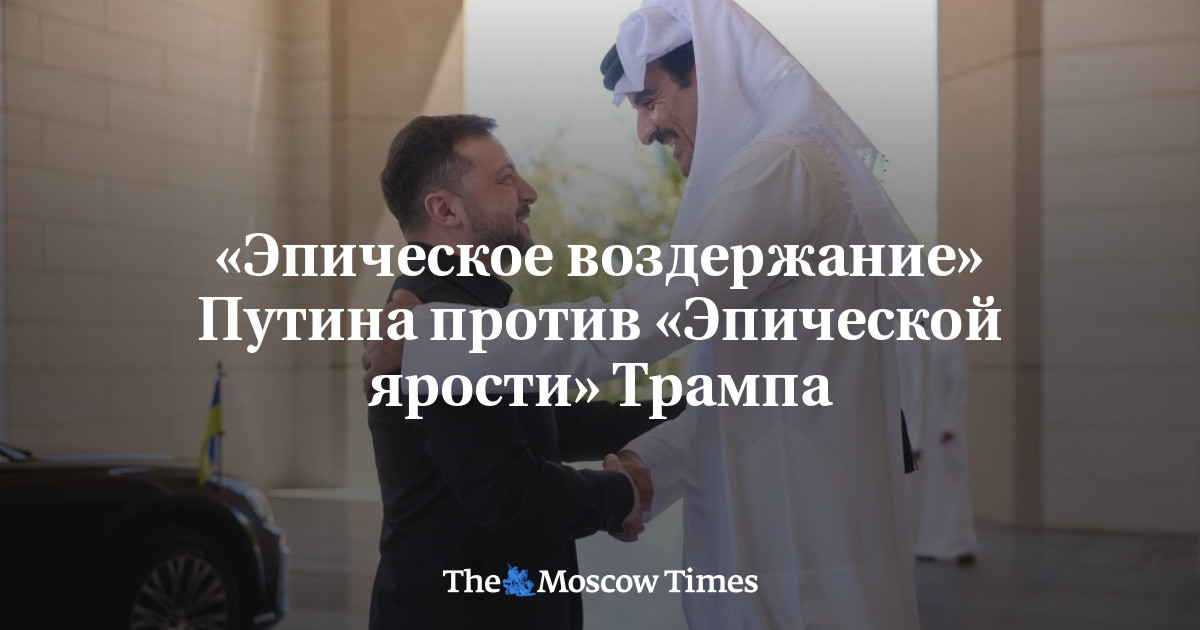
In June 2024, for instance, the Ukrainian president signed in Doha, together with the Emir of Qatar, a major package of bilateral agreements — ranging from investment cooperation to collaboration on security. In October of that year, Ukraine opened an embassy in Oman, and in December — three weeks after the overthrow of al-Assad — Ukraine's foreign minister, Andrii Sybiha, visited Damascus, a city that only a month earlier had been the single largest stronghold of Putin's entire presence in the Middle East. In September 2025, Ukraine and Syria restored the diplomatic relations they had severed in June 2022, after the Damascus of the day — or rather the pro-Russian regime of Bashar al-Assad — recognized the so-called "DPR" and "LPR."
In late March 2026, Zelensky made a series of working visits to the Middle East. In Saudi Arabia, a ten-year defense agreement was signed with Crown Prince Mohammed bin Salman (March 27), providing for joint production and technological cooperation. On March 28, an analogous ten-year agreement was signed with Qatar — covering joint investment, production, and the exchange of expertise in counter-drone and missile defense. That same day, an agreement in principle was reached on an identical pact with the UAE. In Jordan, a security partnership was discussed (March 29). Zelensky later confirmed, too, the interest of Jordan, Kuwait, Bahrain, and Oman in a defense partnership with Ukraine.
Unlike Russia, Ukraine offered its Arab partners not political declarations but a concrete, working product in acute demand at that very moment: combat experience and technical solutions for the mass interception of Iranian Shahed drones — the very ones with which Iran was attacking the Arab states of the Persian Gulf. The success rate of Ukrainian crews in intercepting these devices exceeds 85%. Because Russia regularly bombards Ukrainian cities with these very drones, or their variants, no other country in the world possesses greater expertise in this field than Ukraine.
By mid-March 2026, more than two hundred Ukrainian specialists were already working in the Gulf states and, according to Euronews, took part personally in intercepting Iranian drones during actual attacks. Zelensky made no secret of this, stating outright that it was Ukrainian specialists who had shot down the Iranian drones. And the overall scale of the deals, by his account, was already measured not in millions but in billions of dollars.
Consequences That Have Already Arrived
Few people today recall how, in January 2025, Putin and Iran's president, Pezeshkian, signed in Moscow a "Treaty on Comprehensive Strategic Partnership" meant to run for twenty years to come. At the ceremonial signing, complete with a joint photo op, there was loud talk of a "new era" in bilateral relations. Yet among the treaty's 47 articles, not one concerned mutual defense. Not a single line stated that one party would come to the other's aid in the event of a military attack. This, I am certain, was no accidental omission. Putin evidently understood from the very outset that he had nothing to offer Iran in a real crisis. His army was bogged down in Ukraine, his economy was running at its limit, and to enter into direct confrontation with the United States under such conditions would be nothing short of suicide. The treaty was needed solely for its title — to manufacture, for domestic propaganda, the mere appearance of having allies.
Iran, for its part — however laughable this looks from the outside — seems genuinely to have counted on the durability of its alliance with Putin. Since 2022, Tehran had supplied Moscow with thousands of Shahed drones, which over the course of several years became one of the principal instruments of Putin's terror against Ukraine's cities and energy infrastructure. And in effectively subsidizing the Russian war economy at its own expense, Iran also took on additional sanctions pressure from Western countries.
What is more, military instructors from the Islamic Revolutionary Guard Corps (IRGC) were personally present in the occupied territories — and even died there. In October 2022, for instance, the Ukrainian Armed Forces carried out two strikes — on positions in the Kherson region and on an airbase in occupied Crimea. According to the Secretary of Ukraine's National Security and Defense Council, Oleksiy Danilov — corroborated by American intelligence — those strikes killed at least ten Iranian servicemen of the IRGC who had been training Russian operators to handle the drones.
If, after all this, it seems to you that in the UN vote of March 11, 2026, Putin's Russia treated its ally less than honorably, then perhaps you have also forgotten that on August 24, 2025, a member of Iran's Expediency Discernment Council, Seyed Mohammad Sadr, declared in a public video interview that as far back as the First Iran War (the so-called "12-Day War"), Russia had been passing Israel (!) the coordinates of Iranian air-defense systems. This claim cannot be independently verified — nor, for that matter, refuted. But the very fact that such an assertion came from the lips of a senior Iranian official speaks volumes about the level of trust within the Russian-Iranian "strategic partnership." Apparently, whenever Putin suddenly needs to curry favor with "unfriendly" countries, the "friendly" ones "would do well to view it with understanding."
The economic dimension of Putin's "neutrality" deserves particular attention. While Iranian cities were enduring devastating American-Israeli strikes, Russia aggressively ramped up its oil exports to Asia, nearly doubling them within a month (to $19 billion in March 2026) and displacing the Iranian volumes dropping out of that market. All told, by the estimate of the Kyiv School of Economics, Putin's aggregate additional revenue from the war of his "enemies" against his "ally" may have amounted to between 45 and 151 billion U.S. dollars.
Strictly speaking, in a global politics that is utterly cynical by nature, profiting from a third party's war against your close partner can well be justified by the defense of one's own national interests. But betraying one's allies too frequently and too ostentatiously, as Putin does, is a clear sign of strategic short-sightedness and a pathological absence of will — something scarcely permissible for a head of state. And all the more so for a leader seriously laying claim to influence in one of the world's most complex regions, where no one ever forgets or forgives anything. In the countries of the Middle East, whose history is measured in millennia, such geopolitical illiteracy carries entirely predictable long-term consequences. And for Russia, those consequences have in some places already arrived, and in others are arriving right now.
Zelensky has not, of course, yet won the entire Middle East away from Putin. To say so today would be far too premature. But he has plainly already opened the scoring where, only a few years ago, Ukraine had not a single piece on the board. And he did so not because he got lucky, but because he proved, by any objective measure, more far-sighted, more professional, and perhaps simply more decent than Putin. That is precisely why, at the very moment when the shamefaced word "abstained" glowed beside the Russian flag on the screen of the UN Security Council in New York, Zelensky was already finalizing the plans for his visit to Damascus — the capital of a country that, until very recently, Putin had considered entirely his own.
Postscript: St. Petersburg, April 27
On April 27, 2026 — seven weeks after the UN Security Council vote and three weeks after the ceasefire was declared — Iran's foreign minister, Abbas Araghchi, arrived in St. Petersburg and was received by Putin at the Boris Yeltsin Presidential Library. It was the first visit by a senior Iranian official to Russia since the start of the war. At the ministerial, not the presidential, level. In St. Petersburg, not Moscow. The third stop on the itinerary — after Pakistan and Oman. The request to arrange the meeting had come from Tehran only on Friday, April 24 — right before the weekend.
The conversation lasted about two hours — very little for serious negotiations. Putin spoke in hackneyed diplomatic clichés — "the Iranian people, courageously and heroically fighting for their independence and sovereignty" — and dispensed promises just as devoid of meaning — "to do everything for the swiftest possible peace in the Middle East." Araghchi played along languidly, thanking him for the promises and repeating that "Russian-Iranian relations are a strategic partnership at the very highest level."
The upshot of the meeting: no commitments whatsoever on Moscow's part. None on defense, none on weapons, none on sanctions. The only thing the Kremlin proved able to offer was its services as a mediator between Tehran and Washington. The U.S. State Department gave no reaction at all — which, in the prevailing context, is itself telling as to how much significance Washington attaches to the Russian-Iranian talks.
In effect, Tehran had turned to Putin no longer as an ally but as a function, a channel of communication — after Donald Trump canceled the trip of Steve Witkoff and Jared Kushner to Islamabad, leaving the Pakistani negotiating track stalled. It seems that for the Iranian side, too, Moscow had by now become a residual diplomatic address, to be used when all the others fail. Yet even in that case, Putin made clear, Moscow would have nothing to offer.
 Сергей Коняшин