The Story of One Emigration, or How to Go On Living in Russia While Outside Its Borders?
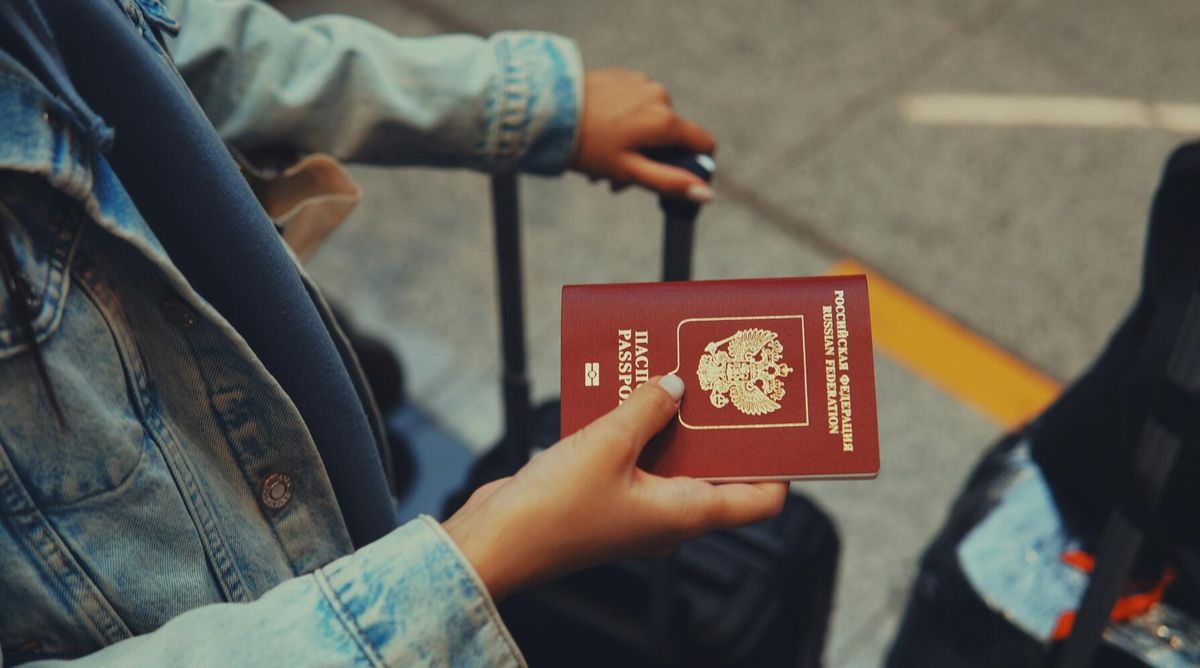
The year 2023 stays in my memory as one of dreadful monotony and unrelenting fatigue… I wake at 4:40 in the morning, while it is still dark in Haifa, in time to manage breakfast. At the stop near my building, I wait for the company bus that the locals call the razvozka — the "shuttle." It comes at 5:30, and being late is not an option: there will be no next one. Forty minutes later I am in the Tziporit industrial zone, in Galilee, the homeland of Jesus Christ, at a metal-parts factory belonging to a large multinational American corporation.
My shift, lunch break included, runs more than twelve hours. I do not get home until around eight in the evening. I have a quick dinner and go to bed, only to rise again at 4:40 the next morning to the tune of my alarm — a pleasant song in the Maghrebi dialect of Arabic, a reminder of my last diplomatic posting, as Russian consul in Algeria.
To Leave or to Stay
On my postings abroad I lived in spacious apartments with beautiful views of the mountains or the sea, and I drove to work in expensive official cars with diplomatic plates. But on 24 February 2022 it became absolutely clear to me that there was no longer any way I could go on serving Putin's criminal regime. Until that day I, like many of my former colleagues, had tried to justify my work by the hope that things might yet change for the better, and by the need to keep my family at the high level of social and material comfort we had grown used to. But I was no longer prepared — not even for a handsome diplomatic salary — to become a direct accomplice in the war crimes of the Kremlin's cannibal.
On top of that, things around me began to grow more difficult after I spoke out publicly against the so-called "special military operation," and against Putin personally, at meetings with schoolchildren in my native Hero City. By then my war novel The Last Frontier — reissued in 2020 for the 75th anniversary of the Victory — had gained some modest popularity in Novorossiysk. Because it dealt with the defense of our home region against the fascists in 1942–1943, some of the city's schools had begun using it as material for so-called "patriotic-education classes." In those classes — drawing, among other examples, on The Last Frontier — Novorossiysk's schoolchildren were taught that Russia had to be "defended" by killing Ukrainians, who were the very people now being branded the fascists.
At some of these meetings, where I was an invited guest as a native son of the city and the author of the novel, I always rejected this line of reasoning. I stated that I did not support such an interpretation of my work, that I condemned the barbaric aggression against a neighboring country, and that I considered Putin's actions both mistaken and criminal. Before long, of course, the invitations stopped, and the city officials — who had a fine sense of which way the wind was blowing — broke off contact with me.
I received no direct threats of persecution, but it was immediately clear to me that I had to leave Russia. The start of the war in Ukraine was, of course, not the only reason for my decision to emigrate. It was merely the last and largest drop that finally made the cup of my long-standing indecision overflow.
In taking the difficult decision to quit the ranks of Putin's diplomatic lackeys, I was, of course, giving up a great deal. Even so, our family paid that price consciously and of our own free will — so that today we might stand among decent people in opposing this criminal war against the brotherly Ukrainian people, rather than share in the responsibility for it. So much for the claim that a Russian official supposedly cannot leave the civil service.
So if you, reading this article, are yourself serving in a Russian government post that has long since disillusioned you, yet still cannot bring yourself to leave it (and I am sure there are many such people), just stop and think. If you are not, right now, weighed down by several large loans with enforcement proceedings opened against you; if you and your family are not being hounded by bailiffs and debt collectors; if you do not have three small children, including a newborn; and if you still have at least some savings — then your situation is already far better than mine was at the moment I left Russia.
"I Will Bring You Up Out of the Affliction…" (Exodus 3:17)
Our main problem was that, at the end of February 2022, my wife was eight months pregnant with our third son. In that condition no airline would have taken her on board. So we had to wait for the baby to be born in March and give her another month to recover. We only managed to fly out of Russia in May.
At that point the cheapest tickets to Israel for a family of what was now five turned out to be from Minsk, with a long layover in Tashkent and a departure on 9 May. While Russian television ran the customary Victory Day parade (still with military hardware on display in those days), our plane was already leaving Belarus.
In the early hours of 11 May we landed at Ben Gurion Airport. Despite our Jewish roots, none of us had ever been to Israel before, not even in passing. In the Holy Land we had no friends, no acquaintances, no relatives. Stepping off the plane, we found ourselves utterly alone in a foreign country we knew nothing about.
One of the first questions the immigration officer at the airport asked us was: "Where shall we take you?" As it turned out, new immigrants are expected to choose a city to settle in ahead of time, and preferably even rent a place there in advance, or at least book a hotel. We had done none of this, because in those days we were fleeing Russia more than we were moving to Israel.
I asked to be taken to the nearest hotel, since we were dead tired after a long flight through two transit countries and the children badly wanted to sleep. The officer then explained that the right to a free transfer is granted to new immigrants only once. A state minibus could take us from the airport to anywhere in the country — to Eilat, say, or up to the Golan Heights. But only once! If we used that right merely to reach the hotel nearest the airport, all further travel around the country would be entirely at our own expense — and Israel, as everyone knows, is not a cheap country.
Since our finances were shaky, we asked which regions of Israel were considered the least expensive. He answered that it was the north, but then, hastily cutting himself off, added that he was not permitted to give us any advice. The only city in northern Israel we had heard anything at all about was Haifa. And so that is where they took us — simply because we could not name any other city in the north. That is how we ended up in Haifa, where we live to this day. In the time since, the three sons we brought from Russia have been joined in our family by a daughter, born here in Israel.
Why did I think it important to share the story of our departure with you? In four years of emigration I have seen dozens of Russian families go through countless hardships much like our own. All of us — the émigrés of the "wartime" wave, the one that followed February 2022 — often found ourselves in much the same dead ends, which seemed to offer no way out. At such moments, I am sure, almost every one of us felt that we could no longer cope — a feeling that then gave way to the urge to stop resisting and give up.
For my own part, after long years of the relatively comfortable, well-provided life of a career diplomat, it took me a good deal of time and moral effort to grasp something that is, at bottom, very simple: if you do not despair, do not expect much, and make do with what you truly need, then most of these difficulties are quite solvable. But not with money, which few émigrés ever have in any abundance. Rather, above all, with access to the right information, with connections, and with people helping one another.
The main problem of Russian émigrés and those who have relocated, in my view, is that we know far too little about one another — even though, one would think, we are the very people who could help each other settle into a new place, find work and clients, share useful experience, or simply offer a kind word in a hard moment.
My Struggle in Emigration
Back in Russia, as the head of a family with small children, I did not feel I had the moral right to engage in opposition politics — it was too dangerous, and not for me alone. Outside the country, though, I thought, everything would be different. Now, after all, I could try to act on the many ideas I had turned over in my mind for so long.
One of them seemed especially important, and therefore the most urgent: to help other opponents of Putin's regime get out of Russia too — so that as few people as possible would remain within reach of its security services, pay taxes to its regime, or serve in its criminal army, which kills civilians in neighboring countries. And so the first thing I did in our new home was to open a firm offering immigration services.
Of the eight thousand dollars I had brought with me, I spent five on a franchise from a large international online center for migration consulting. I remotely hired two managers in Russia: one in Moscow, the other in my native Novorossiysk. We operated for three months, served a grand total of four clients — and went bust. Letting the managers go, I tried to carry on alone. But the workload proved overwhelming, and the income was nil.
By February 2023 we had nothing left — neither the firm that was meant to feed our family, nor the savings we had brought from Russia, which I had sunk into that failed venture. Our entire family — five of us: my wife, our three children at the time, and I — was left utterly without any means of subsistence. We urgently had to start earning something, somewhere, anything at all. And so I took the only job I could find quickly: at that very American metal-parts factory in Galilee, not far from Nazareth.
Every day during the lunch break I would walk from my Workshop No. 8 to the factory canteen along a path that ran beside a low chain-link fence. Beyond it opened a stunning view of the Galilean hills, and a small town on the slope of one of them. That little town was called Kafr Kanna. According to the Gospel, it was here that Jesus performed his first miracle, turning water into wine at a wedding.
As a child I had a Children's Bible — a blue book on glossy paper, with beautiful pictures. Its final pages carried photographs of biblical sites. Among them was a shot of this very town — taken, it seems, from almost the very same angle. I remember well how, thirty years ago, gazing at Kafr Kanna in that photograph in my Children's Bible, I would imagine the miraculous Gospel scene unfolding on its ancient streets. Back then I was utterly certain that I would never in my life see these legendary places with my own eyes. But life, it turns out, can spin its plots more deftly than any Hollywood screenwriter.
After half a year at the factory, a feeling began to harden in me that our struggle for a better life beyond Russia had been lost outright. Any career growth in Israel calls for good Hebrew. Without it, even if you formally hold citizenship, you start not from zero but, in effect, from a minus. Yet finding time to study the language on twelve-hour shifts, when you cannot even get a proper night's sleep, is — understandably — an impossible task.
Something had to change. But what, exactly, and how — I had no idea.
Good Will Hunting
One day, scrolling through job listings online, I came across a notice about an upcoming open day at Ariel University. Among other things, the university's website mentioned a doctoral program taught not in Hebrew but in English. And this program was housed in the School of Communication — in Russian terms, the journalism faculty. Precisely my own field of training.
I tried to get time off work to attend that open day. But the shop foreman refused: my forklift training had been scheduled for the very same date, since they wanted to put me in charge of unloading metal. So I gathered every email address I could find on the university's website and sent letters to all of them. I wrote that I was interested in the doctoral program for media researchers but would, unfortunately, not be able to come to the open day.
From one of those addresses came a reply suggesting I get in touch with a professor who might become my supervisor. I wrote to her. She invited me to a meeting, after which she agreed to consider my candidacy, provided I passed the entrance exams.
For English, the university accepted results from the British IELTS exam, with a score of no less than 6.5. In Haifa the test cost 1,200 shekels (about 330 dollars). For a factory worker's family with three children, that was a serious sum, and I had a hard time persuading my wife to set the money aside from our family budget.
Anyone who has taken IELTS knows that it is a rather peculiar exam, one in which the technique of sitting the test matters almost more than actual knowledge of the language. And I had never dealt with exams of that kind before. Despite all my efforts, I ended up scoring exactly six — half a point short of what I needed to get in. A retake of IELTS is permitted only after two years. Thinking that was the end of it, I reported the news to the professor with regret. But she pointed out that, besides the British exam, the university also accepted the results of an internal Israeli test, AMIRAM, with a passing score of 134 out of 150.
The AMIRAM test cost just 280 shekels. I signed up for it — and failed that one too, scoring 129. Yet this second failure, paradoxically, only bolstered my confidence. First, this time the gap already seemed quite surmountable. And second, unlike IELTS, AMIRAM could be retaken after 40 days. So, the moment I got back from that exam, I immediately signed up for the next one and began to prepare.
The problem, as before, was the utter lack of time. Studying at night was out of the question from the start — I was already chronically short of sleep. The only free time I could see was the ride to the factory and back on the shuttle: forty minutes there, forty back. That was already almost an hour and a half a day. I subscribed to a BBC podcast and started listening to the news in English on the bus. That took care of the listening part.
But I still had to read texts and learn vocabulary. On the dark bus, which I always rode either before dawn or after sunset, that was impossible. And doing it during working hours at the factory was, of course, something no one would allow. But I had a smartwatch, and no one can stop you from glancing at your own watch. So here is what I did. On weekends (in Israel that is Friday and Saturday) I read a great deal in English, looking up unfamiliar words in an electronic dictionary and taking a screenshot of each. On Saturday evening, before the working week began, I would load these screenshots into a separate folder on the watch and set it to display them on the main screen. As a result, images of words with their translations cycled on my wrist all day long. To see a new word, a single glance at the watch was enough. As I worked, I would mentally conjugate the verbs in their various forms and tenses and build short phrases with the nouns. A few minutes later I would look at the watch again — and the next word was already there.
It worked. I passed the second AMIRAM with a score of 145 — and was admitted to the entrance interview. It took place in December 2023, also in English. I felt I had done terribly and was absolutely certain that, as always, I had failed. But a few days later a notice arrived: I had been accepted into the doctoral program and could begin my research.
At the start of 2024 I left the factory, and I now research the information strategies used to cover wars in Israel's mainstream and community press, in Hebrew, English, Russian, and Arabic. I also contribute to several Russian opposition outlets published abroad. It is in one of them, in fact, that you are reading this article right now.
Russia Within Us
Of course, I cannot say that all our problems have vanished since then. But our difficult émigré life has certainly acquired new and firmer bearings and footholds. At the very least, I am now doing what I love: conducting research, writing articles, and working as a journalist for outlets that share my values.
And yet, looking back, I cannot shake the thought that this road could have been far easier and shorter. For many of the difficulties that I got through only with enormous effort and loss — or did not get through at all — were obviously easy to overcome; I simply did not know how. I did not know whom to turn to, or where to look for information and support.
Over the past four years I have met dozens, if not hundreds, of Russian émigrés — both here in Israel and remotely, over the Internet. We talked a great deal and shared our troubles. In candid conversations about our common hardships, almost everyone confided the same feeling: that they had to cope with them alone. And I could not shake the sense that there was something wrong about this. After all, there are thousands of us all over the world. Lawyers, doctors, programmers, businesspeople, teachers, translators, and a host of other professionals — with skills and experience that would be more than enough to make up the economy of a small European country.
As I thought about this, I increasingly recalled a book I had read on the bus to Minsk, as we were fleeing Russia: Solzhenitsyn's Two Hundred Years Together. Among other things, it describes the mutual-aid practices of people from the Jewish communities of Eastern Europe. Jews, as is well known, were always subjected to brutal persecution, yet they managed to preserve their unity and cultural identity precisely because, in every matter, they supported one another. A Jewish merchant, for instance, when buying goods in the shtetls, would first purchase from all the Jewish sellers and only then from everyone else. He would declare his cargo through a Jewish broker. He would hire a merchant ship from a Jewish owner. And so on. In this way, even in the diaspora, far from its homeland, the community sustained itself for centuries — and so not only survived but prospered.
Fortunately, we Russians in emigration experience not even a small fraction of the horror that Jews had to endure in the Russian Empire and the Soviet Union. But the very principle of communal mutual support — of keeping resources within one's own circle — strikes me as entirely applicable. All the more so because modern technology makes it easy to connect people scattered across the globe.
Today there are so many of us living outside Russia that we would be more than enough to populate a major metropolis. And although we are scattered across the planet, we nonetheless share a common past and very similar problems in the present. The language barrier, the difficulty of securing legal status, the search for work and housing, a failure to grasp local realities, the loss of professional standing, a declining standard of living, a sense of isolation and loneliness — all this is only a small part of what has, sadly, become our new reality.
In this situation — left one-on-one with our problems, far from home — we often forget one important resource that could greatly ease our lives and bring us substantially closer to the goals we seek. That resource is ourselves.
NEXIRS
The country we left was, above all, the place where all of us naturally exchanged goods and services, easily found the specialists and freelancers we needed, and built professional connections. In other words, we felt at home simply because we lived in a single, shared space of communication that connected us as a matter of course. So why not simply recreate such a space for ourselves?
This thought gave rise to an idea: to bring together the Russians who have ended up in immigration, along with the foreigners who support them, into an international network of expats for integration and resource sharing. In English, the name would run roughly as "Network of Expats for Integration & Resource Sharing" — NEXIRS for short.
To bring my idea to life, I created a website under that name, that lets people all over the world not only offer their services and professional expertise to a familiar Russian-speaking audience, but also find the specialists they need within a community they already know. This way, instead of spending scarce resources, money, and energy on the "outside market," where we often remain outsiders, each of us gets the chance to channel expenses we would incur anyway into the success of the projects and businesses of compatriots who need support just as much as we do. And they, in turn, will help us back.
I am sure that, if we manage to build the right relationships within the NEXIRS community, we will create a unique social and economic space that benefits every one of its members. On the one hand, such an association will have no ties to the economy of Putin's Russia, meaning that your taxes and mine will certainly not go toward financing criminal wars. On the other hand, it will preserve all the best of what unites us — a shared language, cultural code, traditions, and values.
NEXIRS works very simply. It is like an open forum or a bulletin board, where anyone can post information about themselves and their services. Just publish a post on the site describing what you do, what you can offer, and whom you would like to help, and how. It can be anything at all: legal advice, IT services, accounting, design, construction, tutoring, translation, psychological support — the list could go on forever. There is no complicated registration, no long forms to fill out. You simply leave your post using a basic online editor, add photos and links, list your contact details — and that's it, you are part of the community! By the way, if you do not have your own website or portfolio, a post on NEXIRS can serve perfectly well as your "digital business card," where you can describe yourself and what you have to offer in detail. If, on the other hand, you are looking for a specialist, you can find one using the site's search function.
In short, if we have all ended up in the same boat one way or another, let us row toward the shore of our well-being together. If only because, quite simply, it is easier that way.
If anyone shares my idea and would like to help me develop it, I would be sincerely grateful. Unfortunately, at the moment all I can offer is the chance to become a volunteer, working without pay, just as I do myself.
First and foremost, the project needs someone who understands digital marketing, social-media marketing, contextual advertising, or SEO — someone who can make sure that NEXIRS reaches the people who truly need it. So if you know how to promote projects on social media, set up targeted advertising, or work with online communities, write to me at the email address listed on the site.
If you visit the site, you will surely notice that its current design is rather austere. That is because, not being an IT specialist and having no money for developers, I built the whole thing from scratch on my own, with the help of YouTube tutorials and AI tools. Technically the site works perfectly well, but I realize that its appearance could be improved — made more user-friendly, more attractive, and more functional. So, if you are a web developer, a UI designer, or a frontend or full-stack specialist, and you are willing to help, I would be very grateful as well.
Dear friends, we have all already proved that we can keep our fortitude and our dignity on our own. We have managed to stay afloat, to keep from giving up, and to achieve something or other after our forced emigration or relocation. And so I believe that, by joining together, we can achieve still more. We can create a community of Russians that lives apart from Putin's criminal regime — by our own rules, not his. We can build broad, horizontal ties among ourselves, ties that span the whole world — and thereby prove that we are fully capable of building a better future for ourselves and our children, if only dictators and war criminals do not stand in our way.