A Pyramid Instead of a Sphinx: How the Lubyanka Is Destroying Russian Diplomacy in the Middle East
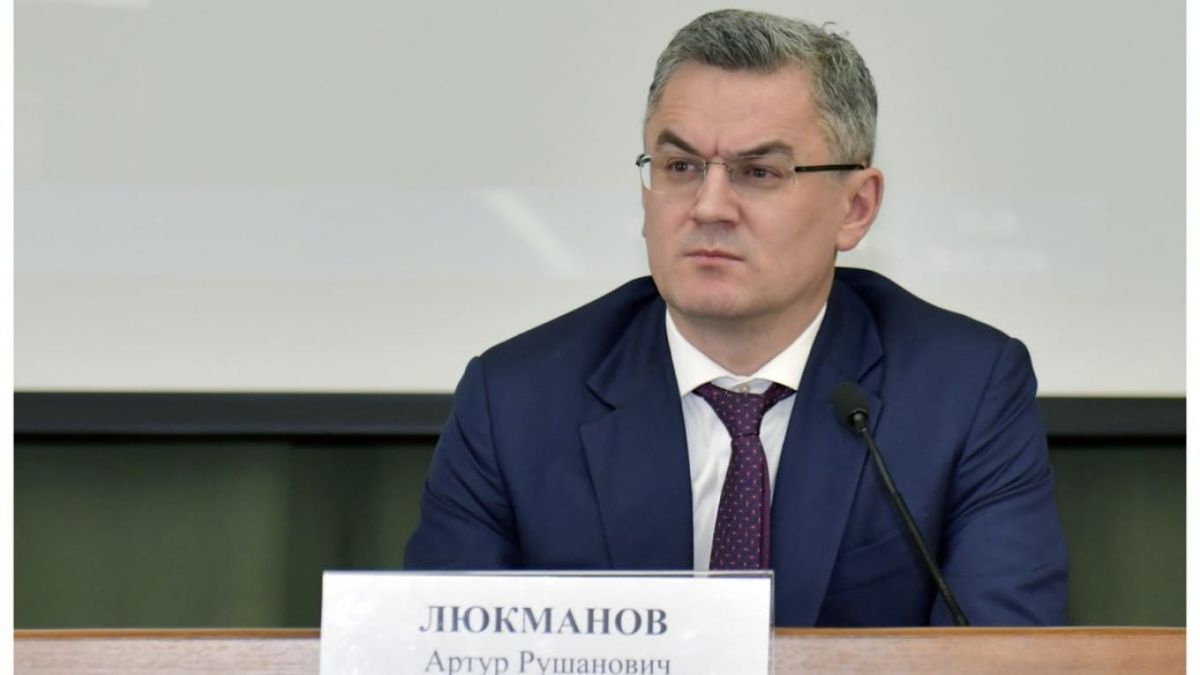
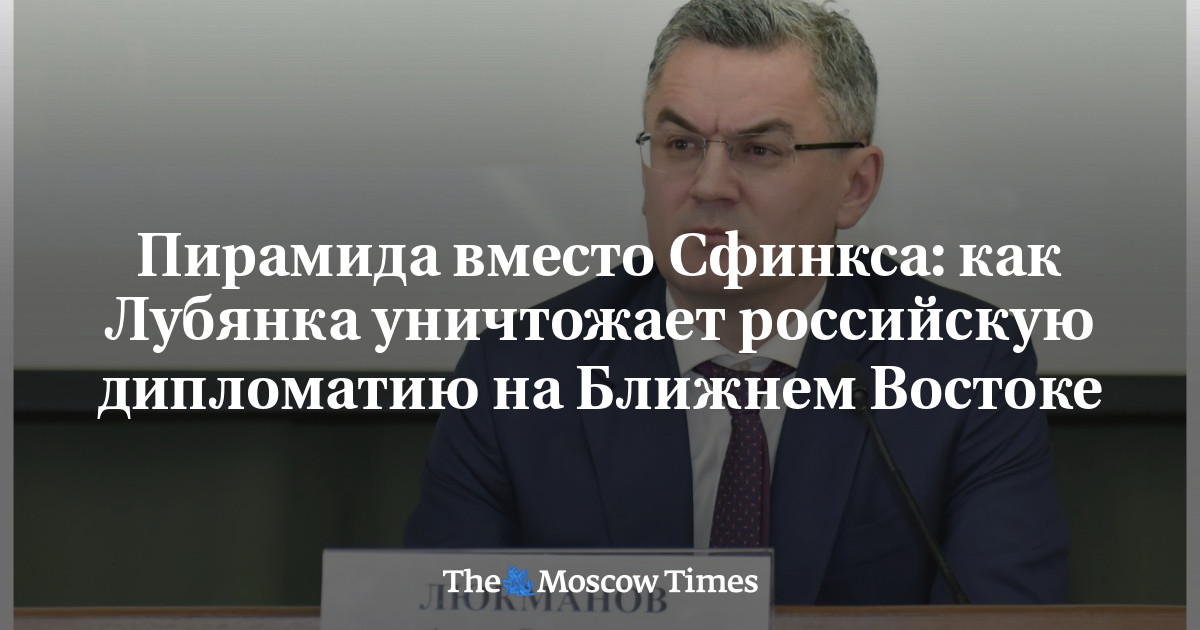
Russia's next ambassador to Egypt will be Artur Rushanovich Lyukmanov. There is no presidential decree yet. But my confidential sources in the Russian Foreign Ministry report that the decision has, in principle, already been made. In any case, there is no need to wait for the official paper to come out of Putin's administration before commenting on this appointment. All the more so since its dry, impersonal wording (like that of all such decrees) will say nothing about the true meaning of this personnel decision. So let me explain what it means.
Sending Lyukmanov to Cairo as ambassador is not a routine rotation. First, the residence of the Russian ambassador in the “land of the pyramids” has stood empty since February 20. Who the previous ambassador, Georgy Yevgenyevich Borisenko, was and where he went, we described in detail here. Since then, one of Russia's most important diplomatic missions has been without its head. It is surprising, in fact, that the matter has still not been settled. Second, to one of the key capitals of the Arab world Putin's regime is once again sending not a regional expert but a man of an entirely different specialty. Since March 10, 2023, Lyukmanov has held the post of director of the Department of International Information Security. This field has traditionally been the preserve of officials connected in one way or another with the Foreign Intelligence Service (SVR) or the Federal Security Service (FSB). So I think we can say with a high degree of confidence that the “securitization” of Russia's foreign policy in the Middle East is continuing, at the expense of classical diplomacy.
Although the Russian Foreign Ministry's website formally notes that the future ambassador to Egypt speaks Arabic, among other languages, he is a Turkologist by training. I never crossed paths with him personally during my years at the ministry, and he graduated from MGIMO a month before I enrolled there, but knowledgeable acquaintances have confirmed to me that he studied Turkish, not Arabic.
But the question is not even that Lyukmanov, despite some experience of work in Eastern countries, lacks the deep grounding in Arabic studies that many other Russian ambassadors in the Middle East have behind them. The question is what grounding he does have. And I fear that even his closest colleagues do not know the full answer.
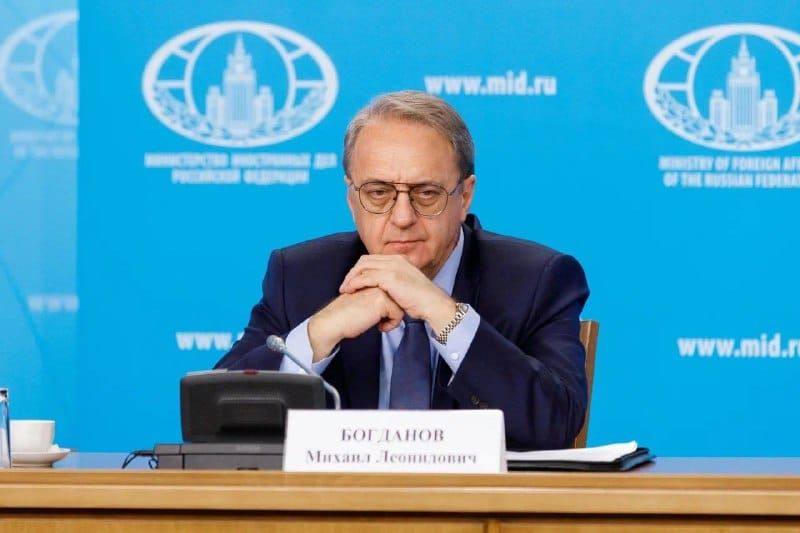
The appointment of a new ambassador to Cairo, soon to be announced, is only the tip of the iceberg. Since the unexpected resignation a year ago of Mikhail Bogdanov, the former deputy minister for Arab and African countries, the Middle East wing of the Russian Foreign Ministry has been undergoing a heavy shake-up — and the process is clearly being run by chekists (security-service operatives). That is why, on key desks in the Arab world, professional diplomats are lately being replaced more and more often by people of an entirely different type — supervisors from the special services rather than political envoys.
To better understand what exactly is changing in Putin's Middle East policy, the first thing to look at is not the man who will soon receive the post of Russian ambassador in Cairo, but the man who will not.
Not a Stall, but a Reset
Aidar Aganin became Russia's ambassador to Libya at the end of 2022. At the time, the embassy entrusted to him, evacuated in 2014 because of the war, was operating out of neighboring Tunisia. Six months after his appointment, Aidar Rashidovich arrived in Tripoli — abandoned by Russian diplomats eight years earlier — to restore Moscow's full presence in Libya.
Aganin is an outstanding Arabist in the fullest sense of the word. An academic researcher fluent in English, Arabic, and Hebrew. The author of fundamental scholarly works on Middle Eastern tribes and clans. He built a classic diplomatic career (serving in Jordan, the United States, and Palestine), which he varied in 2007–2011 with a spell in journalism, heading RT's Arabic-language service. By the bureaucratic logic of any healthy state, he would have been the natural candidate for promotion to Cairo. Not to mention that Egypt is a difficult country — and a geopolitically very important one.
If the post had gone to some other Arabist comparable in standing to Aidar Rashidovich, this would not have deserved much attention. In the Department of the Middle East and North Africa, as in any other unit, backstage passions simmer and office intrigues are spun — someone is always undercutting, setting up, or outmaneuvering someone else on the career track. But when a figure of a completely different caliber, different professional qualities, and different institutional loyalties is wedged into the usual scramble, it looks much more like deliberate interference from outside. If only because Artur Lyukmanov's previous specialty and career path, to put it mildly, in no way mark him out as a serious Arabist, better able than other Middle East hands to strengthen and develop Russia's relations with one of the key countries of the global East.
A Sprint Up the Career Ladder
Artur Lyukmanov's official biography should be read slowly and carefully — everything in it is very ordinary, without a single striking line. But that is exactly what makes it eloquent. He graduated from MGIMO in 2000 and joined the Foreign Ministry. At first he did indeed work in the central office on the Middle East track. But at some point — open sources give no exact date, which is telling in itself — he moved to the Department for New Challenges and Threats. The pointedly vague name of this unit clearly signals its specialized rather than regional character. Behind the extremely smooth, almost euphemistic wording lie terrorism, drug trafficking, human trafficking, organized crime, and all the criminal spheres where formal diplomacy meshes with the work of the SVR and FSB so closely that, in the nature of its tasks, it is hardly distinguishable from them. It was from there that, in early 2023, Lyukmanov stepped even further — into international information security. And that is the direct domain of the special services: how to build confidential relationships, run agents, track threats, counter the enemy's propaganda operations, and so on.
The pace of Lyukmanov's climb up the career ladder also looks more like a schedule for changing the diplomatic covers of officers from outside agencies than the speed of promotion in rank and position that is normal for ordinary Foreign Ministry staff. According to available data, as late as 2017 Lyukmanov was listed as a first secretary on the new-challenges-and-threats track — not a very senior position. Yet by early 2023 he was already director of the Department of International Information Security, and in July of that year he became the president's special representative for international cooperation in this field. I will not venture to say exactly what mechanisms drove such a rapid rise, but I can say with confidence that a great many Russian diplomats would envy it deeply.
Lyukmanov's rare appearances in public also say a great deal. The point is not that he blindly echoes Putin's official line. All officials in today's Russia echo it. They just do so in different ways. His particular statements — about the need for digital confrontation with unfriendly countries, about Ukraine as a testing ground for Western cyber technologies aimed at Russia, and so on — in their style, vocabulary, and set of arguments resemble not the statements of a diplomat, with their obligatory half-tones and shades of meaning, but the reports of a chekist used to thinking in categories of threats, enemies, and how to counter them.
The “Neighbors” Become the Hosts
To gauge the scale of the changes now under way in Russia's diplomatic apparatus — in particular on its Middle Eastern and African track — it is worth looking a little higher than individual appointments. For almost a decade and a half, this entire area rested on Mikhail Bogdanov, deputy minister and the president's special representative for the Middle East and Africa. Since he was relieved of both posts in the summer of 2025, the position of special representative has remained vacant. In other words, it is not just an official that has disappeared. What has disappeared is the entire bureaucratic level at which work in the region was conducted through official diplomatic channels rather than through special operations of Putin's security services.
In Russian diplomatic parlance, intelligence officers and chekists are called “the neighbors” — people from adjacent agencies who simply work nearby but are not one of your own. Now these “neighbors,” it seems, are pushing their hosts out of their offices ever more actively. And with them goes professional expertise, deep knowledge and understanding of the region, one of the world's best schools of Arabic studies, and much else that cannot be restored afterward with a single signature on a presidential decree, but is built up only over long decades of hard work.
Putin's regime has evidently entered a phase in which its resources and capabilities are shrinking ever faster, and the surviving assets are becoming the object of a furious carve-up among rival groups of influence. This process has not spared the diplomats either: they have become a convenient target for the siloviki (officials from the security and enforcement agencies), with their attractive foreign postings, budgets and hard-currency salaries, channels of communication with foreign partners, and even the embassies themselves as points of physical presence abroad.
But there are, of course, reasons deeper than a banal division of resources. In Putin's Russia, it seems, the very idea of what an ambassador is for is changing fundamentally. When a country conducts a real foreign policy, the head of a diplomatic mission needs a wide range of country-specific skills, which are acquired only through total immersion in regional expertise and years of postings in the relevant countries. But Putin's regime today needs entirely different people — professional overseers who control flows of resources, supply channels, spheres of influence, diplomats' contacts with foreigners, and so on. And people are chosen to match the changed tasks.
 Сергей Коняшин